Get free shipping on your order, with any water filter subscription. Find my filter

Open Hamburger Menu
Sears Parts Direct
Tips to find your model number
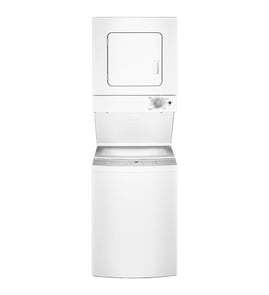
GE WSM2420D0WW washer/dryer

GE WSM2420D0WW washer/dryer Parts

Here are the diagrams and repair parts for GE WSM2420D0WW washer/dryer, as well as links to manuals and error code tables, if available.

By Schematic
By Part
SELECT DIAGRAM
?

This is the number corresponding to the part on the diagram / schematic

Browse Parts for WSM2420D0WW Washer/Dryer

  • Laundry Center Dryer Thermal Fuse, 195-degree F for GE WSM2420D0WW - Part WE4X857

    Dryer drum & back panel diagram

    Thermal Fuse

    Part #WE04X0857

    Replaced by #WE4X857

    Info Icon
    Manufacturer substitution
    This part replaces WE04X0857. Substitute parts can look different from the original.
    In Stock
    $62.12
    9% OFF Phone Price : $68.12Info Icon
    Minus Item
    Qty
    Plus Item
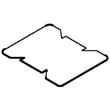
  • Laundry Center Dryer Lint Screen for GE WSM2420D0WW - Part WE18X25155

    Dryer drum & back panel diagram

    Lint Screen

    Part #WE18X0055

    Replaced by #WE18X25155

    Info Icon
    Manufacturer substitution
    This part replaces WE18X0055. Substitute parts can look different from the original.
    In Stock
    $148.34
    7% OFF Phone Price : $160.34Info Icon
    Minus Item
    Qty
    Plus Item
  • Laundry Center Dryer Safety Thermostat for GE WSM2420D0WW - Part WE4X856

    Dryer drum & back panel diagram

    Thermostat

    Part #WE04X0856

    Replaced by #WE4X856

    Info Icon
    Manufacturer substitution
    This part replaces WE04X0856. Substitute parts can look different from the original.
    In Stock
    $586.61
    $12.00 OFF Phone Price : $598.61Info Icon
    Minus Item
    Qty
    Plus Item
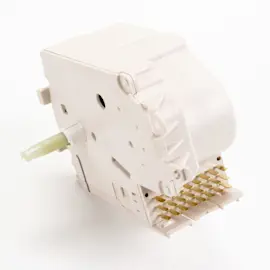
  • G.e. Washer Timer for GE WSM2420D0WW - Part WH12X950

    Washer/dryer control panel diagram

    Timer

    Part #WH12X0950

    Replaced by #WH12X950

    Info Icon
    Manufacturer substitution
    This part replaces WH12X0950. Substitute parts can look different from the original.
    In Stock
    $273.74
    $12.00 OFF Phone Price : $285.74Info Icon
    Minus Item
    Qty
    Plus Item
  • Laundry Center Dryer Lint Screen for GE WSM2420D0WW - Part WE18X25155

    Dryer drum & back panel diagram

    Cvr Lint Scr

    Part #WE18X0056

    Replaced by #WE18X25155

    Info Icon
    Manufacturer substitution
    This part replaces WE18X0056. Substitute parts can look different from the original.
    In Stock
    $148.34
    7% OFF Phone Price : $160.34Info Icon
    Minus Item
    Qty
    Plus Item
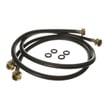
  • Ge Washer Fill Hose, 2-pack for GE WSM2420D0WW - Part WH41X10207

    Washer cabinet & dryer support diagram

    In.hose 4 Ft

    Part #WH41X0058

    Replaced by #WH41X10207

    Info Icon
    Manufacturer substitution
    This part replaces WH41X0058. Substitute parts can look different from the original.
    This item is not returnable
    In Stock
    $24.46
    20% OFF Phone Price : $30.46Info Icon
    Minus Item
    Qty
    Plus Item
  • Seal, Gearca for GE WSM2420D0WW - Part WH08X10012

    Gearcase parts diagram

  • Clip for GE WSM2420D0WW - Part WC36X5084

    Dryer cabinet & motor diagram

    Clip

    In Stock
    $41.09
    Minus Item
    Qty
    Plus Item
  • Drum Hole Pl for GE WSM2420D0WW - Part WH01X10172

    Dryer drum & back panel diagram

  • Screw for GE WSM2420D0WW - Part WH01X10185

    Screw

    In Stock
    $31.10
    Minus Item
    Qty
    Plus Item

GE Washer/Dryer WSM2420D0WW FAQs

GE laundry centers like model WSM2420D0WW do not use a dedicated reset button. To reset the washer or dryer controls, we recommend turning the unit off and resetting power (unplug the cord or switch the breaker off), then restore power and restart the cycle using the control knob or Start button.

How to “reset” the washer and dryer on WSM2420D0WW

Use this simple power reset first; it clears many control glitches.

  • Turn the cycle selector to Off/Stop.
  • Unplug the laundry center (or turn both dryer breakers off if your home has two).
  • Wait 2 to 5 minutes.
  • Restore power.
  • Re-select your cycle and start:
    • Washer: pull the cycle control knob out to start.
    • Dryer: close the door and press Start.

For control locations and normal start/stop operation, use the WSM2420D0WW owner's manual.

If it still will not start after a reset

A “reset” will not fix a no-power or safety-switch issue. These checks match common start conditions for this GE stacked laundry center.

  • Confirm the outlet has power and the cord is firmly plugged in.
  • Check house fuses and circuit breakers (dryers can have two).
  • Make sure the dryer door is fully closed.
  • Make sure the washer lid is closed (it can fill but not spin with the lid open).
  • Verify controls are actually in a running position (washer knob pulled out, dryer Start pressed).

Quick symptom guide

What you see Most likely cause What to check first
Nothing runs No power to unit Breaker(s), fuse(s), outlet
Dryer tumbles but no heat One breaker/fuse tripped Check both breakers/fuses
Washer fills but won’t spin Lid not closed or lid switch issue Lid closure, lid switch

If the washer will not spin even with the lid closed, a failed lid switch can stop the spin circuit; the model-specific replacement is the lid switch WH12X955.

Why it matters

A power reset is a safe first step, but repeated tripped breakers, no-heat conditions, or a washer that will not spin usually points to an electrical supply issue, airflow/heating issue, or a failed safety switch that needs diagnosis.

Last updated: February 2026

The most common issues we see with the GE WSM2420D0WW laundry center are dryer no-heat or overheating, poor drying from airflow restrictions, washer not starting or stopping mid-cycle, and fill or drain problems. Many of these trace back to a few high-wear parts and basic maintenance.

Common symptoms and what usually causes them

  • Dryer runs but no heat: blown thermal fuse, failed thermostat, or restricted venting
  • Dryer takes too long to dry: clogged lint screen, blocked exhaust duct, or weak airflow
  • Washer will not start or won’t spin: lid switch not closing, timer issues, or drive belt wear
  • Washer won’t fill or fills slowly: water valve problem, kinked hoses, or clogged inlet screens
  • Burning smell or very hot cabinet: lint buildup or vent restriction causing overheating

Quick checks we recommend first

  1. Unplug the unit; for gas models, shut off gas (if applicable).
  2. Clean the lint path and confirm the exhaust vent is clear and not crushed.
  3. Verify the washer lid closes firmly and the lid strike aligns with the switch.
  4. Check hot and cold supply valves are fully open; inspect hose screens for debris.
  5. If you’re comfortable testing, use a multimeter to check continuity on safety devices.

Parts that commonly fix these problems

Symptom Common part to check What it does
Dryer no heat Thermal fuse WE4X857 Shuts heat off if the dryer overheats
Dryer overheating Thermostat WE4X856 Regulates dryer temperature
Washer won’t start/spin Lid switch WH12X955 Confirms lid is closed for safe operation
Washer fill issues Water valve WH13X10014 Controls water flow into the washer
Washer won’t agitate/spin Drive belt WE12X93 Transfers motor power to the drive system

Why it matters

On a stacked laundry center like the WSM2420D0WW, airflow and safety interlocks are critical. A clogged vent can cause repeated thermal fuse failures, and a worn lid switch can stop the washer even when everything else is working.

Model-specific help

For your exact troubleshooting steps, wiring diagram references, and access panels, follow the WSM2420D0WW owner’s manual and the WSM2420D0WW installation guide.

Last updated: March 2026

On the GE WSM2420D0WW stacked laundry center, the washer will fill but it will not spin if the lid is open or the load is badly out of balance. Start by confirming the lid is fully closed, then redistribute the load and restart the final spin (see the WSM2420D0WW owner's manual).

Quick checks that fix most “won’t spin” complaints

  • Close the washer lid firmly; the washer will not progress through spin with the lid up.
  • Redistribute the load evenly around the wash basket; then close the lid and restart.
  • Remove a few items if the basket is overloaded; smaller loads spin more consistently.
  • Verify the appliance has power and the controls are set correctly.
  • Make sure the unit is level and stable; excessive vibration can interrupt spinning.

What to check next (in order)

  1. Lid switch operation: If the washer does not “sense” a closed lid, it will not spin. A failed switch is a common cause on top-load designs. Consider inspecting or replacing the lid switch WH12X955.
  2. Drain and hose setup: If water is not draining correctly, the washer may not reach spin. Confirm the drain hose is not kinked or pinched and that the standpipe height is within the installation limits (see the WSM2420D0WW installation guide).
  3. Out-of-balance behavior: Heavy, single items (blankets, rugs) can repeatedly stop spin. Run a smaller, mixed load to confirm.

Symptoms and most likely causes

What you notice Most likely cause Best first action
Fills, agitates, then stops before spin Lid not closed or lid switch not sensing closed Close lid; test/replace lid switch
Starts spin, bangs, then stops Load out of balance or unit not level Redistribute load; level the unit
Clothes are very wet at end Spin never reached full speed Re-run final spin after balancing
Won’t start the cycle at all Power or control setting issue Check outlet, breakers, timer setting

Why it matters

A washer that cannot spin leaves clothes soaking wet and can strain the drive system over time. Fixing simple causes like lid closure, balance, and leveling restores normal spin performance and helps prevent repeat shutdowns.

Last updated: February 2026
Most common symptoms to help you fix your laundry centers

Choose a symptom to see related laundry center repairs.

Main causes: broken dryer drive belt, weak drive motor, binding drum seals…

Main causes: door not fully shut, bad door switch, faulty push-to-start switch, wiring failure, bad drive motor, blown f…

Main causes: blocked exhaust vent, clogged lint screen, bad timer, moisture sensing problems, weak gas valve coils, bad …

Main causes: broken lid switch or lid lock, faulty drive motor, drain system problem, broken drive system components…

Main causes: bad lid switch or lid lock, drive motor failure, broken motor coupler, bad timer, faulty electronic control…

Main causes: clogged drain system, blocked drain hose, bad drain pump…

Main causes: control system failure, broken heating element, bad gas valve coils, gas supply failure, voltage supply pro…

Main causes: unbalanced load, broken suspension springs or shocks, worn snubber ring…

Main causes: lack of water supply, failed lid switch or lid lock, bad water level pressure switch, control system failur…

Most common repair guides to help fix your laundry centers

These step-by-step repair guides will help you safely fix what’s broken on your laundry center.

How to replace a laundry center washer lid lock switch

How to replace a laundry center washer lid lock switch

If the washer fills but won’t start the agitation cycle, the lid lock switch could be defective. …

Repair time and Difficulty

 15 minutes or less
How to replace a laundry center washer timer

How to replace a laundry center washer timer

If the washer doesn't fill, spin or drain, the timer could be the problem. …

Repair time and Difficulty

 15 minutes or less
How to replace a laundry center washer snubber ring

How to replace a laundry center washer snubber ring

If the washer tub bangs the cabinet during the spin cycle even though the load is balanced, you might need to replace th…

Repair time and Difficulty

 15 minutes or less

Effective articles & videos to help repair your laundry centers

Use the advice and tips in these articles and videos to get the most out of your laundry center.

How to get cleaner clothes: 7 laundry tips for whiter whites and better results

How to get cleaner clothes: 7 laundry tips for whiter whites and better results

Tired of dull laundry? These 7 expert tips help you get cleaner clothes, brighten whites, and fix common washer mistakes…

Are DIY appliance repairs safe?

Are DIY appliance repairs safe?

Find out how to stay safe when repairing your appliances.…

Cleaning your appliances after a drinking water advisory

Cleaning your appliances after a drinking water advisory

Find out how to clean and flush household appliances once a boil water advisory is lifted.…

Parts & More

Bottom-Mount Refrigerator
Central Air Conditioner
Chest Freezer
Front-Engine Lawn Tractor
Gas Range
Gas Snowblower
Gas Walk-Behind Mower
Gas Water Heater
Parts
Side-By-Side Refrigerator
Table Saw
Television
Top-Mount Refrigerator
Washer