Owner’s manual
 Error Codes




What is the advantage of a bottom mount fridge?
A bottom-mount refrigerator like Kenmore 59675239404 puts the fresh-food section at a more comfortable height, so you reach everyday items without bending as much; the freezer stays below for bulk frozen storage. For feature details specific to your unit, use the owner's manual.
Key benefits you will notice day to day
- Easier access to frequently used fresh foods (less bending and squatting)
- Better organization for produce, dairy, and leftovers at eye level
- Freezer drawer/bottom compartment is convenient for larger frozen items
- Typically less time with the door open while you grab common items (helps temperature stability)
- Works well for households that use the refrigerator section more than the freezer
Trade-offs to consider
Bottom-mount designs are a great fit for most kitchens, but these are the common compromises:
- You may bend more often for frozen foods
- Freezer drawers can feel heavier when fully loaded
- Some layouts need extra clearance for door swing and pull-out access
Space and clearance quick check (from the manual)
The manual for this model family recommends these minimum clearances for ventilation and door swing:
| Location | Typical minimum clearance |
|---|---|
| Top and back | 1/2 in. (1.25 cm) |
| Hinge side next to a wall | 2 1/2 in. (6.3 cm) |
Why it matters
When fresh food is at eye level, you spend less time searching with the door open. That helps keep temperatures steadier, supports food quality, and can reduce workload on cooling components like the evaporator fan and electronic control.
Last updated: February 2026
What's the average lifespan of a Kenmore refrigerator?
Most Kenmore refrigerators last 10 to 15 years on average. With consistent care (cleaning, good airflow, and fixing small issues early), many units can reach the high end of that range or longer; use the 59675239404 owner's manual for model-specific care and maintenance guidance.
Typical lifespan and what changes it
A refrigerator’s life is mostly determined by how hard the sealed system and cooling airflow have to work day to day.
- Typical lifespan: 10 to 15 years
- Often shorter when: condenser is dirty, doors do not seal, or temperatures are set too cold
- Often longer when: coils are kept clean, doors close tightly, and defrost drainage stays clear
- Big life-shorteners: poor ventilation around the cabinet, frequent power interruptions, and heavy ice buildup
Maintenance that adds years (high impact)
These are the most effective habits for a Kenmore bottom-mount refrigerator like model 59675239404:
- Vacuum and brush condenser coils regularly (dust makes the compressor run hotter and longer).
- Check door gaskets for gaps and clean them so they seal.
- Keep vents inside the fresh food section and freezer unblocked.
- If you see water under the crisper or freezer, clear the drain path; a clogged drain can lead to ice buildup.
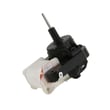
- Replace failed airflow parts promptly; for example, a noisy or stalled evaporator fan can be addressed with the refrigerator evaporator fan motor WPW10128551 when it matches your symptom.
Quick “is it worth repairing?” guide
| If your refrigerator is… | Usually makes sense to… |
|---|---|
| Under 8 years old | Repair most cooling, ice maker, and leak issues |
| 8 to 15 years old | Repair if the fix is moderate and performance is otherwise good |
| Over 15 years old | Repair smaller issues first; weigh major sealed-system costs carefully |
Why it matters
A refrigerator that is struggling (dirty coils, weak airflow, leaking gasket) runs longer cycles, which increases wear on the compressor, control board, and fans. Preventive maintenance reduces run time, stabilizes temperatures, and extends overall service life.
Last updated: February 2026
What does "bottom mount" mean?
A “bottom-mount” refrigerator means the freezer compartment is located on the bottom and the fresh-food (refrigerator) compartment is on top. On Kenmore model 59675239404, this design keeps everyday refrigerated items at eye level while frozen foods stay in the lower drawer.
How a bottom-mount layout is set up
In most bottom-mount refrigerators like Kenmore 59675239404, you will typically see:
- Fresh-food section on top with shelves, door bins, and crispers
- Freezer section on the bottom (usually a pull-out drawer)
- Separate airflow paths to keep refrigerator and freezer temperatures stable
- Door alignment and leveling features to help doors close properly
For the exact feature list and compartment details for your unit, use the owner's manual.
Why people choose bottom-mount refrigerators
Bottom-mount designs are popular because they make the refrigerator section easier to use day to day.
- Less bending to reach milk, produce, and leftovers
- Better visibility for fresh foods (helps reduce waste)
- Freezer storage is still large, just positioned lower
- Often pairs well with crisper and door-bin organization
Quick comparison: bottom-mount vs. top-mount
| Feature | Bottom-mount refrigerator | Top-mount refrigerator |
|---|---|---|
| Fresh-food access | Higher, easier reach | Lower, more bending |
| Freezer access | Lower, more bending | Higher, easier reach |
| Best for | Frequent fresh-food use | Frequent freezer use |
Why it matters for parts and troubleshooting
Knowing your refrigerator is bottom-mount helps when you are diagnosing symptoms and choosing parts because the freezer drawer area commonly houses key cooling components (like the evaporator area and defrost system). If you are tracking a cooling or frost issue, the owner's manual troubleshooting section is the best starting point.
Last updated: February 2026
How do I tell what model Kenmore fridge I have?
To tell what model Kenmore refrigerator you have, we look for the model and serial tag (rating plate) inside the fresh food compartment or freezer, or near the bottom front behind the toe grille. For your refrigerator, the model number format will match 59675239404.
Where to look for the model number tag
Check these common locations first (use a flashlight and look for a sticker or metal plate):
- Inside the refrigerator compartment on a side wall
- Inside the refrigerator compartment behind or near the crisper drawers
- Inside the freezer compartment on a side wall
- Along the door frame (visible when the door is open)
- Behind the bottom toe grille (kick plate) at the front
What the tag looks like and what to write down
The tag usually lists model number and serial number. Write both down exactly as shown.
- Model number: identifies the exact design and parts list
- Serial number: helps match production changes and date codes
- Electrical info: voltage and amperage details (useful for service)
Quick check: model number vs. part number
Use this to avoid ordering the wrong item.
| Item type | Example | What it’s used for |
|---|---|---|
| Model number | 59675239404 | Identifies your refrigerator |
| Part ID | WPW10128551 | Identifies a specific replacement part |
| Part number | W10128551 | Manufacturer number for the part |
Why it matters
Kenmore model numbers can look similar, but internal components (like the electronic control board, ice maker, or water inlet valve) can differ by model. Using the exact model number ensures the parts list and diagrams match your refrigerator.
Helpful next step
Once you find the model number, confirm it against the 59675239404 owner's manual so you know you are using the correct instructions and feature set for your exact unit.
Last updated: February 2026
How to tell if a Kenmore refrigerator compressor is bad?
On your Kenmore 59675239404 bottom-mount refrigerator, a “bad compressor” usually shows up as poor cooling with the unit running a lot, repeated clicking as it tries to start, or the refrigerator not running at all even though power and controls are on. Confirm the basics in the owner's manual first, then narrow it down with a few checks.
Quick symptoms that point to a compressor or start problem
- Refrigerator and freezer both warm, even after 24 hours of run time
- Compressor area clicks every few minutes (start attempt, then stops)
- Compressor is very hot to the touch after repeated start attempts
- You hear fans, but temperatures do not drop
- The refrigerator runs “too much” compared to normal use patterns (warm room, frequent door openings, large food load)
Rule out common non-compressor causes first
The manual calls out several issues that can mimic compressor failure. Check these before assuming the sealed system is bad:
- Verify the outlet works (plug in a lamp) and reset any tripped breaker
- Make sure the temperature control is turned on
- If it is a new install or recently moved, allow a full 24 hours to cool
- Confirm doors close fully and nothing is blocking bins or shelves
- Listen for normal operating sounds (pulsating, hissing, popping, water dripping during defrost)
What to test next (safe, practical checks)
| What you observe | Most likely cause | What we recommend |
|---|---|---|
| Clicking + no cooling | Start device or compressor not starting | Have the start circuit and compressor electrically tested |
| Runs constantly + weak cooling | Low refrigerant, restriction, weak compressor | Check airflow and coils; then sealed-system diagnosis |
| No sound at all | Power/control issue | Verify power, controls, then consider control diagnostics |
Parts that are often involved when cooling is poor
If the compressor is running but cooling is still weak, airflow and defrost issues are common contributors:
- A failed evaporator fan motor can prevent cold air circulation (see refrigerator evaporator fan motor WPW10128551)
- A defrost heater problem can lead to frost buildup and blocked airflow (see refrigerator defrost heater WP12729128)
- A control problem can cause incorrect run behavior (see refrigerator electronic control board WPW10503278)
Why it matters
Replacing a compressor or sealed-system components is a major repair. By first confirming power, controls, door sealing, and airflow, we help you avoid replacing expensive parts when the real issue is a fan, defrost component, or control.
Last updated: February 2026