Installation guide
 Owner’s manual
 Error Codes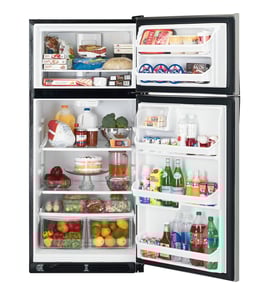



What are the dimensions of a Kenmore refrigerator model 25378889014?
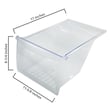
The overall cabinet height, width, and depth for Kenmore refrigerator model 25378889014 are provided in the product specifications section of the 25378889014 owner's manual. For planning a tight fit (cabinet opening, door swing, and moving clearance), we recommend using those published dimensions and then confirming with a quick tape-measure check on your unit.
What we can confirm from the installation information
The 25378889014 installation guide specifies minimum clearances for airflow and installation access:
- Sides and top: 3/8 inch
- Rear: 1 inch
- Keep the toe grille unblocked for proper air circulation
- Room temperatures below 55°F or above 110°F can impair cooling performance
| Clearance area | Minimum clearance |
|---|---|
| Sides and top | 3/8 inch |
| Rear | 1 inch |
How we recommend measuring (so your numbers match real-world fit)
Use the manual dimensions for planning, then verify these points on the refrigerator you have:
- Measure width at the widest point (often the doors)
- Measure height from the floor to the top hinge cover or top of cabinet
- Measure depth two ways: cabinet only, then to the front of handles
- Confirm the unit is level before final fit checks
- Add space for door swing and for pulling the unit out for service
Why it matters
Correct dimensions plus the right clearances help the compressor cool properly, keep doors sealing tightly, and prevent scuffs or damage when sliding the refrigerator into place.
Last updated: January 2026
What are the most common issues with 25378889014?
The most common issues we see with the Kenmore 25378889014 top-mount refrigerator are warm temperatures (especially in the fresh food section), frost buildup on the evaporator cover, water leaking or puddling, door sealing problems, and ice maker failures. Many of these trace back to airflow, defrost, or door gasket conditions.
Common symptoms and what they usually point to
- Fridge warm, freezer OK: restricted airflow, iced-over evaporator, or evaporator fan problem
- Heavy frost on back freezer panel: defrost system issue (heater, thermostat, timer)
- Water under crisper or on floor: clogged/iced defrost drain or door left ajar
- Door not closing or sweating around door: gasket not sealing or door alignment issue
- No ice or small cubes: ice maker issue, fill problem, or temperature too warm
Quick checks we recommend first
- Set temps to typical targets: 0°F freezer, 37°F fresh food.
- Make sure vents are not blocked by food packages.
- Listen for the freezer fan; it should run when the compressor is running.
- Inspect door seals for gaps, tears, or areas that do not grip paper.
- Look for frost patterns: a solid ice sheet behind the freezer panel usually means a defrost problem.
Parts that commonly solve these problems
| Problem area | What fails most often | Example part for this model |
|---|---|---|
| Defrost frost buildup | Heater or defrost thermostat | Refrigerator defrost heater 242044008, refrigerator defrost bi-metal thermostat 5303918202 |
| Warm temps from poor airflow | Evaporator fan motor or blade | Refrigerator evaporator fan motor 241854301, refrigerator evaporator fan blade 5308000010 |
| Door not sealing | Door gasket | Refrigerator gasket 242193213 |
Why it matters
Cooling, defrost, and door sealing work together. If airflow is reduced by frost or a weak evaporator fan, the refrigerator section warms up and the compressor runs longer. A leaking gasket adds moisture, which increases frost and can lead to puddles.
For model-specific operating details and troubleshooting steps, use the owner's manual.
Last updated: March 2026
What is the life expectancy of a top freezer refrigerator?
Most top-freezer (top-mount) refrigerators like Kenmore 25378889014 typically last 10 to 15 years. With consistent basic care (good airflow, clean seals, stable temperatures), many owners reach the upper end of that range.
What affects how long it lasts
- Condenser coil cleanliness: dirty coils make the compressor run hotter and longer
- Door seal condition: air leaks force longer run times and can cause frost issues
- Room temperature: very hot or very cold rooms reduce cooling performance and increase wear
- Leveling and door alignment: helps doors seal correctly and reduces moisture intrusion
- How full it runs and how often doors open: heavier use increases run time
Maintenance that helps you reach 15 years
Use these practical habits as your baseline:
- Keep airflow space around the cabinet (sides/top and rear clearances) per the installation guide.
- Keep the refrigerator level and slightly tilted back so doors close fully.
- Clean and inspect door gaskets; replace if torn, hardened, or no longer sealing.
- Set controls, then wait before making more changes (rapid adjustments can cause temperature swings).
- Keep vents inside the fresh food and freezer sections unblocked.
Quick checklist: normal aging vs. “time to repair”
| What you notice | Often normal | Often worth troubleshooting/repair |
|---|---|---|
| Longer run times in summer | Yes | If it never cycles off |
| Occasional frost after heavy door use | Yes | Thick frost buildup repeatedly |
| Door not sealing evenly | No | Yes (gasket or alignment issue) |
| Warm fridge, cold freezer | No | Yes (airflow, defrost, fan) |
Why it matters
A top-freezer refrigerator is one of the simplest refrigerator designs, so it often lasts longer than more complex styles. Most early failures come from heat stress (poor airflow, dirty coils) or air leaks (worn gaskets), both of which are preventable.
Last updated: January 2026