 Installation guide
 Owner’s manual




Is GE CDT706P2M5S1 considered high end?
Yes. The GE CDT706P2M5S1 is typically considered an upper-tier (high-end) dishwasher within the GE lineup because it is commonly sold under the Café family and is positioned above standard GE models, with more premium design and feature sets.
How to think about “high end” for this model
We classify “high end” by a mix of build, features, and price tier. For the CDT706P2M5S1, the high-end label usually fits when you compare it to entry and mid-range dishwashers.
Common high-end indicators include:
- Quieter operation and more insulation
- More wash options and sensor-driven cycles
- Better rack adjustability and loading flexibility
- More robust drying performance (often tied to a heating system)
- More advanced electronics and user interface
What matters for repairs and parts
Higher-end dishwashers often rely more on electronic controls and specialized wash components. When performance drops, the fix is frequently a specific part rather than a “generic adjustment.”
Parts on this model that commonly relate to premium performance features:
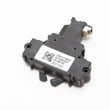
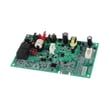
- Machine control board WD21X32163 (cycle logic, power distribution)
- Dishwasher heating element WD05X30818 (water heating and drying support)
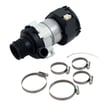
- Dishwasher circulation pump assembly WD26X23258 (wash pressure and spray performance)
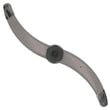
- Dishwasher spray arm, lower WD22X33499 (coverage and cleaning)
Quick comparison: where it sits in the market
| Tier | Typical positioning | What you usually get |
|---|---|---|
| Entry | Basic cleaning at lowest cost | Fewer cycles, louder, simpler racks |
| Mid-range | Best value for most homes | Better racks, quieter, more options |
| Upper-tier (high end) | Premium features without true luxury pricing | Quieter, more sensors, stronger wash and dry, more electronics |
| Luxury | Design-forward, built-in, top pricing | Highest fit/finish, specialized features |
Why it matters
If you are deciding whether it is “high end,” it affects expectations: cycle times can be longer (more sensing and staged washing), and repairs often involve components like the control board, heating circuit, or pump system. For installation and setup details that impact performance (leveling, drain hose routing, electrical requirements), use the installation guide.
Last updated: February 2026
What is the life expectancy of a GE dishwasher?
A GE dishwasher typically lasts 10 to 12 years. With consistent care (good loading habits, regular cleaning, and fixing small leaks early), many units reach 12 to 15 years before major repairs become more common; see maintenance guidance in the owner's manual.
Typical lifespan and what changes it
Most GE dishwashers, including model CDT706P2M5S1, fall into a predictable range based on use and upkeep.
- 10 to 12 years: typical service life for a built-in dishwasher
- 12 to 15 years: common when the tub stays clean, water quality is decent, and issues are addressed early
- 6 to 8 years: common when the unit is heavily used and maintenance is skipped
What usually fails first (and what it looks like)
These are the most common wear items and symptoms we see on dishwashers.
- Drain problems: standing water, slow drain, or humming (often tied to the drain path or pump)
- Poor cleaning: gritty dishes, weak spray, or one rack not washing well (spray arm or circulation issues)
- Drying issues: water left on dishes at end of cycle (heater, venting, or settings)
- Won’t start: door won’t latch, lights on but no run, or intermittent starts
- Leaks: water at the front corners or under the unit (gaskets, hose routing, or door sealing)
Maintenance that extends life the most
These steps reduce strain on the pump, heater, and controls.
- Clean the filter and sump area on a regular schedule (monthly is a good baseline)
- Run a dishwasher cleaner cycle periodically to reduce grease and mineral buildup
- Keep spray arm holes clear; remove debris that blocks jets
- Use the right detergent amount for your water hardness; too much can cause residue
- Avoid overloading; blocked spray patterns shorten pump life and reduce cleaning
Quick “repair vs. replace” guide
Use this as a practical decision check when problems start.
| What you’re seeing | Most likely category | Typical next step |
|---|---|---|
| Not draining | Drain path or drain pump | Check hose routing and pump area |
| Not cleaning | Spray/circulation/diverter | Inspect spray arms and circulation |
| Won’t start | Door latch or controls | Verify latch engagement and power |
| Not drying | Heater/vent/settings | Confirm heated dry options and airflow |
Why it matters
A dishwasher is a water-heating appliance, so keeping water flow, drainage, and sealing in good shape prevents secondary damage (motor strain, heater overwork, and moisture reaching electrical components). Installation details also matter for long-term reliability; the installation guide covers leveling, hose routing, and enclosure requirements.
Last updated: February 2026
What is the most common problem with a GE dishwasher?
For a GE dishwasher like model CDT706P2M5S1, the most common issues we see are won’t start, won’t drain, or poor cleaning. These problems are often caused by a door that is not fully latched, a drain restriction (hose, air gap, disposer plug), or a wash system issue such as a clogged spray arm.
Quick checks that fix many “common problems”
- Confirm the door closes smoothly and latches completely (a misaligned install can prevent a solid latch).
- Cancel the cycle and verify the unit drains; standing water points to a drain restriction.
- Check the drain hose routing for kinks or crushing behind the dishwasher.
- Make sure incoming hot water is in the 120°F to 140°F range for best wash performance.
- Inspect spray arms for blocked holes and free rotation.
- If racks roll forward or the door hits the tub, re-level the dishwasher.
Most common symptoms and what they usually mean
| Symptom | Most common cause | What to check first |
|---|---|---|
| Won’t start | Door not latched or door alignment issue | Latch engagement; door rubbing cabinet/tub; leveling |
| Won’t drain | Drain path blocked | Disposer plug removed; air gap clear; hose not kinked |
| Not cleaning well | Poor water flow or spray issue | Spray arm holes; circulation; water temperature |
| Not drying | Heating issue or low water temp | Water temp; heater operation; cycle selection |
Parts that commonly relate to these problems
If basic checks do not resolve the issue, these model-matched parts are common suspects:
- Door won’t start or stops mid-cycle: GE dishwasher door latch lock WD21X10490
- Poor cleaning (low spray, dead zones): dishwasher spray arm, lower WD22X33499 and dishwasher spray arm, middle WD22X33498
- Not drying or weak heating: dishwasher heating element WD05X30818
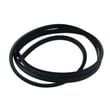
- Drain problems after clearing the hose/air gap: drain pump asm WD19X24829 or dishwasher drain hose WD24X10062
Why it matters
A dishwasher that is not level, has a kinked utility line, or is not getting hot enough water can look like a “bad part” problem. Correct alignment, proper drain routing, and correct water temperature prevent repeat clogs, leaks, and poor wash performance.
Helpful model-specific references
- Leveling, door alignment, wet test, and drain checks are covered in the installation guide.
- If your dishwasher is showing a code, use GE electronic dishwasher error codes to match the symptom to the most likely cause.
Last updated: February 2026





