Owner’s manual
 Error Codes




How to figure out a Whirlpool model?
For Whirlpool model GB2SHDXTS01 (bottom-mount refrigerator), the model and serial number are on the rating label on the right-hand side of the refrigerator interior. Use that exact model number when ordering parts, checking specifications, or following troubleshooting steps in the GB2SHDXTS01 owner's manual.
Where to look on this refrigerator
On the Whirlpool GB2SHDXTS01, check these common spots first:
- Right interior wall of the fresh food compartment (most common for this model)
- Near the crisper drawer area on the side wall
- Along the door opening frame (inside the cabinet)
- Behind a produce drawer or deli drawer edge (label is still on the cabinet wall)
What to write down (and why)
Record the information exactly as shown on the label:
- Model number (example: GB2SHDXTS01)
- Serial number (helps identify production details)
- Any revision or additional characters if shown
Why it matters
The model number ensures you get the correct Whirlpool refrigerator parts that actually fit, such as an ice maker, electronic control board, damper control, or evaporator motor. Even small model differences can change wiring, mounting points, and connector styles.
Quick checklist if the label is hard to read
Try these steps before you assume the label is missing:
- Wipe the label gently with a damp cloth and dry it
- Use a flashlight held at an angle to reduce glare
- Take a close-up photo and zoom in
- Look for a second label on the cabinet wall near the door opening
Model number vs. serial number (at a glance)
| Item | What it tells you | When you need it |
|---|---|---|
| Model number | Exact design and parts fit | Ordering parts, manuals, diagrams |
| Serial number | Production-specific details | Service calls, warranty, some part lookups |
Last updated: February 2026
What's the average lifespan of a Whirlpool refrigerator?
Most Whirlpool refrigerators, including the Whirlpool GB2SHDXTS01 bottom-mount refrigerator, typically last 10 to 18 years with normal household use. Consistent care (clean airflow, good door sealing, and stable temperatures) is what most often separates a 10-year fridge from an 18-year fridge.
What affects lifespan the most
- Condenser cleanliness: Dusty coils make the compressor run hotter and longer.
- Door seal condition: Air leaks force longer run times and can cause frost issues.
- Ventilation and leveling: Poor airflow around the cabinet increases heat load.
- Ice maker and water system upkeep: Mineral buildup and leaks create avoidable wear.
- Temperature settings: Over-cold settings can increase run time and icing.
Quick maintenance checklist (best return for the effort)
- Vacuum and brush the condenser area every 6 to 12 months.
- Keep refrigerator vents inside the cabinet unblocked by food packages.
- Confirm doors close fully and the gasket seals evenly all the way around.
- If you use the ice maker, keep the fill area clear and address slow fills early.
- Follow the cleaning and care steps in the GB2SHDXTS01 owner's manual.
Typical lifespan expectations (what to plan for)
| What you see | What it usually means | What to do next |
|---|---|---|
| Still cooling well at 10+ years | Normal aging | Keep up coil cleaning and gasket checks |
| Warm fridge, freezer OK | Airflow or damper issue | Check vents; consider a damper inspection |
| Frost buildup, noisy fan | Defrost or airflow problem | Inspect for ice blockage; verify door sealing |
| No ice or intermittent ice | Water supply or ice maker wear | Troubleshoot ice maker and fill system |
Why it matters
A refrigerator that runs longer cycles to maintain temperature uses more energy and puts extra stress on sealed-system components. Simple upkeep, especially airflow and door sealing, is the most reliable way to extend service life.
Last updated: February 2026
What is the most common problem with a Whirlpool refrigerator?
Cooling problems are the most common issue we see on Whirlpool refrigerators like model GB2SHDXTS01, usually showing up as warm fresh food, soft ice cream, or long run times. The most frequent causes are restricted airflow (dirty condenser coils, blocked vents), frost buildup from a defrost drain issue, or a failing evaporator fan.
Quick checks we recommend first
- Set temperatures to typical targets: 37°F for the refrigerator and 0°F for the freezer.
- Make sure food packages are not blocking air vents in either compartment.
- Clean the condenser area (dust buildup commonly causes poor cooling and long run times).
- Confirm the doors close and seal fully; gaps let warm, humid air in.
- Listen for the evaporator fan in the freezer; it should run when the compressor is running.
Common symptoms and the most likely causes
| Symptom | Most likely cause | What to check next |
|---|---|---|
| Refrigerator warm, freezer cold | Airflow restriction to fresh food | Damper operation, blocked vents |
| Both sections warm | Dirty condenser, control issue, fan issue | Condenser cleaning, fans, controls |
| Frost on freezer back wall | Defrost problem or airflow issue | Door sealing, drain, fan |
| No ice | Ice maker or water supply issue | Fill tube freezing, shutoff valve, inlet flow |
Parts that commonly fix these problems on GB2SHDXTS01
If basic cleaning and airflow checks do not resolve the issue, these model-matched parts are common next steps:
- Evaporator motor WPW10128551 (fan not running, weak airflow)
- Refrigerator damper control WPW10196393 (freezer cold but fresh food warm)
- Refrigerator electronic control board WPW10503278 (erratic temps, intermittent operation)
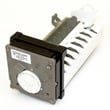
- Whirlpool refrigerator ice maker D7824706Q (no ice or inconsistent ice production)
Why it matters
Cooling and ice maker complaints often start as airflow or maintenance issues, but they can quickly lead to food spoilage, heavy frost, and longer compressor run times. Catching the cause early helps prevent repeat failures and unnecessary part replacements.
Helpful reference
For model-specific troubleshooting steps, control settings, and safety guidance, use the GB2SHDXTS01 owner's manual.
Last updated: February 2026
What are signs of a failing refrigerator?
If your Whirlpool GB2SHDXTS01 bottom-mount refrigerator is failing, you typically notice weak cooling (food spoils faster), heavy frost or ice buildup, water leaks, or the unit running almost constantly. Also watch for new noises that are louder or more frequent than the normal operating sounds.
Common failure symptoms
- Fresh-food section warms up; freezer temperature swings
- Ice cream softens, ice cubes clump, or frost spreads quickly
- Water puddles under the cabinet or water inside the refrigerator
- Runs most of the day and still cannot hold temperature
- Condensation on packages or around door openings
- Clicking, grinding, squealing, or repeated loud rattling
Normal vs. problem symptoms
Some run time and sounds are normal on this model, especially after door openings or adding warm groceries.
| What you notice | Often normal | More likely a problem |
|---|---|---|
| Long run time | Warm room, frequent openings, large food load | Runs constantly and temps rise |
| Sounds | Buzzing when ice maker fills; gurgling in defrost | Repeated clicking, grinding, squeal |
| Frost | Light frost after long door openings | Heavy ice blocking vents |
Fast checks we recommend
- Confirm controls are on; after a major change, allow 24 hours to stabilize.
- Check door sealing; a poor seal causes condensation, frost, and long run times.
- Make sure vents inside are not blocked by food packages.
- If you suspect a fan issue (warm fridge, noisy freezer area), inspect the evaporator fan; the evaporator motor WPW10128551 is the replacement motor used when the fan will not run.
Why it matters
Early symptoms usually point to airflow, door sealing, or fan problems; fixing those quickly protects food and reduces strain on the compressor and electronic controls.
For model-specific operating notes and normal sound descriptions, use the GB2SHDXTS01 owner’s manual.
Last updated: February 2026