 Owner’s manual
 Error Codes



Where is the model number on a Kenmore side by side refrigerator?
On Kenmore side-by-side refrigerator model 59657542791, the model number is on the serial plate inside the fresh food (refrigerator) compartment. On this style, it’s typically on the top left interior wall of the refrigerator section.
Where to look (fast checklist)
- Open the refrigerator (fresh food) door, not the freezer door
- Look along the top left interior wall of the compartment
- Check near the ceiling area above the top shelf
- Look for a sticker or metal plate labeled Model and Serial
- Wipe condensation or smudges off the label so the full number is readable
What the label usually shows
The serial plate normally includes both identifiers. Use the model number for parts lookup and the serial number for production details.
| Item on label | What it’s used for | Example format |
|---|---|---|
| Model number | Finding the correct parts diagrams and parts | 59657542791 |
| Serial number | Identifying production run and date codes | Letters plus numbers (varies) |
Why it matters
Kenmore refrigerators often have similar-looking doors, shelves, and ice maker setups across multiple models. Using the exact model number (like 59657542791) prevents ordering the wrong door bin, water filter, ice maker part, or control component.
Tip for reading it correctly
- Copy the model number exactly as printed (all digits)
- If the label is worn, take a photo and zoom in
- Confirm the number against the identification section in the owner's manual
Last updated: February 2026
What are the most common problems with Kenmore refrigerators?
The most common issues we see on Kenmore refrigerators like model 59657542791 are no power or no cooling, warm temperatures from blocked airflow or frequent door openings, and ice maker or dispenser problems caused by door not sealing, low freezer temperature, or water supply issues. For model-specific checks, use the owner's manual.
Most common symptoms and what usually causes them
- Refrigerator will not run at all: unplugged cord, tripped breaker, blown fuse, controls set to OFF, or the unit is in a defrost cycle.
- Lights do not work: loose bulb, burned-out bulb, or no power to the refrigerator.
- Runs a lot or makes unfamiliar noises: dirty condenser coils, hot room temperature, doors opened often, base grille blocked, or gaskets sticking.
- Temperature too warm or moisture build-up: blocked air vents, doors not closing fully, controls not set correctly, or warm food recently added.
- Ice maker not making ice: ice maker arm in OFF position, freezer not cold enough, water shut-off valve closed, kinked supply line, or water pressure problems.
Quick troubleshooting checklist (in order)
- Confirm power: verify the cord is firmly plugged in and the breaker is on.
- Check control settings: make sure the freezer control is not set to OFF.
- Allow for defrost: if lights work but the compressor and fans are off, wait about 40 minutes to see if it restarts.
- Restore airflow: clear packages away from air vents between the freezer and fresh food sections.
- Fix door sealing issues: remove items blocking the door, and make sure bins and shelves are seated correctly.
What “normal” looks like on this model
| What you notice | Often normal | Often needs attention |
|---|---|---|
| Long run times | Warm room, frequent door openings, large food load | Dirty condenser coils, blocked grille/vents |
| Moisture inside | Doors opened often | Door not closing, vents blocked |
| No ice | First 24 hours after install | Arm OFF, freezer too warm, water valve closed |
Why it matters
Power, airflow, and door sealing drive cooling performance. When vents are blocked or doors do not seal, the compressor runs longer, temperatures rise, and you can also see moisture or frost.
Last updated: February 2026
Can you still get parts for Kenmore refrigerators?
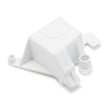
Yes. You can still get replacement parts for Kenmore refrigerators, including model 59657542791, by matching the part to your exact model number and diagram. The quickest way to avoid fit issues is to use the model-based parts lookup and confirm the part description in the owner's manual.
Best way to make sure you order the right part
We recommend using your refrigerator’s model and serial information, then confirming the symptom and the part location.
- Use the full model number 59657542791 (not a partial number)
- Check the symptom first (cooling, ice maker, water dispenser, lights, noise)
- Match the part to the correct section (freezer door, fresh food door, evaporator area, control housing)
- Compare any markings on the old part (sticker numbers, connector style, mounting holes)
- Review safety and access steps before disassembly (power off, water off if applicable)
Common Kenmore refrigerator parts people replace
Even when the exact part list varies by configuration, these are the most frequently replaced items on side-by-side refrigerators:
| Symptom | Common part category | What it affects |
|---|---|---|
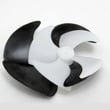
| Not cooling well | Evaporator fan motor, defrost heater, defrost thermostat, control | Airflow and defrosting |
| Ice maker not working | Ice maker assembly, inlet valve, fill tube heater (if equipped) | Ice production and fill |
| Water tastes/odors | Water filter, water lines | Water quality |
| Leaking water | Inlet valve, tubing, door water line fittings | Water delivery |
| Door not sealing | Door gasket, door closer/cam | Frost, temps, energy use |
Why it matters
Kenmore model numbers can look similar, and small design changes affect fit. Using the exact model 59657542791 helps ensure the replacement part matches the wiring connectors, mounting points, and door or cabinet configuration.
Safety notes before you start
Your manual calls out key electrical requirements and grounding. Follow these basics before any repair:
- Plug into a properly grounded outlet; do not remove the grounding prong
- Do not use a 2-prong adapter
- Do not use an extension cord
- Unplug the refrigerator before accessing electrical parts
Last updated: February 2026
How to replace an ice maker in a side by side refrigerator?
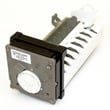
To replace the ice maker in your Kenmore 59657542791 side-by-side refrigerator, we unplug the unit, shut off the water supply, remove the ice bucket, disconnect the ice maker wiring, swap the assembly, then restore power and water and allow 24 to 48 hours for ice production (see the owner's manual).
Safety and prep
- Unplug the refrigerator or switch off the breaker
- Turn off the household water shut-off valve to the refrigerator
- Remove the ice bucket and clear loose cubes from the chute
- Use gloves; freezer sheet metal edges can be sharp
- Keep screws organized so the ice maker mounts squarely
Replacement steps (typical side-by-side procedure)
- Open the freezer door and remove the ice storage bucket.
- Turn the ice maker OFF (raise the shutoff arm if your model uses one).
- Remove the ice maker cover (if present) to access the harness plug.
- Disconnect the wiring harness.
- Remove the mounting screws; support the ice maker as the last screw comes out.
- Position the new ice maker on the mounting points and tighten screws snugly.
- Reconnect the wiring harness and reinstall the cover.
- Reinstall the ice bucket, turn water back on, restore power, and set the ice maker to ON (arm down).
What to expect after installation
The Kenmore 59657542791 manual notes the ice maker starts once the freezer reaches normal temperature.
| Item | Normal expectation |
|---|---|
| First ice after replacement | Up to 24 to 48 hours |
| After first hookup or long non-use | Discard first 3 harvests |
| Stopping ice production | Raise the ice maker arm to OFF |
If it still does not make ice
These checks match the troubleshooting guidance in the manual:
- Confirm the ice maker arm is down (ON)
- Make sure the freezer is cold enough; allow 24 hours after temperature changes
- Verify the water shut-off valve is fully open
- Check the supply line for kinks; copper tubing resists kinking better than plastic
- Correct water pressure issues if flow seems too low or too high
Why it matters
A correct install prevents leaks at the water connection, avoids damage to the shutoff arm (do not force it), and ensures the freezer reaches the temperature needed for consistent ice production.
Last updated: February 2026





