Owner’s manual
 View engine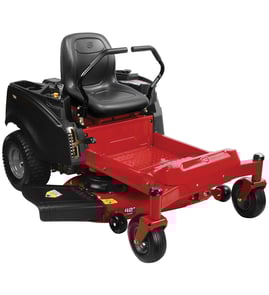



How to identify a lawn mower engine?
On your Craftsman rear-engine riding mower model 536270280, the engine identification numbers are typically stamped on the engine shroud (sheet metal) near the muffler area or on the front of the engine near the air cleaner. Use those stamped numbers to match the correct engine parts and tune-up specs in the 536270280 owner's manual.
Where to look on the engine
Check these common ID locations first (wipe dirt and grass off so the stamp is readable):
- On the sheet metal shroud directly above the muffler (muffler can be on the right or left side)
- On the front of the engine, near the air cleaner housing
- Near the valve cover area or on a flat machined pad on the engine block
- On a sticker or tag near the starter or blower housing (if still present)
What numbers you need (and why)
Most mower engines have multiple identifiers. Recording all of them prevents ordering the wrong carburetor, air filter, or spark plug.
| What to record | What it’s used for | Example of where it helps |
|---|---|---|
| Engine model number | Identifies the engine family | Correct tune-up parts and gaskets |
| Type/spec code | Identifies the exact configuration | Correct carburetor or governor parts |
| Serial number | Production run details | Matching service bulletins and revisions |
Quick tips to get a clean, readable stamp
- Turn the key off and let the engine cool
- Brush off debris; then wipe with a rag and mild cleaner
- Use a flashlight at a low angle to make stamped numbers stand out
- Take a close-up photo; zoom in to read it clearly
Why it matters
Your mower model number (536270280) identifies the tractor, but the engine model/type/serial identifies the engine itself. That is what we use to match engine-specific parts and maintenance specs so the mower starts, runs, and cuts correctly.
Last updated: January 2026
Where to find model number on riding mower?
On the Craftsman riding mower model 536270280, the model and serial numbers are printed on a decal attached to the mower. We use that decal information to match the correct parts list, operator instructions, and maintenance specs in the 536270280 owner's manual.
Common places to check on a riding mower
Look for a sticker or metal tag in areas that stay protected from debris and heat:
- Under the seat or on the underside of the seat pan
- On the frame near the rear wheels
- On the mower deck (often near the rear or left side)
- Near the engine area (shroud or starter housing)
- On the footrest or console support area
What you should write down
The decal typically includes more than one identifier. Record both so we can match parts accurately.
- Model number (for this mower: 536270280)
- Serial number (unique to your unit)
- Date of purchase (helpful for your records)
Quick ID checklist (before ordering parts)
Use this checklist to avoid ordering the wrong belt, switch, or hardware:
- Confirm the model number matches exactly: 536270280
- Copy the serial number exactly as printed
- If the decal is worn, clean it gently and use a flashlight at an angle
- Match the part by function and location (deck, transaxle, steering, electrical)
Why it matters
Craftsman riders can look similar across years, but small differences affect fit. Using the exact model number helps ensure the right items, such as a deck belt, seat switch, or starter solenoid, match your mower’s deck and hydrostatic drive setup.
Model number vs. serial number
| Identifier | What it tells us | Why you need it |
|---|---|---|
| Model number | The design and parts breakdown | Ensures correct part fit |
| Serial number | The specific unit build | Helps confirm production variations |
Last updated: January 2026
How old is my mower by serial number?
On a Craftsman rear-engine riding mower model 536270280, the serial number can often be decoded to estimate the build date, but the format varies by manufacturer and production run. We recommend matching your serial number format to the identification section in the 536270280 owner's manual to pinpoint the month and year.
Where to find the serial number
Most riding mowers place the model and serial information on a label or plate in one of these spots:
- Under the seat pan (lift the seat and look on the frame)
- On the rear frame near the transaxle
- On the mower deck housing (top surface)
- Near the footrest area or console support
How to decode the serial number (common patterns)
Serial numbers are not universal, but these patterns are common on riding mowers and their major components:
- Date code embedded early in the serial: often looks like YYMMDD or MMDDYY
- Year and week format: YYWW (year, then production week)
- Julian date format: a 3-digit day-of-year plus a year digit (common on some engines)
- Separate engine date code: the engine (often Briggs & Stratton) may have its own build code that differs from the mower’s build date
Quick check table
| What you see in the serial | Most likely meaning | What you can estimate |
|---|---|---|
| 6 digits like 230615 | YYMMDD or MMDDYY | Exact day (once format is confirmed) |
| 4 digits like 2310 | YYWW | Year and production week |
| Letters plus 4-6 digits | Plant/line + date segment | Month/year after matching the format |
Tips to avoid common mistakes
- Use the mower serial number for mower age; the engine code can be different.
- If two date formats seem possible, confirm using the manual’s ID guidance so you do not swap month and day.
- If the label is worn, take a photo and write down every character; one digit off changes the date.
Why it matters
Knowing the build date helps us match the correct parts and diagrams for your Craftsman 536270280, especially for wear items like the lawn tractor deck belt 37X111MA and safety components.
Last updated: January 2026
Is it worth replacing a lawn mower engine?
Replacing the engine on your Craftsman rear-engine riding mower model 536270280 is worth it when the mower’s deck, transaxle, and steering are still solid and the total engine swap cost stays under about half the price of a comparable new mower. If multiple major systems are worn out, replacement usually makes more sense.
Quick decision checklist
- The mower still drives well (no slipping, grinding, or leaking at the transaxle)
- The deck cuts evenly and the housing is not rusted through
- You can do basic maintenance safely (spark plug wire off, engine stopped)
- The engine problem is truly internal (low compression, heavy smoke, thrown rod)
- The engine replacement cost (parts plus labor) is under ~50% of a new mower
What to inspect before you spend money
Use the same safety approach described in the 536270280 owner’s manual before inspecting or servicing anything: stop the engine, wait for all movement to stop, and disconnect the spark plug wire.
Focus on these areas:
- Deck and belt system: poor cut quality is often belt or blade related, not engine related
- Brake and safety systems: the manual calls out checking brake operation frequently
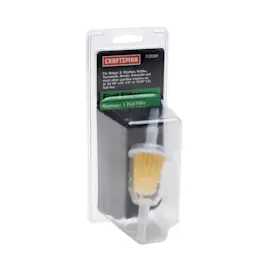
- Fuel system condition: stale fuel and dirty filters can mimic “bad engine” symptoms
- Electrical starting system: a no-start can be a fuse, wiring, or solenoid issue
Cost comparison (typical)
| Option | Best when | Typical outcome |
|---|---|---|
| Tune-up and fuel service | Engine cranks but runs poorly | Lowest cost, often restores power |
| Short block or engine rebuild | Chassis is excellent and you want a project | Moderate cost, more labor |
| Full engine replacement | Engine is failed but mower is otherwise strong | Highest cost, fastest “like new” engine |
| Replace mower | Multiple major systems are worn | Best long-term value |
Parts that commonly get mistaken for “engine failure”
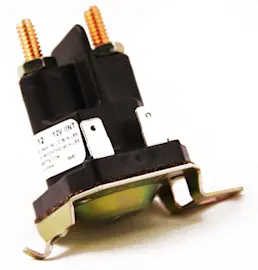
If the engine clicks or won’t crank, the starting circuit is a common culprit. For this model, a frequent replacement item is the solenoid 7701100MA.
Also, if cut quality drops, the manual notes replacing the mower drive belt if performance does not improve after checks; for this model that can involve the lawn tractor deck belt 37X111MA.
Why it matters
An engine swap only pays off when the rest of the mower is dependable. If the deck, drive system, and safety controls are already near end-of-life, a new engine can leave you with a mower that still needs major repairs soon after.
Last updated: January 2026