


Where is the model number on a Craftsman tiller?
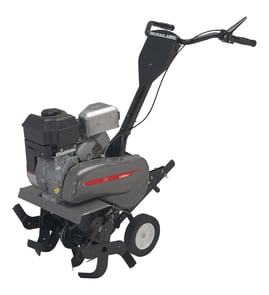
On a Craftsman tiller like model 917298541, the model number is printed on an ID label or stamped plate on the machine frame. Most commonly, we see it on the tine shield (tine guard) area or near the engine and fuel tank.
Common places to check first
Look for a sticker, metal tag, or stamped numbers in these spots:
- On the tine shield/tine guard, usually above or behind the tines
- On the main frame rail near the engine mount
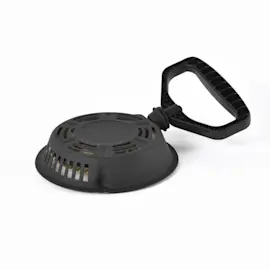
- Near the fuel tank or recoil starter housing area
- On the front of the unit (especially on larger or older designs)
- Around the handle support brackets where the handles bolt to the frame
How to find it quickly (and make it readable)
Dirt and oil often hide the label. This quick process usually works:
- Turn the engine off and let it cool completely
- Brush off loose soil around the tine guard and frame
- Wipe the area with a rag and mild degreaser
- Use a flashlight at a low angle to spot stamped characters
- Take a photo and zoom in to confirm each digit
What the label usually shows
Most Craftsman tiller ID labels include more than one identifier.
| Label item | What it’s used for |
|---|---|
| Model number | Matching the correct parts diagrams |
| Serial number | Identifying production run details |
| Engine info | Finding engine-specific tune-up parts |
Why it matters
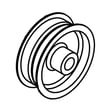
Using the exact model number (for example, 917298541) prevents ordering the wrong belts, sheaves, springs, and hardware. Once you confirm it, you can match parts precisely, such as the tiller engine sheave 592642101 or small hardware like the gripco nut 596322601.
Last updated: February 2026
How often should I change the oil in my tiller?
For the Craftsman 917298541 5-hp compact tiller, we recommend changing the engine oil after the first few hours of break-in on a new or newly rebuilt engine, then about every 25 to 50 hours of use or at least once per season (once a year), whichever comes first.
A practical oil-change schedule
Use this schedule if you do not have the exact maintenance chart for your engine:
- New engine or fresh rebuild: change oil after 5 hours
- Normal use: change oil every 50 hours or once per season
- Dusty soil, high heat, heavy tilling: change oil every 25 hours
- Infrequent use: change oil at the start of the season if the oil is old or dark
Quick checks that tell you it is time
Oil condition matters as much as hours. Change the oil if you notice any of these:
- Oil looks dark, gritty, or smells burnt
- Oil level keeps dropping (possible consumption or leak)
- Engine runs hotter than normal or surges under load
- You see metallic shimmer in the oil (wear indicator)
What you need and what to do (high level)
Before servicing, let the engine cool and prevent accidental starting.
- Park on level ground; clean dirt around the fill and drain areas
- Drain warm oil into an approved container
- Refill with the correct oil type and amount for your engine
- Run the engine briefly, then recheck level and top off if needed
Common oil types by temperature (typical small-engine guidance)
| Outdoor temperature | Typical oil choice |
|---|---|
| Above 40°F | SAE 30 |
| 0°F to 100°F | 10W-30 |
| Below 0°F | 5W-30 synthetic |
Why it matters
Fresh oil protects the crankshaft, piston, and bearings from wear and overheating. On a front-tine tiller, dirty oil shows up fast because the engine works hard in dusty conditions.
If you are also doing seasonal maintenance, it is a good time to inspect and tighten hardware such as the gripco nut 596322601 so vibration does not loosen critical fasteners.
Last updated: February 2026
What would cause a tiller to not start?
A Craftsman 917298541 5-hp compact tiller usually will not start because it is not getting fuel, not getting spark, or it is not getting enough air. Start by confirming fresh fuel and correct choke position, then test for spark and check for fuel flow to the carburetor.
Quick checks (fastest wins)
- Turn the fuel valve to ON (if equipped) and confirm fuel is fresh (older than 30 days can cause hard starting).
- Set the choke fully ON for a cold start; move to RUN as the engine warms.
- Make sure the throttle is set to START or FAST (if your control panel has that setting).
- Verify the spark plug wire is firmly seated on the plug.
- Check the air filter; a clogged filter can choke the engine.
Spark vs. fuel: how to narrow it down
Use this simple split test to identify the most likely cause.
| What you observe | Most likely issue | What to do next |
|---|---|---|
| No spark at the plug | Ignition problem (coil, kill switch wiring, plug) | Inspect plug condition and test ignition coil output |
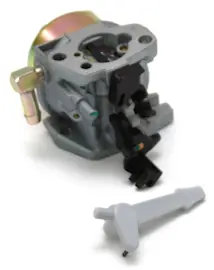
| Spark is strong but plug stays dry | Fuel delivery problem (fuel line, carburetor) | Check fuel line flow and carburetor bowl/jet passages |
| Spark is strong but plug is wet | Flooding or choke stuck | Open choke, hold throttle open, dry/replace plug |
Common causes on small tiller engines
- Old fuel or water in fuel (especially after storage)
- Dirty carburetor jets or stuck float needle
- Cracked fuel line or blocked fuel cap vent
- Fouled spark plug or weak ignition coil
- Safety/stop switch or wiring shorting to ground
Why it matters
Repeated no-start attempts can flood the engine, foul the spark plug, and wash oil off the cylinder wall, which makes starting even harder. A quick spark and fuel-flow check prevents unnecessary parts replacement.
Parts that can be involved
If you find a loose or missing fastener while inspecting linkages and controls, replace it with the correct hardware for this model, such as the gripco nut 596322601.
Last updated: February 2026
What kind of engine is on a Craftsman tiller?
For the Craftsman 917298541 5-hp compact (front-tine) tiller, the engine type depends on the specific engine installed on your unit; this model family was commonly paired with a small gasoline, 4-cycle (4-stroke) horizontal-shaft engine in the 5 HP class.
How to identify the exact engine on your tiller
Check the engine itself (not the tiller frame tag). The engine brand and model are usually printed on a decal or stamped into the blower housing.
- Look for an engine label near the recoil starter, air filter cover, or fuel tank
- Record the engine brand (often Briggs & Stratton, Tecumseh, or similar)
- Record the engine model and type code (this is what you need for engine-specific parts)
- Note whether it is OHV (overhead valve) or a flathead design
- Confirm fuel type: gasoline (most common for this Craftsman tiller)
What “5 HP compact tiller” typically means
Most 5 HP-class front-tine tillers use a simple, durable engine setup designed for steady torque at lower speeds.
| Item | Typical for this tiller type | What you should verify on your unit |
|---|---|---|
| Engine cycle | 4-cycle gasoline | Label says 4-cycle or 4-stroke |
| Shaft orientation | Horizontal shaft | Pulley/sheave mounts to a side shaft |
| Starting | Recoil pull start | Presence of starter rope housing |
| Maintenance | Oil changes required | Dipstick or oil fill plug present |
Why it matters
The exact engine model determines the correct tune-up parts (spark plug, air filter, carburetor parts) and drive components. For example, the belt and pulley system relies on the correct engine-mounted sheave size and fit.
Parts on this model page that relate to the engine drive
If your issue is slipping, squealing, or no tine movement, these parts are commonly involved:
- Tiller engine sheave 592642101 (engine pulley that drives the belt)
- Gripco nut 596322601 (fastener used in assemblies that can loosen over time)
- Spring 583731801 (spring tension can affect engagement depending on location)
Last updated: February 2026
Are Craftsman tillers any good?
Craftsman tillers are a solid choice for typical home garden work; they are known for strong digging performance and good value when maintained. Like any tiller, long-term satisfaction depends on matching the machine to your soil conditions and keeping wear items adjusted and replaced as needed.
What you can expect from a Craftsman tiller
- Good power for the size: Many Craftsman compact tillers handle established garden beds and moderately compacted soil well.
- Parts support: Routine hardware and drive components are serviceable, which helps extend the life of the tiller.
- Best fit: They perform best when you avoid forcing the tines through roots, large rocks, or heavily packed clay in one pass.
Common complaints (and what usually causes them)
Some owners report issues that come down to setup, wear, or operating technique:
- Handle vibration or flex from loose fasteners
- Premature wear when belts or pulleys are misaligned
- Hardware loosening over time from vibration
- Tines not behaving as expected when the drive system is worn or out of adjustment
Quick maintenance checklist (keeps performance high)
- Re-tighten external fasteners after the first few uses and periodically after that.
- Inspect the drive system for wobble, rubbing, or misalignment.
- Replace worn hardware instead of reusing distorted nuts or retainers.
- Keep the engine at proper operating speed while tilling; lugging increases stress.
- Till in shallow passes first, then go deeper.
Helpful parts for vibration and drive issues (model 917298541)
| Symptom | What to check | Example part on this model page |
|---|---|---|
| Rattling, loosening fasteners | Missing or worn locking hardware | Gripco nut 596322601 |
| Drive slip or inconsistent tine action | Pulley/sheave wear or damage | Tiller engine sheave 592642101 |
| Pins/retainers not holding securely | Retainer fatigue or deformation | Spring retainer 532003146 |
Why it matters
A front-tine tiller like the Craftsman 917298541 (5-hp compact tiller) relies on a tight, aligned drive system and secure hardware. When small parts loosen or wear, you feel it immediately as vibration, slipping, or reduced digging performance.
Last updated: February 2026