Owner’s manual


Does my Kenmore Elite washing machine have a filter?
Yes. Your Kenmore Elite washer model 11045087404 uses a drain pump clean-out (often called a pump filter or coin trap) that catches lint and small items before they reach the pump; cleaning it helps prevent no-drain problems and leaks. For model-specific access steps, use the 11045087404 owner's manual.
Where the “filter” is on this washer
On most Kenmore Elite front-load designs like 11045087404, the clean-out is part of the drain system near the bottom front of the cabinet, close to the drain pump.
Common signs it needs cleaning:
- Washer will not drain or drains slowly
- Standing water left in the drum
- Rattling or grinding during drain
- Musty odor from trapped debris
- Small leaks at the front bottom area
How we recommend cleaning it (safe, basic method)
Before opening any drain clean-out, plan for water.
- Unplug the washer (or switch off the breaker)
- Place towels and a shallow pan under the front lower area
- Open the access panel (if equipped) and locate the clean-out cap
- Turn the cap slowly to let water drain in a controlled way
- Remove lint, coins, hair pins, and sock debris; rinse the cap and cavity
- Reinstall the cap firmly (hand-tight) and run a quick rinse/drain to check for leaks
Parts that are commonly involved if it still will not drain
If cleaning the clean-out does not restore draining, the issue is usually in the pump or hoses.
| Symptom | Most likely area | What we check next |
|---|---|---|
| Hums but will not drain | Pump jam or failed pump | Inspect/replace pump 280187 |
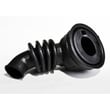
| Drains slowly | Partial blockage | Check washer tub-to-pump hose WPW10467168 for clogs |
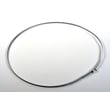
| Leaks after service | Loose or weak clamp | Refit/replace clamp WP285655 |
Why it matters
A clogged pump clean-out can mimic bigger failures, trigger drain-related errors, and strain the drain pump. Regular clean-out cleaning is one of the simplest ways to extend pump life and prevent water left in the drum.
Last updated: February 2026
How to force a Kenmore Elite washer to drain?
To force-drain a Kenmore Elite washer model 11045087404, we use the control-panel manual drain: press PAUSE/CANCEL once, choose DRAIN & SPIN, then press and hold START for about 1 second to begin draining. When the spin finishes, the door unlocks.
Fast steps (manual drain)
- Press PAUSE/CANCEL once.
- Turn/select DRAIN & SPIN.
- Press and hold START (about 1 second).
- Wait for the cycle to complete; the door unlocks after the spin.
- If the door stays locked, let the washer finish draining; high water level or hot water can delay unlocking.
If it still will not drain
These checks fix the most common “won’t drain” causes on front-load Kenmore washers.
- Make sure the drain hose is not kinked, crushed, or shoved too far into the standpipe.
- Confirm the standpipe or laundry tub has an air gap (hose secure but not airtight).
- Check for a clog in the tub-to-pump path; a blocked hose can stop draining.
- If you hear the pump humming but water does not move, the drain pump may be jammed or failing.
Parts that commonly affect draining (for 11045087404)
| Symptom | Most likely area | Model-matched part to consider |
|---|---|---|
| No drain, pump silent | Drain pump not running | Pump 280187 |
| Slow drain, intermittent drain | Restriction between tub and pump | Washer tub-to-pump hose WPW10467168 |
| Leak at hose connection | Loose or weak clamp | Clamp WP285655 |
Why it matters
A washer that cannot drain usually cannot complete the spin, which leaves clothes soaking wet and can trigger longer cycle times. Correct drain-hose routing also helps prevent backflow and floor leaks.
For control details and cycle behavior, follow the steps in the 11045087404 owner's manual.
Last updated: February 2026
How to hard reset kenmore washer?
For the Kenmore Elite washer model 11045087404, the most reliable “hard reset” is a control power-down: press PAUSE/CANCEL twice to end the cycle, then unplug the washer for 1 minute and restore power. This clears many control glitches and lets you restart cleanly.
Reset options that work on this model
Use these in order; they match how the controls are designed to stop, restart, and recover.
- Cancel and restart a cycle: press PAUSE/CANCEL twice, choose a new cycle, then press and hold START for about 1 second.
- Power cycle reset: unplug (or switch off the breaker) for 1 minute, then plug back in.
- Clear a stuck cycle safely: press PAUSE/CANCEL twice; if water is hot or high, the washer may drain before the door unlocks.
- Manual drain reset (if it will not unlock): press PAUSE/CANCEL once, select DRAIN & SPIN, then press and hold START for about 1 second.
- After a reset: run a quick rinse or a normal cycle empty to confirm fill, tumble, drain, and spin all respond.
Step-by-step: “hard reset” (recommended)
- Press PAUSE/CANCEL twice.
- Unplug the washer for 1 minute.
- Plug it back in.
- Select a cycle and press and hold START for about 1 second.
For button names and cycle behavior specific to this washer, follow the 11045087404 owner's manual.
If the washer shows an error or will not fill/drain
A reset helps, but repeated errors usually point to a fill or drain problem.
| Symptom after reset | What to check first | Common related part on this model |
|---|---|---|
| Will not drain, water stays in tub | Drain path, clogs, pump operation | Pump 280187 |
| “No fill” or slow fill | Faucets fully open, inlet screens, kinked hoses | Flow meter (if equipped) |
| Door will not lock/unlock normally | Door latch alignment, lock mechanism | Washer door lock assembly |
Why it matters
Resetting the control the right way prevents unnecessary part replacement and protects the door lock system. If the washer must drain before unlocking, forcing the door can create a bigger repair.
Last updated: February 2026
What is the UL code on the Kenmore Elite Oasis HE washer?
The UL code on a Kenmore Elite washer indicates the washer detected an unbalanced load and stopped or limited the spin to prevent excessive vibration. On model 11045087404, correcting load balance and making sure the washer is properly leveled usually clears the code; see the 11045087404 owner's manual for model-specific steps.
What to do first (quick fixes)
- Press Pause/Cancel to stop the cycle, then wait for the drum to settle.
- Redistribute items evenly; wash one bulky item (blanket, comforter) with a few towels.
- Remove a few items if the drum is tightly packed.
- Check that the washer sits solidly on the floor; adjust leveling feet until it does not rock.
- Run a Rinse/Spin cycle to confirm it can reach high spin without shaking.
Leveling and installation checks
A front-load washer that is even slightly out of level can trigger repeated unbalance events during ramp-up to high spin.
- Confirm the washer is on a firm floor (weak flooring can amplify vibration).
- Verify all four feet contact the floor; tighten the lock nuts after leveling.
- If the washer was recently moved, confirm it was reinstalled following the 11045087404 owner's manual.
When it points to a worn part
If the load is balanced and the washer is level but UL keeps returning, vibration control or drive components can be involved.
| Symptom during spin | Most likely area to inspect | Example part for this model |
|---|---|---|
| Loud thumping, tub “bouncing” | Suspension support | Washer suspension spring set W10135004 |
| Squeal, burning rubber smell, weak spin | Belt and pulley | Washer drive belt WPW10388414 and washer drive pulley WP8182650 |
Why it matters
Repeated unbalanced spinning increases wear on the suspension, belt, and tub components, and it can lead to leaks or a no-spin condition over time.
Last updated: February 2026
What is the average lifespan of a Kenmore washer?
A Kenmore washer typically lasts 10 to 15 years. For the Kenmore Elite washer model 11045087404, regular care (cleaning, correct loading, and hose checks) helps you reach the high end of that range; heavy use and poor maintenance shorten it.
Typical lifespan and what affects it
Most washers land in the same general window, but real-world life depends on how hard the machine works and how well it is maintained.
- Loads per week: more cycles equals faster wear on bearings, pump, and belt
- Overloading: increases strain on the drive system and suspension
- Water quality: hard water speeds buildup in the tub and dispenser areas
- Ventilation and door habits: leaving the door ajar helps reduce odor and boot wear
- Preventive maintenance: simple cleaning and inspections prevent small issues from becoming big repairs
What to maintain on model 11045087404
Use the maintenance and care steps in the 11045087404 owner's manual to keep performance steady over time.
| Maintenance item | How often | Why it matters |
|---|---|---|
| Clean washer interior and dispenser areas | Monthly | Reduces odor, residue, and buildup that can affect washing and draining |
| Inspect water inlet hoses | Every 6 to 12 months | Prevents leaks and flow problems |
| Check for slow draining and unusual noise | As needed | Catches pump or hose restrictions early |
| Keep door seal area wiped and dry | Weekly | Helps protect the door boot from grime and mildew |
Repair vs. replace: a practical rule
When a washer is 10+ years old, we typically recommend comparing repair cost to replacement value.
- If the washer won’t drain, check for clogs first; a failing drain system often points to the pump 280187 or a restricted hose.
- If the washer won’t spin or slips under load, the drive system may be involved (belt and pulley wear are common on many front-load designs).
- If you see water leaks at the door, the door boot is a frequent wear item.
Why it matters
Knowing the expected lifespan helps you plan maintenance, avoid surprise breakdowns, and decide when replacing a high-wear part (like a pump or door boot) makes sense versus investing in a major repair.
Last updated: February 2026
What model is my Kenmore Elite washer?
Your Kenmore Elite washer’s model number is printed on a rating label attached to the washer cabinet. On Kenmore front-load washers like model 11045087404, the label is most often in the door opening (door jamb) or just behind the door.
Where to look first (fastest checks)
- Open the washer door and check the door jamb (the frame area the door closes against)
- Look just inside the door opening on the front panel
- Check the side of the cabinet near the bottom front
- If your unit is installed tight in a closet, use a flashlight and look along the front edges of the cabinet
What the model number looks like
For this Kenmore Elite front-load platform, the model number is typically a 3-digit prefix plus a longer number. Examples you may see:
| What you see on the label | What it means |
|---|---|
| 110.45087404 | Full model number format (with dot) |
| 11045087404 | Same model number without the dot |
| 110.45085$ / 110.45085X | Model family reference; the last digit can vary by color |
Why it matters
We use the exact model number to match the correct parts and diagrams for your washer. Even one digit off can change fit and function for items like the drain pump, door boot, or door lock.
After you find it
- Write the model number exactly as shown (include the dot if present)
- Take a clear photo of the label for future reference
- Use the model number to confirm parts such as the pump 280187 or the washer door lock assembly WP8182634
- For label location diagrams and model identification tips, check the 11045087404 owner's manual
Last updated: February 2026
When was Kenmore Elite made?
Kenmore Elite is a premium Kenmore product line that has been produced across multiple years (not a single “made in” year). For your Kenmore Elite washer model 11045087404, the exact manufacture date is typically tied to the unit’s serial number; we use the 11045087404 owner's manual to confirm where to find that information.
How to find the manufacture date on your washer
Most Kenmore Elite washers use the serial number to encode the production date. Check these common locations first:
- Door opening area (around the door frame) on a model and serial tag
- Behind the door on the cabinet front
- Rear panel label
- Inside the lower access panel area
Once you have the serial number, match it to the date-code format described in the 11045087404 owner's manual.
Kenmore Elite timeline (what “made” usually means)
“Kenmore Elite” refers to a higher-end tier within the Kenmore brand, not a single model year. Different Kenmore Elite washers were sold in different eras, and the same model family can span multiple years.
Quick clarification table
| Term customers use | What it usually means | Best way to confirm |
|---|---|---|
| “When was Kenmore Elite made?” | When the Elite line existed | Identify the specific model number and era |
| “When was my washer made?” | Your unit’s build date | Decode the serial number |
| “When was this model sold?” | Retail sales window | Compare model number to documentation and parts history |
Why it matters
Knowing the build date helps us choose the right replacement parts (like a drain pump 280187 or a door seal washer door boot WP8182119) and prevents ordering parts that look similar but fit different production runs.
Last updated: February 2026
Why is my Kenmore Elite washer leaking water from the bottom?
A bottom leak on your Kenmore Elite washer model 11045087404 almost always comes from a drain or seal point: the drain pump area, a loose or split hose, or the door boot letting water run down the front and drip underneath. Start by checking for simple clamp and hose issues before replacing parts.
Quick checks (fastest wins)
- Unplug the washer and turn off both water supply valves.
- Pull the washer forward and look for a wet trail to identify the leak side (front, left, right, or center).
- Check the drain hose height and routing; the drain outlet should be no higher than 96 in. above the floor (a bad setup can contribute to water issues). See the 11045087404 owner's manual.
- Look for detergent oversudsing; excess suds can push water out of places it normally would not.
- Confirm household plumbing is not the source (standpipe, laundry tub, supply hoses, shutoff valves).
Most common leak sources from the bottom
| Where you see water | Likely cause | What to do next |
|---|---|---|
| Center/bottom, especially during drain | Drain pump or pump seal | Inspect and replace the pump 280187 if it’s seeping or noisy |
| Left or right underside | Tub-to-pump hose split or loose | Inspect the washer tub-to-pump hose WPW10467168 and tighten/replace the clamp WP285655 |
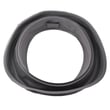
| Front, then dripping underneath | Door boot torn, warped, or debris on sealing lip | Inspect and replace the washer door boot WP8182119 if damaged |
| Front corner near door | Door not latching tightly | Check door strike alignment; replace the washer door strike WP8181651 if cracked |
Why it matters
A leak from the bottom can damage flooring and can also lead to drain problems later. The manual also notes that water near the washer can come from household plumbing leaks, so ruling that out early prevents unnecessary part replacement. See the 11045087404 owner's manual.
When replacement is the right call
Replace parts when you find any of these conditions:
- Pump housing shows mineral tracks, cracks, or active dripping
- Hose is soft, swollen, split, or rubbing the cabinet
- Clamp is rusted, distorted, or will not tighten evenly
- Door boot has a tear, pinhole, or hardened sealing edge
Last updated: February 2026