Owner’s manual
 Error Codes


What is the life expectancy of a bottom freezer refrigerator?
A bottom-freezer refrigerator like the Jenn-Air JFI2089AES2 typically lasts 10 to 15 years. With consistent care (good airflow, clean coils, tight door seals, and stable temperatures), it’s common to reach the upper end of that range.
Typical lifespan and what affects it
Most bottom-mount refrigerators land in a predictable window; the biggest differences come from usage and maintenance.
- 10 to 15 years is the typical service life for this style
- Heavy use (frequent door openings, warm garage installs) shortens life
- Poor airflow and dirty condenser areas increase compressor run time
- Worn door gaskets cause temperature swings and moisture issues
- Power issues (tripped breakers, weak outlets) can stress electronics
Quick maintenance checklist (high impact)
These habits help the sealed system and fans run more efficiently.
- Keep vents inside the fresh food and freezer sections unblocked
- Set realistic temps (avoid running “coldest” all the time)
- Clean dust from the condenser area periodically
- Confirm doors close fully and seals make full contact
- After moving or installing, allow 24 hours to cool completely
What “normal” operation looks like
Your refrigerator may run longer than older models because it uses a high-efficiency compressor and fans. This is especially true when the room is warm, you add a large food load, or doors are opened often.
| What you notice | Usually normal | Often needs attention |
|---|---|---|
| Compressor runs a lot | Warm room, frequent openings, heavy load | Runs constantly and temps are unsafe |
| Noises (buzzing, hissing, pulsating) | Water valve fill, refrigerant flow, fan/compressor changes | Loud grinding, repeated clicking, burning smell |
Why it matters
Knowing the expected lifespan helps you decide when to maintain versus repair. If your JFI2089AES2 is approaching 10 to 15 years and cooling performance is slipping, start with airflow, cleaning, and seal checks before replacing major components.
For model-specific use and care guidance, follow the owner's manual.
Last updated: February 2026
Are bottom mount fridges better?
A bottom-mount refrigerator like the Jenn-Air JFI2089AES2 is better for many households because the fresh-food section sits at eye level, so you reach everyday items with less bending. It is a practical layout if you use the refrigerator compartment more often than the freezer.
What “better” usually means with bottom-mount designs
Bottom-mount models tend to feel more convenient day to day because the refrigerator compartment is the most accessible.
Common advantages
- Fresh food is easier to see and grab (less crouching).
- Wide refrigerator shelves make organizing groceries simpler.
- Freezer drawer can hold bulky frozen items in a deep bin.
- Doors typically seal well when the cabinet is leveled correctly.
Common tradeoffs
- You bend more to access freezer items.
- Freezer drawers can feel heavy when fully loaded.
- Door alignment and leveling matter for smooth closing and sealing.
Quick comparison: bottom-mount vs top-freezer
| Feature | Bottom-mount | Top-freezer |
|---|---|---|
| Most-used items | Easier access | More bending for fresh food |
| Freezer access | More bending | Easier access |
| Storage style | Freezer drawer | Freezer shelf/bin |
| Best fit for | Fresh-food focused households | Frozen-food focused households |
Why leveling and door swing matter (especially on this style)
On the JFI2089AES2, proper installation clearances and leveling help the doors close easily and keep a consistent seal. The manual calls for ventilation space at the top and behind the refrigerator, extra space for water line connections if equipped with an ice maker, and clearance next to a fixed wall so the door can swing open.
What we recommend checking
- Leave about 1/2 inch of space at the top and behind for ventilation.
- If you have an ice maker, leave extra room behind for the water line.
- If installed next to a fixed wall, leave about 2 3/4 inches so the door can swing.
- Level the cabinet so doors close smoothly (tilting slightly to the rear often helps).
- Avoid installing near heat sources; keep the room temperature above 55°F.
For the exact steps and diagrams for leveling, hinges, and door alignment, use the owner's manual.
Why it matters
A bottom-mount layout improves everyday ergonomics, but it only feels “better” if the refrigerator is installed with the right clearances and leveled so the doors seal and close properly. That protects food temperatures, reduces run time, and helps prevent moisture issues.
Last updated: February 2026
What are the disadvantages of a bottom freezer refrigerator?
Bottom-freezer refrigerators like the Jenn-Air JFI2089AES2 keep fresh food at eye level, but the tradeoff is that frozen items sit low in a pull-out drawer. That can mean more bending, heavier drawer loads, and more wear on drawer slides and door seals over time.
Common disadvantages (what owners notice most)
- More bending for frozen foods: you access the freezer from a low drawer, which is less convenient if you use frozen items daily.
- Heavier, bulkier freezer drawer: a fully loaded drawer can feel heavy and can stress glides/rollers if it is slammed or overloaded.
- Less “quick grab” organization: stacked bins can hide items; you may need to lift baskets to reach food at the bottom.
- More floor space needed to open: the freezer drawer typically needs more clearance in front than a swing door.
- Potential for seal and alignment issues: if the cabinet is not level, doors and drawers can sit unevenly and leak air.
What you can do to reduce the downsides
We recommend these practical habits for the JFI2089AES2:
- Keep heavier items toward the back of the freezer drawer to reduce tipping and strain.
- Avoid overpacking; air circulation helps both sections run efficiently.
- Level the refrigerator so the drawer closes squarely (the manual describes adjusting rollers/leveling screws and setting the brake foot). See the JFI2089AES2 owner's manual.
- Clean and inspect door gaskets so warm air does not leak in and create frost.
- Open the drawer straight out (do not “walk” the refrigerator when moving it for cleaning or service).
Parts that commonly take more wear on bottom-freezer designs
| Area | What can happen | Example part type |
|---|---|---|
| Drawer/door sealing | Warm air leaks, frost, longer run time | Gasket panel |
| Drawer support/handling | Drawer feels rough or misaligned | Glides, brackets |
| Cooling performance | Longer run time if airflow is restricted | Fan blade |
If you are troubleshooting cooling or airflow symptoms, our DIY guide how to fix your evaporator cooling fan is a solid starting point.
Why it matters
A bottom freezer layout is efficient for fresh-food access, but keeping the cabinet level and the seals tight helps prevent temperature swings, frost buildup, and excessive compressor run time.
Last updated: February 2026
What are common problems with Jenn-Air refrigerators?
Common problems we see on Jenn-Air refrigerators like model JFI2089AES2 include warm temperatures from airflow or condenser issues, ice maker and water dispenser troubles, water leaks from a clogged defrost drain, door sealing problems, and occasional control or sensor faults. Many fixes start with cleaning, leveling, and basic checks in the owner's manual.
Most common symptoms and what usually causes them
- Not cooling or weak cooling: dirty condenser coil, blocked vents, evaporator fan issue, or sealed-system trouble
- Ice maker not making ice: water supply restriction, frozen fill tube, ice mold or bin issue
- Water leaking or puddles: defrost drain clog, loose water line, dispenser/ice maker supply leak
- Door not sealing: gasket not sealing, doors out of alignment, bins/shelves preventing closure
- Noisy operation: fan blade hitting ice, worn fan motor, compressor start components
- Lights not working: failed door/light switch
Quick checks we recommend before replacing parts
- Set temps to typical targets: 37°F fresh food and 0°F freezer.
- Make sure vents inside the compartments are not blocked by food packages.
- Clean dust from the condenser area; restricted airflow commonly causes warm temps.
- Confirm doors close fully and the cabinet is level.
- If you have water/ice issues, verify the shutoff valve is fully open and the supply line is not kinked.
Parts that commonly relate to these problems (when symptoms match)
| Symptom | Common part area | Example part on this model page |
|---|---|---|
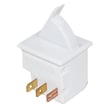
| Lights stay off or won’t turn off | Door/light switch | Refrigerator light switch W11396033 |
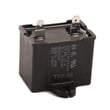
| Clicking, hard start, intermittent cooling | Start components | Refrigerator run capacitor WPW10662129 |
| Warm temps with poor heat rejection | Condenser system | Refrigerator condenser WPW10346415 |
| Ice clumping or dispensing issues | Ice storage components | Refrigerator ice bin assembly WPW10324088 |
DIY help that matches the most frequent complaints
- For warm fridge or freezer sections tied to airflow, use how to fix your evaporator cooling fan.
- For leaks and water under the unit, follow how to get rid of refrigerator puddles.
- For recurring ice maker or dispenser issues, use how to prevent water dispenser and ice maker problems.
Why it matters
Catching airflow, door seal, and water-supply problems early helps your JFI2089AES2 hold steady temperatures, reduces compressor run time, and prevents leaks that can damage flooring or create ice buildup.
Last updated: February 2026