Error Codes


Are bottom mount fridges better?
A bottom-mount refrigerator like the Electrolux EI23BC80KS3 is better for many households because the fresh-food section sits at eye level, so you reach everyday items more easily and bend less. The tradeoff is that frozen foods are lower, so you may bend more for freezer access.
When a bottom-mount fridge is the better choice
- You use the refrigerator compartment more often than the freezer
- You want fresh foods (produce, dairy, leftovers) at a more comfortable height
- You prefer wider refrigerator shelves and easier visibility of items
- You want a freezer drawer that can hold bulky frozen items
- You are trying to reduce daily bending and reaching
When it might not be better
- You access frozen foods more than fresh foods
- You prefer a top freezer for quick grab-and-go frozen items
- You want the simplest layout with the fewest drawers and bins
Quick comparison
| Feature | Bottom-mount (like EI23BC80KS3) | Top-freezer |
|---|---|---|
| Fresh food access | Easier (higher) | Lower |
| Freezer access | Lower (drawer) | Easier (higher) |
| Organization | Often better for fresh foods | Often simpler overall |
| Typical use case | Fresh-food heavy households | Freezer heavy households |
Why it matters
Most day-to-day kitchen trips are for fresh foods, drinks, and leftovers. Putting those items higher reduces strain and makes it easier to see what you have, which can cut down on food waste and improve convenience.
Keeping any style working its best
- Keep door seals clean and closing tightly to hold temperatures steady
- Replace odor control filters on schedule if your model uses one
- If doors do not line up, level the cabinet and adjust rollers as needed
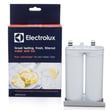
If you are dealing with odors on this model, the refrigerator door air filter EAFCBF is a common maintenance item.
Last updated: February 2026
How to remove Electrolux bottom drawer?
To remove the bottom freezer drawer on your Electrolux EI23BC80KS3 bottom-mount refrigerator, pull the drawer fully open, release the left and right slide locks (one side lifts up, the other presses down), then lift the drawer front slightly and pull it straight off the rails.
Quick removal steps
- Remove food and the bin/basket so the drawer is lighter.
- Pull the drawer out to the full stop.
- Look just behind the drawer on each slide rail for the plastic release levers.
- Press one lever down while lifting the other lever up (they move opposite directions).
- While holding both levers, pull the drawer forward to disengage it from the rails.
- Lift the drawer front slightly and pull it away from the refrigerator.
If the drawer will not release
These are the most common causes we see on bottom-mount freezer drawers:
- Ice buildup on the rails; unplug the refrigerator and let the rails thaw, then try again.
- Drawer is cocked (one side farther out than the other); push it in evenly, then pull out and retry.
- A rail is binding; check for broken plastic or a warped basket rubbing the liner.
- The drawer gasket is sticking; warm the gasket with a hair dryer on low for 30 to 60 seconds.
Reinstalling the drawer (so it closes and seals)
- Align both drawer rails to the same position before sliding the drawer back on.
- Set the drawer onto the rails evenly, then push in until you feel it seat.
- Open and close the drawer a few times to confirm smooth travel and a tight seal.
| What you notice | What it usually means | What to do next |
|---|---|---|
| Drawer comes off but feels rough | Dirty or iced rails | Clean and dry rails; thaw ice |
| Drawer won’t stay aligned | One rail not seated | Remove and reinstall evenly |
| Frost near the drawer | Seal not closing fully | Inspect gasket and alignment |
Why it matters
Removing the bottom drawer correctly prevents bent slide rails and helps the freezer door seal properly, which reduces frost buildup and keeps temperatures stable.
For sealing issues after reinstalling, use our guide: how to fix a fridge door seal.
Last updated: February 2026
What are the disadvantages of a bottom freezer refrigerator?
Bottom-freezer refrigerators like the Electrolux EI23BC80KS3 keep fresh food at eye level, but the tradeoffs are more bending for frozen items, heavier freezer drawers that can wear hardware faster, and typically higher purchase and repair costs than simpler top-freezer designs.
Common drawbacks you may notice day to day
- You bend more to reach frozen food, especially items stored in the lower basket.
- Freezer drawers can feel heavy when fully loaded; that extra weight stresses slides, hinges, and door alignment.
- Organization can be harder if the freezer is mostly deep bins instead of shelves.
- Ice buildup and drawer drag are more noticeable if the door is opened often or not sealing well.
- Repairs can cost more because many bottom-freezer designs use more complex door, drawer, and airflow components.
Parts that can be affected by heavy use
If the freezer drawer is slammed, overloaded, or the doors sit unevenly, these types of parts are commonly involved:
| Symptom | What it often points to | Example part for this model |
|---|---|---|
| Door not sealing, frost, warm spots | Worn or warped gasket | Refrigerator door gasket 5304537408 |
| Doors feel uneven or sagging | Hinge wear or alignment issue | Universal/multiflex (frigidaire) refrigerator door hinge 241779401 |
| Odors linger more easily | Air circulation and filter maintenance | Refrigerator door air filter EAFCBF |
Quick ways to reduce the downsides
- Keep heavier frozen items in the upper basket so you lift less weight.
- Do not overload the freezer drawer; leave space so it closes smoothly.
- Clean and inspect door seals regularly; wipe the gasket and confirm full contact all the way around.
- Level the refrigerator so doors self-close and stay aligned.
- Replace the air filter on schedule to help control odors.
Why it matters
Most bottom-freezer complaints come down to ergonomics (bending and lifting) and wear from a heavy, frequently used drawer. Keeping doors aligned and seals tight helps the refrigerator cool efficiently and prevents frost, odors, and temperature swings.
For more practical tips on odor control in any bottom-mount setup, use our guide: how to get rid of refrigerator smells.
Last updated: February 2026