Owner’s manual
 Error Codes



How to level a Kenmore refrigerator with wheels?
To level your Kenmore Elite refrigerator model 79571052014 with wheels, we raise or lower the front leveling legs (or front wheel adjusters) until the cabinet is stable and the doors close on their own. Turning the adjuster clockwise typically raises the front; counterclockwise lowers it (the screw adjusts height and does not come out).
Step-by-step leveling (front wheels/legs)
- Unplug the refrigerator or switch off power at the breaker for safety.
- Pull the refrigerator forward enough to access the front leveling points.
- Use a wrench or screwdriver (varies by design) to turn the left and right front adjusters.
- Adjust both sides a little at a time until the refrigerator stops rocking.
- Set a slight backward tilt so the doors self-close from a partially open position.
- Recheck after loading food, since weight can change the stance.
Quick checks that confirm it is level
- Doors swing shut smoothly without slamming.
- The cabinet does not rock when you press on opposite corners.
- Shelves look level and items do not roll forward.
| What you notice | Likely adjustment | What to do |
|---|---|---|
| Refrigerator rocks | One front corner is low | Raise the low side slightly |
| Doors drift open | Front is too low (no back tilt) | Raise both front adjusters evenly |
| Doors slam shut | Too much back tilt | Lower both front adjusters slightly |
Why it matters
Proper leveling helps the door gaskets seal, reduces vibration noise, and supports consistent cooling and ice maker performance.
For the exact leveling point locations and tool type for model 79571052014, follow the diagrams in the 79571052014 owner's manual.
Last updated: January 2026
What is the average lifespan of a Kenmore Elite refrigerator?
Most Kenmore Elite refrigerators, including model 79571052014, typically last 10 to 15 years. With consistent maintenance (clean coils, good door sealing, stable temperatures), many units reach the upper end of that range; major sealed-system failures often determine whether repair or replacement makes sense.
What affects lifespan the most
- Condenser coil cleanliness: Dust buildup makes the compressor run hotter and longer.
- Door seal condition and alignment: Air leaks increase run time and frost.
- Ice maker and dispenser upkeep: Leaks and clogs can cause water damage and icing.
- Stable settings: Aim for about 37°F fresh food and 0°F freezer.
- Power quality: Surges and repeated outages shorten control and compressor life.
Maintenance schedule we recommend
| Task | How often | Why it matters |
|---|---|---|
| Vacuum/brush condenser area | Every 6 to 12 months | Reduces compressor stress |
| Check door closing and gasket seal | Every 3 months | Prevents warm air intrusion |
| Replace water filter (if used) | About every 6 months | Protects water flow and taste |
| Clear ice buildup in freezer vents | As needed | Keeps airflow and temps steady |
For model-specific care steps and cleaning guidance, use the 79571052014 owner’s manual.
Parts that commonly drive “end of life” decisions
When a refrigerator stops cooling or struggles to hold temperature, these are common high-impact areas:
- Compressor and start components (cooling stops, clicking, overheating)
- Evaporator fan and airflow path (warm fridge, cold freezer, uneven temps)
- Defrost system (heavy frost, poor airflow, warming)
- Water system leaks (puddles, dispenser issues, ice maker problems)
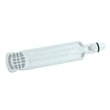
If you are troubleshooting water taste/flow or want to keep the dispenser system healthy, the genuine Kenmore refrigerator water filter 9690 AGF80300801 is the correct filter listing for this model.
Why it matters
A refrigerator that is running longer than normal, warming intermittently, or building frost is usually consuming more energy and putting extra wear on the compressor and fans. Catching airflow, sealing, and coil issues early is the simplest way to extend service life.
Last updated: January 2026
What are the common problems with Kenmore Elite refrigerators?
For Kenmore Elite model 79571052014, the most common problems are poor cooling, ice maker or water dispenser issues, frost buildup from defrost or door-seal problems, and unusual noises from fans or the compressor area. Many fixes start with basic cleaning, airflow checks, and a few key part inspections.
Most common symptoms and what usually causes them
- Not cooling or warm temperatures: dirty condenser coil, blocked vents, evaporator fan issue, or sealed-system/compressor trouble
- Ice maker not making ice: water supply issue, frozen fill tube, ice maker failure, or dispenser door not sealing
- Water dispenser slow or not dispensing: clogged filter, kinked tubing, or air in the line
- Frost/ice buildup in freezer: door not sealing, frequent door openings, or defrost system sensor/heater problems
- Buzzing, clicking, or rattling: fan blade hitting ice, loose panels, or compressor start components
Quick checks we recommend first (before replacing parts)
- Set temps to typical targets: 37°F fresh food, 0°F freezer.
- Make sure food packages are not blocking air vents.
- Clean dust from the condenser area and confirm the condenser fan (if equipped) runs.
- Check door closing and gasket contact all the way around.
- If you have a display error, match it to the troubleshooting steps in Kenmore 795 model bottom freezer refrigerator error codes.
Parts that commonly solve these issues on this model
| Problem area | Part to inspect/replace | What it affects |
|---|---|---|
| Water taste/flow, ice production | Genuine Kenmore refrigerator water filter 9690 AGF80300801 | Water flow and filtration to dispenser and ice maker |
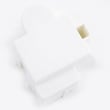
| Door light, dispenser behavior, cooling logic | Refrigerator door switch 6600JB1010A | Tells the control when the door is open/closed |
| Frost/defrost complaints | Refrigerator defrost sensor assembly 6615JB2005N | Helps control defrost timing and temperature feedback |
Why it matters
Cooling, ice, and water problems often share the same root causes: restricted airflow, poor heat removal at the condenser, or restricted water flow through the filter and tubing. Fixing the basics first prevents unnecessary part replacement and helps the refrigerator run efficiently.
For model-specific operating details (controls, cleaning points, and maintenance intervals), follow the steps in the 79571052014 owner's manual.
Last updated: January 2026
Why is my Kenmore Elite refrigerator leaking water out of the bottom?
Water leaking from the bottom of your Kenmore Elite refrigerator model 79571052014 is usually caused by a defrost drain that is clogged or frozen, or by a leak in the dispenser water line. Less often, an ice maker or internal water tubing connection is seeping and running down to the base.
Most common causes (and what to check first)
- Clogged defrost drain: Meltwater cannot flow to the drain pan, so it backs up and spills into the fresh food section, then down to the bottom.
- Frozen defrost drain: Ice blocks the drain opening and causes the same overflow.
- Dispenser water line leak: A small crack or loose fitting can drip and track down the cabinet.
- Ice maker fill leak: Water can drip behind the unit or into the freezer, then migrate forward.
- Door left ajar or poor seal: Excess frost increases defrost water volume and can overwhelm a partially restricted drain.
Quick troubleshooting steps (safe DIY)
- Unplug the refrigerator and remove items near the leak.
- Check where the water starts:
- Water under crisper drawers often points to a defrost drain issue.
- Water near the dispenser area often points to water tubing or a fitting.
- Inspect the water supply line behind the refrigerator for drips.
- Look for ice buildup on the freezer floor or under the evaporator cover (a common sign of a drain problem).
- If you recently changed the filter, re-seat the filter and check for seepage around the housing.
Parts that commonly relate to bottom leaks
| Symptom you see | Likely area | Example part for this model |
|---|---|---|
| Water near dispenser, slow drip | Dispenser line/fitting | Refrigerator water tubing MJU62070602 |
| Leak after filter change or at filter area | Filter head/bypass | Refrigerator water filter bypass ABN73019101 |
| Water pooling inside, then leaking out | Defrost drain path | Follow steps in the 79571052014 owner’s manual |
Why it matters
A bottom leak can damage flooring and also lead to ice buildup, odors, and temperature swings. Fixing the source early helps protect the evaporator area, fan airflow, and ice maker performance.
Last updated: January 2026