


How to use a tiller with front tines?
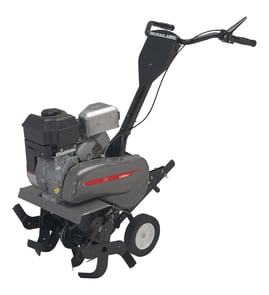
On the Craftsman 917298242 front-tine tiller, the front tines pull the machine forward as they bite into soil, so we control speed and depth by holding back on the handles and making shallow passes. Start slow, keep a firm stance, and let the tines do the work.
- Clear the area of rocks, wire, roots, and debris that can jam the tines.
- Wear eye protection, gloves, long pants, and sturdy boots.
- Check that all guards and fasteners are secure.
- Set the depth stake for a shallow first pass; adjust deeper gradually.
- If the tiller surges forward or is hard to control, inspect the depth stake 532446066 for bending or looseness.
- Start the engine and let it warm up briefly.
- Position the tiller at the edge of the plot; keep both hands on the handles.
- Engage the tines and immediately resist forward pull by leaning back slightly.
- Make a shallow pass first; overlap passes by a few inches.
- For deeper tilling, lower the depth stake one notch at a time and repeat passes.
| Soil condition | What you will feel | What to do |
|---|---|---|
| Hard, dry soil | Bouncing, poor bite | Water lightly, then do multiple shallow passes |
| Weedy or rooty soil | Snagging, sudden jerks | Clear debris often; reduce depth |
| Loose soil | Fast forward pull | Raise depth stake; slow your pace |
Front-tine tillers like the Craftsman 917298242 can “walk” forward quickly; using shallow passes and the depth stake helps prevent loss of control, reduces strain on the drive system, and leaves a more even seedbed.
Last updated: January 2026
Which is better, front or rear tine tiller?
For a Craftsman front-tine tiller like model 917298242, a front-tine design is usually better for lighter, already-worked soil and tight spaces, while a rear-tine tiller is usually better for breaking new ground and handling tougher soil with less effort. “Better” depends on your yard size, soil hardness, and how much control you want.
- Front-tine tiller (like 917298242): more maneuverable, typically lighter, easier to store
- Rear-tine tiller: typically digs more aggressively, tracks straighter, usually less tiring in hard soil
- Best use case: front-tine for garden beds and between rows; rear-tine for large plots and compacted soil
| Feature | Front-tine tiller (917298242 style) | Rear-tine tiller |
|---|---|---|
| Maneuverability | High | Medium |
| Breaking new ground | Fair | Excellent |
| Effort in hard soil | Higher | Lower |
| Working between rows | Excellent | Good |
| Typical weight | Lighter | Heavier |
- Soil condition: hard clay and sod favor rear-tine; loam and previously tilled soil favor front-tine
- Garden layout: narrow beds and tight turns favor front-tine
- Depth control: both can be adjusted, but rear-tine usually holds depth more steadily in tough soil
- Operator comfort: rear-tine often “pulls itself” more; front-tine can require more guidance
Choosing the right tine layout affects how evenly you can till, how deep you can work the soil, and how much fatigue you feel after 30 to 60 minutes of use.
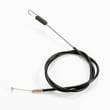
If your front-tine tiller struggles to pull or the tines stop under load, inspect the drive and clutch components. A worn or stretched clutch cable can reduce engagement and make tilling feel much harder.
- Check cable free-play and lever feel
- Inspect belt and pulleys for glazing or wobble
- Verify the depth stake is set for the pass you want
Helpful part reference: cbl/cltch t 583731701
Last updated: January 2026
What tiller is made in the USA?
For the Craftsman front-tine tiller model 917298242, the country of manufacture is not something we can identify from the model number or the model-specific parts information alone. If you specifically want a tiller made in the USA, Mantis Tillers are commonly marketed as designed, engineered, and manufactured in the United States.
The most reliable way is to check the product identification label on the machine itself.
- Look for a label or plate on the frame near the engine mount, handle support, or tine shield
- Check for “Made in …” or “Assembled in …” wording
- Record the full model number (917298242) and any serial number
- If the label is missing, compare your unit to the parts diagrams and hardware used on this model
Model numbers like 917298242 identify a configuration for parts compatibility (belts, sheaves, brackets, fasteners), but they do not consistently encode the factory location. Manufacturing and assembly locations can also vary over a model’s production run.
Use this quick checklist when comparing brands and listings:
| What to check | What it tells you | Where to find it |
|---|---|---|
| “Made in USA” statement | Country of manufacture | Product label, manufacturer listing |
| “Assembled in USA” statement | Assembly location (may differ from parts origin) | Product label, carton, listing |
| Parts support | Long-term repairability | Parts diagrams and replacement parts |
If your goal is long-term ownership, parts availability matters as much as origin. For example, common wear and control items for this model include the cbl/cltch t 583731701, which relates to engaging and controlling tine drive on many front-tine designs.
Knowing the origin helps if “Made in USA” is a must-have, but confirming parts support helps you keep a 5-hp tiller running season after season with fewer surprises.
Last updated: January 2026
How much does it cost to fix a tiller?
For a Craftsman 917298242 front-tine tiller, the exact repair cost is not something we can identify by model number alone because it depends on the failure, labor rate in your area, and which parts are needed. In practice, many tiller repairs land in the low hundreds for parts plus labor, while major drive or engine work can cost more.
- Labor rate and minimum charges: small-engine shops often bill hourly and may have a diagnostic minimum.
- Type of problem: fuel system cleaning is usually less than drive or transmission work.
- Parts replaced: belts, cables, pulleys, springs, and hardware add up quickly.
- Time to access the repair: seized fasteners and heavy wear increase labor time.
- Pickup and delivery: common for outdoor power equipment.
| Repair area | Examples of work | Cost impact |
|---|---|---|
| Fuel and ignition | carburetor cleaning, fuel line service, spark plug | Often lower |
| Drive engagement | adjust or replace clutch cable, inspect idler and pulleys | Medium |
| Pulley and key wear | replace sheave, replace damaged key, tighten hardware | Medium to higher |
| Major mechanical | internal engine repair, gearbox issues | Highest |
If your symptom is “won’t move” or “tines won’t engage,” these model-compatible parts are commonly inspected during diagnosis:
- Cbl/cltch t 583731701 (clutch cable; affects engagement and drive control)
- Tiller engine sheave 592642101 (engine pulley/sheave; can slip or wobble when worn)
- Key 532002649 (key for pulley alignment; a sheared key can stop drive transfer)
Getting the symptom right (no-start vs. no-drive vs. poor tilling) helps a shop quote accurately and helps you avoid replacing parts that are not causing the problem.
Last updated: January 2026