Owner’s manual
 Error Codes



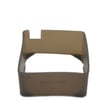
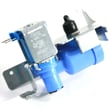
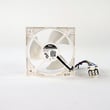
How to remove bottom grille on GE refrigerator?
On a GE GFE26GMKBES bottom-mount refrigerator, the bottom grille (base grille) typically comes off by releasing its retaining tabs or removing a couple of screws (if your version uses them), then pulling the grille straight out. Use the steps in the GFE26GMKBES owner's manual for the exact access points and fastener locations.
- Unplug the refrigerator or switch off power at the breaker (recommended when working near wiring).
- If the unit is plumbed for water, avoid pulling or kinking the water line.
- Protect the floor with cardboard or a thin mat if you need to pull the refrigerator forward.
- Use a flashlight; the grille area is low and easy to miss clips.
- Look for fasteners first: Check the left and right ends of the grille for Phillips or hex-head screws.
- Remove screws (if present): Support the grille with one hand while removing screws.
- Release the clips/tabs: Grip the grille near the ends and pull outward; if it resists, press the grille slightly upward or inward to unload the tabs, then pull out.
- Lift away and set aside: Keep screws in a cup so they do not get lost.
- Align the grille tabs with the slots along the frame.
- Press evenly until it snaps into place.
- Reinstall screws (if used) and confirm the grille sits flush.
| What you see at the grille | What to do | What it usually means |
|---|---|---|
| Screws at both ends | Remove screws, then pull grille forward | Screw-mounted base grille |
| No screws, firm resistance | Pull near ends to pop clips | Clip-in base grille |
| Grille won’t sit flush after reinstall | Re-seat tabs, check for pinched wiring/line | Tabs not fully engaged |
Removing the bottom grille is a common first step for cleaning and inspection. A properly seated grille helps protect components and supports normal airflow around the refrigerator.
Last updated: February 2026
What is the most common problem with a GE refrigerator?
The most common issue we see on GE refrigerators like model GFE26GMKBES is not cooling properly (fresh food warm, freezer soft, or temperatures swinging). It’s usually caused by airflow problems, frost buildup from a defrost issue, or a failed cooling component such as a fan motor or temperature sensor.
- Fresh food warm but freezer cold: evaporator fan not moving air, iced-over evaporator, blocked vents
- Both sections warm: compressor not running, control issue, dirty condenser area, sealed system problem
- Loud humming, grinding, or squealing: evaporator fan motor or blade issue
- Water under the refrigerator or in the crisper: defrost drain restriction or ice melt overflow
- Ice maker slow or not making ice: water supply issue, inlet valve issue, ice maker assembly problem
- Door not sealing: gasket not sealing, door alignment issue, overpacked bins
- Confirm settings: 37°F fresh food and 0°F freezer are typical targets.
- Make sure vents are not blocked by food packages.
- Listen for the evaporator fan (often heard when the doors are closed).
- Check door seal contact all the way around.
- If you have a dispenser, replace an overdue water filter and purge air.
If basic checks point to airflow or temperature sensing, these parts are common solutions for GFE26GMKBES:
| Symptom | Common suspect part | Example part on this page |
|---|---|---|
| Warm temps, weak airflow | Evaporator fan motor and blade | Refrigerator evaporator fan motor and blade WR60X26866 |
| Temps swing, runs too long or too short | Temperature sensor | Refrigerator temperature sensor WR55X10025 |
| Frost buildup, warm fridge | Defrost system issue | Refrigerator defrost heater WR51X10132 and refrigerator defrost bi-metal thermostat WR50X10108 |
Cooling problems can spoil food quickly and force the compressor to run longer than normal. Catching airflow, defrost, or sensor issues early helps restore stable temperatures and reduces strain on major components.
For model-specific operating details and temperature guidance, use the GFE26GMKBES owner’s manual.
Last updated: February 2026
What is the life expectancy of a GE Monogram refrigerator?
GE Monogram refrigerators typically last 15 to 20 years. Your GE GFE26GMKBES is a standard GE bottom-mount refrigerator (not a Monogram unit); standard GE refrigerators typically last 13 years with normal home use and routine maintenance. For model-specific care steps, use the GFE26GMKBES owner's manual.
| Refrigerator type | Typical life expectancy | Notes |
|---|---|---|
| GE Monogram (built-in/premium) | 15 to 20 years | Higher-end components; maintenance still matters |
| Standard GE freestanding (like GFE26GMKBES) | 13 years | Most common replacement window for freestanding units |
- Keep condenser airflow clear; dust buildup makes the compressor run hotter and longer
- Maintain a tight door seal; leaks add moisture, frost, and run time
- Avoid blocking interior vents; overpacking causes temperature swings
- Keep temperatures set correctly; steady temps reduce stress on the sealed system
- Maintain the water system; timely filter changes help prevent low flow and ice maker issues
| Task | Typical frequency | Why it matters |
|---|---|---|
| Clean condenser area | Every 6 to 12 months | Reduces compressor load and overheating risk |
| Inspect/clean door gaskets | Every 3 to 6 months | Prevents warm-air leaks and frost buildup |
| Replace water filter | About every 6 months (or when prompted) | Protects water flow and ice maker performance |
| Verify temperatures | Monthly | Catches cooling problems early |
If you are troubleshooting cooling or water issues on GFE26GMKBES, these model-compatible parts are often involved:
- Refrigerator temperature sensor WR55X10025 for temperature feedback problems
- Refrigerator evaporator fan motor and blade WR60X26866 for weak airflow or warm sections
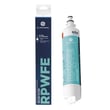
- GE refrigerator water filter RPWFE for low flow, taste/odor, and ice maker supply issues
A refrigerator that runs longer to hold temperature uses more energy and can shorten the life of major components. Basic upkeep (airflow, sealing, and filtration) is the most reliable way to reach the full expected service life.
Last updated: February 2026