

How to hard reset kenmore washer?
To hard reset your Kenmore washer model 11092283800, we recommend a simple power reset: unplug the washer (or switch off the breaker) for 2 minutes, then restore power. This clears many “stuck” conditions after a power glitch or interrupted cycle.
Quick hard reset steps (power cycle)
- Turn the cycle knob to Off.
- Unplug the washer from the outlet (or turn Off the circuit breaker).
- Wait 2 minutes (full control reset).
- Plug back in (or turn breaker On).
- Select a Drain/Spin or Rinse/Spin cycle and press Start.
If it still will not run: what to check next
A reset will not fix a mechanical failure. If the washer still will not agitate, spin, or drain, check these common causes:
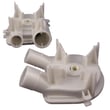
- No drain or slow drain: a clogged or failing pump can stop the cycle; see water pump WP3363394.
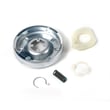
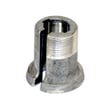
- Won’t spin or agitates poorly: a worn drive connection can prevent proper motion; see coupling 285753A.
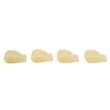
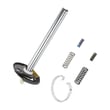
- Agitator “ratchets” or won’t move clothes: worn agitator components are common; see agitator dog 80040.
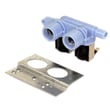
- Fills incorrectly or won’t fill: the inlet valve can stick or fail; see washer valve 285805.
- Intermittent or no operation: a failing timer can stall cycles; see timer WP661597.
Symptoms and the most common part to inspect
| What you notice | What it usually points to | Example part on this model |
|---|---|---|
| Hums but will not drain | Drain pump issue or blockage | Water pump WP3363394 |
| Motor runs but tub does not move | Drive coupling worn/broken | Coupling 285753A |
| Agitator moves one way only or slips | Agitator dogs/cam worn | Agitator dog 80040 |
| Overfills or underfills | Water-level sensing issue | Washer water-level switch WP3356465 |
Why it matters
Resetting clears minor electronic “hang-ups,” but repeated stalling, no-drain, or no-spin symptoms usually mean a worn drive part, a drain restriction, or a failing component. Fixing the root cause prevents motor strain, leaks, and repeat shutdowns.
Last updated: February 2026
How to unclog drain hose on Kenmore washer?
To unclog the drain hose on your Kenmore washer model 11092283800, we unplug the washer, remove as much water as possible, then clear blockages from the drain hose and the drain pump path. Most clogs are lint, coins, socks, or debris lodged at the pump inlet or in the hose bend.
Safety first and quick prep
- Unplug the washer (and turn off both water supply valves if you will move it).
- Protect the floor with towels; keep a shallow pan nearby.
- If the tub is full, bail water out or siphon it before disconnecting hoses.
- Pull the washer forward to access the rear drain hose connection.
Step-by-step: unclog the drain hose and pump path
- Check the standpipe and hose position: Make sure the hose is not kinked, crushed, or shoved too far down the drain (that can restrict flow).
- Disconnect the drain hose from the home drain/standpipe and inspect the end for lint plugs.
- Flush the hose: Run hot water through it (outside or in a tub). If needed, use a flexible brush or a small drain snake to push out debris.
- Check the pump inlet path: If the hose is clear but the washer still will not drain, the clog is often at the pump or the tub-to-pump hose.
- Inspect the drain pump: Remove the pump hoses and look for debris at the impeller area. If the pump is jammed, cracked, or leaking, replacement is the fix.
Parts that commonly relate to “won’t drain” symptoms
| Symptom | Most common cause | What we check next |
|---|---|---|
| Hums but won’t drain | Pump jammed | Pump impeller area, socks/coins |
| Drains slowly | Partial clog | Hose bends, standpipe, pump inlet |
| Leaks during drain | Hose/pump seal issue | Hose clamps, pump housing |
If you determine the pump is failing or damaged, the correct replacement for this model is the water pump WP3363394.
Why it matters
A restricted drain hose or jammed pump can leave water in the tub, cause poor spin performance, and strain the drive system. Clearing the blockage early helps prevent repeat clogs and reduces wear on components.
Last updated: February 2026
What is the average lifespan of a Kenmore washer?
A Kenmore washer typically lasts 10 to 15 years. For your Kenmore model 11092283800, lifespan depends most on load size, how often it runs, and whether wear items (like the drive coupling, pump, and suspension parts) are replaced when symptoms first show up.
Typical lifespan and what changes it
Most washers land in the 10 to 15 year range, but these factors move the needle:
- Overloading (stresses the drive system, clutch, and basket drive)
- Frequent heavy cycles (more heat and mechanical wear)
- Hard water and detergent buildup (can contribute to odors and poor draining)
- Out-of-level installation (increases vibration and suspension wear)
- Delayed repairs (small issues become bigger failures)
Parts that commonly affect “how long it lasts”
When a washer is otherwise in good shape, replacing a few common wear parts often restores performance.
- If it won’t spin or agitates poorly: check the coupling 285753A
- If it won’t drain or leaves water in the tub: check the water pump WP3363394
- If it bangs, walks, or vibrates excessively: inspect the washer suspension spring WP63907
- If the agitator slips or won’t “ratchet”: inspect the agitator dog 80040
Quick symptom-to-part guide
| Symptom | What it often points to | Example part on this model |
|---|---|---|
| Won’t drain / slow drain | Drain pump issue or obstruction | WP3363394 (water pump) |
| Agitator not moving right | Agitator wear parts | 80040 (agitator dog) |
| No spin / weak spin | Drive coupling or clutch wear | 285753A (coupling), 285785 (clutch) |
| Excessive shaking | Suspension components | WP63907 (suspension spring) |
Why it matters
A washer near the end of its expected lifespan can still be a solid performer if we address early warning signs (noise, slipping agitation, slow drain, or vibration). Catching those symptoms early helps prevent secondary damage to the basket drive and tub components.
Last updated: February 2026
How big is a 3.8 cubic foot washing machine?
A 3.8 cubic foot washer refers to the tub capacity (how much laundry it holds), not the outside size. Most 3.8 cu. ft. top-load washers are about 27 inches wide and roughly 42 to 44 inches tall, with depth commonly around 26 to 28 inches.
What “3.8 cu. ft.” means in real use
A 3.8 cu. ft. capacity is typically considered a medium to large top-load washer size.
- Handles everyday family loads comfortably
- Fits bulky items like a comforter (depending on thickness and fill)
- Leaves room for proper agitation and rinsing when you do not overfill
- Works best when the basket is loaded loosely (not packed down)
Typical exterior dimensions (what to plan for)
Exact dimensions vary by brand and model, but these are common planning ranges for a 3.8 cu. ft. top-load washer like Kenmore model 11092283800.
| Measurement | Typical range | What to check in your space |
|---|---|---|
| Width | ~27 in. | Side clearance to walls/cabinets |
| Height | ~42 to 44 in. | Shelf clearance, lid opening |
| Depth | ~26 to 28 in. | Doorway clearance, hose space |
Space and installation tips that prevent surprises
- Leave extra depth for water hoses and the drain hose (often 3 to 6 inches)
- Confirm your doorway and hallway widths before moving the washer
- Plan clearance above the lid so it can open fully
- Make sure the washer sits level to reduce vibration and out-of-balance spinning
Why it matters
Capacity (3.8 cu. ft.) helps you choose the right load size; exterior dimensions determine whether the washer actually fits your laundry area and can be installed without kinking hoses or restricting lid movement.
If you are also troubleshooting poor agitation or a weak wash action on this Kenmore washer, common wear items include the agitator dog 80040 and agitator cam 285748.
Last updated: February 2026