 Owner’s manual






How to reset Fisher and Paykel washing machine?
To reset your Fisher & Paykel washer model WA42T26GW1-96184A, we recommend doing a power reset: turn the washer off, unplug it (or switch the breaker off) for 1 minute, then restore power and start a cycle. This clears many temporary control glitches.
- Press Power to turn the washer off.
- Unplug the washer from the outlet (or turn the circuit breaker off).
- Wait 60 seconds.
- Restore power.
- Press Power, then run a Rinse/Spin or a short cycle to confirm normal operation.
These checks fix the most common “needs a reset” symptoms (no response, stuck cycle, beeping, won’t fill, won’t spin):
- Make sure the lid is fully closed and nothing is preventing it from latching.
- Confirm the outlet has power (test with a lamp) and the breaker is not tripped.
- Turn both water supply valves fully on; check for kinked hoses.
- Clean the inlet screens if filling is slow (a clogged screen can look like a control problem).
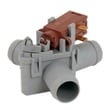
- If the washer fills incorrectly or not at all after a reset, inspect the washer water inlet valve 421177P.
A reset helps when the electronic control gets confused by a power flicker or an interrupted cycle. It will not correct a mechanical failure (drain blockage, worn suspension, motor issue).
| Symptom | Reset likely helps? | What to check next |
|---|---|---|
| Control panel frozen or unresponsive | Yes | Power supply, try power reset |
| Won’t fill or fills very slowly | Sometimes | Inlet screens, hoses, inlet valve |
| Won’t drain | Sometimes | Drain hose routing, pump/obstruction |
| Loud banging or walking | No | Load balance, suspension rods |
Resetting the washer is a safe first step because it can restore normal operation without replacing parts. If the problem returns quickly, it usually points to a repeatable issue like restricted water flow, a lid closure problem, or a failing control component.
For model-specific operating steps and cycle behavior, use the WA42T26GW1-96184A manual.
Last updated: January 2026
Why is my Fisher and Paykel washing machine not draining?
If your Fisher & Paykel washer model WA42T26GW1-96184A is not draining, the most common causes are a blocked drain path (lint, coins, socks), a kinked or restricted drain hose, or a drain pump issue. Start by checking for simple hose and load-related problems, then move to pump and control checks using the WA42T26GW1-96184A owner's manual.
- Cancel the cycle and run a Drain/Spin (or Spin) cycle to see if it will pump out.
- Make sure the drain hose is not kinked, crushed, or pushed too far down the standpipe.
- Verify the standpipe or laundry tub is not backing up (slow household drain can look like a washer failure).
- Redistribute the load; a severely unbalanced load can interrupt draining or spinning.
- Unplug the washer for 2 minutes, then restore power to reset the control.
A poor drain hose setup is a frequent cause of intermittent draining.
| What to check | What “good” looks like | What causes no-drain |
|---|---|---|
| Hose routing | Smooth curve, no sharp bends | Kinks, pinches behind the washer |
| Standpipe/tub | Water flows freely | Slow/clogged household drain |
| Hose insertion | Secure but not jammed tight | Hose shoved too deep, restricting flow |
If the hose and household drain are clear but the washer still will not drain, focus on the pump system.
Common symptoms and likely causes:
- Humming but no water movement: pump jammed by debris or failing.
- Drains slowly: partial blockage in pump hose or drain hose.
- Stops mid-cycle with water left: intermittent pump, wiring issue, or control problem.
Model-relevant parts that can be involved in draining issues include the Fisher & paykel washer drain hose 478084 and internal pump hoses such as the Fisher & paykel Fisher & paykel pump hose 421802.
A washer that cannot drain usually cannot spin properly, so clothes stay wet and the machine may stop to prevent overflow or out-of-balance damage. Clearing restrictions early also helps protect the pump and electronic control.
Last updated: January 2026
What does CLr FLtr mean on washing machine Fisher and Paykel?
On the Fisher & Paykel WA42T26GW1-96184A washer, CLr FLtr means “Clear filter”. The washer is not draining fast enough (commonly within about 6 minutes), so you need to check for a drain restriction such as a clogged pump area, kinked drain hose, or a blockage in the tub-to-pump path.
- Unplug the washer for safety.
- Make sure the drain hose is not kinked, crushed, or pushed too far down the standpipe.
- Confirm the standpipe or laundry sink is draining freely (a slow household drain can trigger drain timeouts).
- Check for small items (coins, socks, lint) that can restrict the pump inlet or hoses.
- If the washer drained but slowly, run a rinse and spin cycle after correcting the restriction.
If the drain path is clear but the washer still times out, a weak or obstructed pump system is a common cause.
| What you notice | Most likely area | Example part for this model |
|---|---|---|
| Hums but won’t drain | Pump obstruction or failing pump | Hood pump 421414 |
| Drains slowly, then errors | Restricted hose path | Washer drain hose 478084 |
| Intermittent draining | Loose connection or internal restriction | Fisher & paykel pump hose 421802 |
When the washer cannot evacuate water quickly, it protects itself by stopping the cycle and showing CLr FLtr. Clearing the restriction helps prevent water left in the tub, poor spin performance, and repeat drain faults.
For model-specific guidance on drain setup, hose routing, and any filter or pump access notes, follow the steps in the WA42T26GW1-96184A manual.
Last updated: January 2026


