Owner’s manual
 Error Codes


What are the dimensions of a Kenmore elite?
Kenmore Elite dimensions vary by the exact model and style (side-by-side, French door, top freezer). For Kenmore model 10658036800 (a side-by-side refrigerator), the most reliable way to confirm the exact height, width, and depth is the specifications section in the 10658036800 owner's manual.
Typical Kenmore Elite refrigerator size ranges
If you are comparing models or planning a kitchen cutout, these are common ranges for full-size Kenmore Elite refrigerators:
- Width: 33 to 36 inches
- Cabinet height: 66 to 70 inches
- Depth (case only): 29 to 33 inches
- Depth with doors/handles: often 32 to 36 inches
- Clearance needed: usually 1 inch or more at sides/top, plus room to open doors
How to measure your refrigerator correctly
Use a tape measure and record three numbers. Measure twice, then compare to the manual specs.
- Measure width at the widest point (often the hinge side or handles)
- Measure height from floor to top of hinge cover (not just the cabinet)
- Measure depth from the back to the front of the doors (and separately to the handle)
- Check if the unit has leveling legs/rollers that change height slightly
- Confirm you have space to remove bins and shelves with the door open
Quick reference: what to write down
| Measurement | What to include | Why it matters |
|---|---|---|
| Width | doors and handles if they stick out | fit through doorways and into the cutout |
| Height | floor to top hinge area | overhead cabinet clearance |
| Depth | case only and with handles | walkway clearance and door swing |
Why it matters
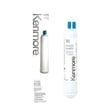
Correct dimensions prevent delivery surprises and help avoid airflow problems that can hurt cooling performance. Proper clearance also makes it easier to service parts like the refrigerator condenser 2324712 if cleaning or repair is needed.
Last updated: February 2026
What are the most common problems with Kenmore refrigerators?
The most common Kenmore refrigerator problems (including model 10658036800) are cooling issues, water leaks, ice maker and dispenser failures, and unusual noises. These usually trace back to airflow restrictions (dirty coils or a failed fan), defrost system trouble, or water supply and valve problems; our 10658036800 owner's manual troubleshooting section helps narrow it down.
Most common symptoms and what typically causes them
- Not cooling or warm temperatures: dirty condenser coils, evaporator fan not running, defrost frost buildup, or a control issue
- Freezer cold but refrigerator warm: airflow blockage, iced evaporator, or evaporator fan problem
- Water leaking or puddles: clogged defrost drain, loose water line, or a leaking inlet valve
- Ice maker not making ice: water supply issue, frozen fill tube, or a failing ice maker module
- Strange noises: normal operating sounds (fans, compressor, defrost) or a worn fan blade/motor
Quick checks we recommend before replacing parts
- Confirm controls are on and allow 24 hours after installation for full cooling.
- Clean condenser coils and make sure airflow around the cabinet is clear.
- Listen for fan operation (evaporator fan in the freezer area; condenser fan near the compressor).
- Check door sealing and make sure doors close fully.
- For ice and water issues, verify the house water supply is on and the line is not kinked.
Common parts involved (when symptoms match)
| Symptom | Common part to inspect | Example part for 10658036800 |
|---|---|---|
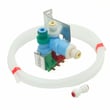
| No ice, no water dispense, slow fill | Water inlet valve | Refrigerator inlet valve W10408179 |
| Frost buildup, warm fridge section | Defrost heater or defrost control components | Refrigerator defrost heater WP2323198 |
| Warm temps, weak airflow, noise in freezer | Evaporator fan motor or blade | Refrigerator evaporator fan motor WP2315549 |
Why it matters
Cooling, ice, and leak complaints often share the same root causes: restricted airflow, defrost ice buildup, or inconsistent water flow. Fixing the underlying cause prevents repeat failures and helps the compressor and fans run normally (some buzzing, gurgling, and pulsating sounds are expected during operation).
Last updated: February 2026
What is the ER if error on a Kenmore Elite refrigerator?
The ER IF (or Er IF) code on a Kenmore refrigerator like model 10658036800 points to an ice fan problem in the freezer; that fan pushes cold air through the door ducting to keep the ice maker area cold and making ice.
What to check first (fast, no parts)
- Power reset: unplug the refrigerator (or switch off the breaker) for 5 minutes, then restore power.
- Make sure freezer vents are not blocked by food packages.
- Check for frost or ice buildup around the ice room or air duct; heavy frost often indicates an airflow restriction.
- Confirm the freezer is actually cold (target is typically 0°F); warm freezer temps can trigger ice and fan-related symptoms.
- Listen for the ice fan: you may hear a small fan running when the unit is calling for ice cooling.
Common causes and what they mean
| Likely cause | What you notice | Typical fix |
|---|---|---|
| Ice fan not running | No airflow to ice area, slow or no ice | Diagnose fan circuit; replace failed fan motor if needed |
| Frost/ice blocking airflow | Ice maker area warms, fan noise changes | Defrost obstruction; address defrost issue |
| Defrost system problem | Repeated frost buildup returns quickly | Test heater/thermostat; repair as needed |
| Control or wiring issue | Intermittent code, fan runs sometimes | Inspect connectors, harness, control outputs |
Parts that are often involved on this model
If you find heavy frost on the evaporator cover or airflow is restricted, these model-matched parts are commonly checked during diagnosis:
- Refrigerator defrost heater WP2323198
- Refrigerator bi-metal thermostat WPW10225581
- Refrigerator evaporator fan motor WP2315549
Why it matters
The ice fan is what moves freezer air to the ice maker compartment. When airflow stops, the ice maker area warms up, ice production drops, and the refrigerator may post ER IF to prevent ongoing poor performance.
For model-specific troubleshooting steps and control information, follow the 10658036800 owner's manual.
Last updated: February 2026
What is the average lifespan of a Kenmore refrigerator?
Most Kenmore refrigerators average 10 to 15 years of service life; a well-maintained Kenmore 10658036800 side-by-side refrigerator often reaches the upper end of that range when airflow, door sealing, and cleaning are kept up per the 10658036800 owner's manual.
Typical lifespan and what to expect
For a side-by-side refrigerator like model 10658036800, lifespan is driven more by maintenance and operating conditions than by brand name alone.
- Average range: 10 to 15 years
- Common “life extenders”: clean condenser area, stable temperatures, good door seal
- Common “life shorteners”: dirty coils, restricted airflow, frequent power interruptions, heavy ice buildup
Maintenance that most improves longevity
The manual includes a dedicated Cleaning section and general care guidance; following those routines helps reduce compressor run time and prevents overheating. Use these habits year-round:
- Keep the condenser area clean and free of dust and pet hair
- Confirm doors close fully and gaskets seal all the way around
- Set temperatures to typical targets (about 37°F fresh food, 0°F freezer)
- Avoid overpacking so vents can circulate cold air
- Replace worn parts promptly when symptoms start (noise, warm temps, leaking)
Parts that commonly affect lifespan (when they fail)
When cooling performance drops, these parts are often involved:
| Symptom | Common system involved | Example part for this model |
|---|---|---|
| Warm refrigerator or freezer | Airflow through evaporator | Refrigerator evaporator fan motor WP2315549 |
| Frost buildup, warming over time | Defrost system | Refrigerator defrost heater WP2323198 |
| No ice or no water dispense | Water supply components | Refrigerator inlet valve W10408179 |
Why it matters
A refrigerator that is running hot, leaking, or building frost usually consumes more energy and stresses major components like the compressor. Simple upkeep and early repairs typically add years of reliable cooling.
Last updated: February 2026