

Is 6.7 cubic feet a big dryer?
Yes. A 6.7 cubic foot Maytag dryer like model MED7230HC2 is considered a standard-to-large capacity size; it comfortably handles everyday family laundry and can fit bulkier items (like towels and bedding) better than compact dryers.
What 6.7 cu. ft. means in real use
Most residential dryers fall into a few common capacity bands. Here’s how 6.7 cu. ft. typically compares:
| Dryer capacity | Common label | Best for |
|---|---|---|
| 3.4 to 4.4 cu. ft. | Compact | Apartments, small loads |
| 5.0 to 7.0 cu. ft. | Standard | Most households, mixed loads |
| 7.1 cu. ft. and up | Extra-large | Frequent bulky loads, large families |
How to tell if it’s “big enough” for you
We use these quick checks when sizing a dryer:
- If you dry queen/king bedding often, 6.7 cu. ft. is a strong fit.
- If you do multiple loads back-to-back, larger capacity reduces cycle count.
- If clothes come out wrinkled or damp, it’s often overloading or airflow, not capacity.
- If you mostly dry small loads, a large drum still works; use the right cycle and dryness level.
- If drying takes too long, check lint screen and venting first.
Why it matters
Capacity affects drying performance and fabric care. A drum that’s too small restricts tumbling, which can increase dry time and wrinkles. A properly sized drum (like 6.7 cu. ft. on MED7230HC2) helps clothes lift and separate so heated air can move through the load.
If drying performance seems “small” even with 6.7 cu. ft.
If the dryer feels underpowered, these are the most common fixes:
- Clean or replace a damaged lint screen such as the screen W10120998.
- Inspect the vent duct for crushing, long runs, or lint buildup.
- If there’s no heat or weak heat, test the heating circuit components (heater, thermal fuse, thermostats).
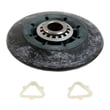
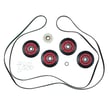
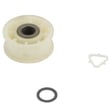
- If the drum squeals or thumps, check support rollers and idler pulley.
Last updated: January 2026
What does L2 mean on my dryer?
On a Maytag MED7230HC2 electric dryer, L2 means the dryer is not sensing proper power on the second “hot” leg of the 240-volt supply. The dryer may run but not heat, or it may stop and display L2 until the power issue is corrected.
What to check first (most common fixes)
- Reset the dryer by turning it off, then unplugging it (or switching the breaker off) for 1 minute.
- Check the home breaker: most electric dryers use a double-pole breaker; reset it fully OFF, then ON.
- Confirm the outlet is a 240V dryer receptacle and the plug fits tightly.
- Inspect the power cord and terminal block area for loose connections (unplug power first).
- If you recently installed the dryer, recheck cord wiring and strain relief.
Quick symptom guide
| What you notice | What it usually points to | What to do next |
|---|---|---|
| Drum tumbles but no heat | One power leg missing (L2) | Reset breaker; verify 240V at outlet |
| L2 appears right away | Power supply or cord connection issue | Check cord/terminal block wiring |
| Dryer stops mid-cycle with L2 | Intermittent power connection | Tighten connections; check outlet fit |
If power is good but the dryer still will not heat
Once you have confirmed proper 240V supply, a no-heat condition can also be caused by a failed heating or safety component. On MED7230HC2, common parts to test include:
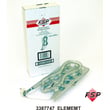
- Element, heater 5400w WP3387747 (open heater)
- Thermal fuse W10909685 (blown fuse stops heat)
- Dryer high-limit thermostat WP8557403 (opens on overheating)
- Dryer thermistor WP8577274 (bad temperature sensing)
A meter test is the fastest way to pinpoint the failed part; see how to use a multimeter to test electrical parts video.
Why it matters
L2 is primarily a power-supply warning. Fixing the 240V supply and connections prevents repeated shutdowns, restores heating performance, and helps avoid overheating from restricted airflow or repeated cycling.
Last updated: January 2026
What is the most common problem with Maytag dryers?
The most common Maytag dryer problem (including model MED7230HC2) is the dryer will not start. In many cases, the root cause is a power supply issue, a door switch problem, or a failed safety device such as a thermal fuse like the thermal fuse W10909685.
Quick checks first (fastest fixes)
- Confirm the dryer has 240V power (a tripped double breaker can leave the drum light on but prevent heating or starting).
- Make sure the door fully latches; a misaligned latch can keep the door switch from closing.
- Verify the control lock is off (if your model has it) and the cycle is actually started.
- Clean the lint screen and check airflow; restricted venting can overheat the dryer and open a safety fuse.
- If the dryer is totally dead, test the thermal fuse and other safety thermostats.
Common “won’t start” causes and what to look for
| Symptom | Most likely area | Typical next step |
|---|---|---|
| No lights, no response | Power supply, terminal block, cord | Check breaker, outlet, cord connections |
| Lights on, won’t run | Door switch, start switch, control | Check door closure, then electrical tests |
| Starts then stops quickly | Overheating protection, airflow | Inspect venting, test thermal fuse |
| Hums but won’t turn | Belt/idler/roller drag, motor | Inspect drum movement and drive parts |
If it runs but has other “top” Maytag dryer issues
These are also very common on electric dryers like MED7230HC2:
- No heat or weak heat: heating element or thermostat issues (example part: element, heater 5400w WP3387747)
- Long dry times: clogged venting, crushed flex duct, lint buildup
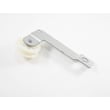
- Squealing or thumping: worn rollers or idler pulley (example parts: dryer drum support roller WPW10314173, dryer idler pulley W10837240)
- Stops mid-cycle: overheating from restricted airflow, failing motor
Why it matters
A “won’t start” complaint often traces back to a simple power or door-latch issue, but it can also signal an overheating condition that opened a thermal fuse. Fixing airflow problems helps prevent repeat failures and improves dry time and energy use.
Last updated: January 2026