Installation guide
 Owner’s manual
 Error Codes


What brand of dryer has the least problems?
For the fewest problems overall, we typically see the best long-term reliability from simpler, heavy-duty designs; Speed Queen is widely regarded as the durability leader, while LG and Whirlpool are often strong picks for reliability in mainstream home use. For your GE GTD84ECSN1WS, proper venting and routine lint maintenance are the biggest factors in avoiding “problem” symptoms.
Best reliability picks (what we see most often)
- Speed Queen: built for longevity; fewer feature-related failures.
- LG: strong performance and reliability in many owner surveys.
- Whirlpool (including Maytag): generally low service rates and widely available parts.
- GE: solid reliability overall; performance depends heavily on airflow and maintenance.
What matters more than brand (especially for GTD84ECSN1WS)
Even a reliable dryer can act up if airflow is restricted or the lint system is neglected. For the GE GTD84ECSN1WS, follow the venting and care guidance in the GTD84ECSN1WS owner’s manual and the GTD84ECSN1WS installation instructions.
Common “problem” triggers to prevent:
- Lint screen not cleaned every load
- Crushed, kinked, or overly long 4-inch vent duct
- Vent hood damper stuck or clogged
- Overloading (poor tumbling and longer dry times)
- ecoDry enabled when you want faster drying
Quick comparison (how to choose)
| Priority | Best fit | Why |
|---|---|---|
| Maximum durability | Speed Queen | Simple design, built to last |
| Features + reliability | LG | Strong performance with modern features |
| Easy serviceability | Whirlpool/Maytag | Broad parts support and common designs |
| Staying with your current brand | GE | Good results with correct venting and upkeep |
Why it matters
Most dryer service calls are caused by airflow, lint buildup, or installation issues, not the brand name. Keeping the vent system clear and the lint screen in good shape helps your GTD84ECSN1WS dry faster, run cooler, and reduce wear on components.
Last updated: January 2026
What is the lifespan of a GE gas dryer?
A GE gas dryer typically lasts 10 years with normal household use. For the GE GTD84ECSN1WS, lifespan is driven less by the model number and more by airflow (venting), routine lint removal, and avoiding overheating; those habits help the motor, burner system, and thermostats last longer.
What affects lifespan the most
- Venting and airflow: Restricted exhaust makes the dryer run hotter and longer.
- Lint control: A clogged lint screen or lint buildup inside the cabinet increases heat stress.
- Load habits: Chronic overloading strains the drum support system and drive components.
- Heat management: Repeated overheating can shorten the life of thermostats and sensors.
- Installation quality: Correct ducting and clearances reduce vibration and heat issues.
Maintenance schedule we recommend
Use this as a simple baseline for GTD84ECSN1WS care; see the detailed steps in the GTD84ECSN1WS owner’s manual.
| Task | How often | Why it helps |
|---|---|---|
| Clean lint screen | Every load | Improves airflow and drying performance |
| Inspect vent hood flap outside | Monthly | Confirms exhaust is not blocked |
| Clean/inspect exhaust duct | Yearly | Reduces long dry times and overheating |
| Check leveling and vibration | As needed | Reduces wear on drum supports and belt |
Signs your dryer is nearing end-of-life
- Drying times keep getting longer even after vent cleaning
- New squealing, thumping, or scraping noises from the drum area
- Heat becomes inconsistent (too hot, not hot enough, or cycling oddly)
- The drum struggles to start or stops mid-cycle
If you are chasing long dry times, our dryer takes a long time to dry guide pairs well with the venting requirements in the GTD84ECSN1WS installation instructions.
Why it matters
A dryer that runs with restricted airflow can overheat and wear out key components faster. Keeping venting clear and following the correct ducting setup is one of the easiest ways to get the full 10-year lifespan from a GE gas dryer.
Last updated: January 2026
What is the most common problem with a GE dryer?
For the GE GTD84ECSN1WS dryer, the most common service issues we see are “no heat” or “clothes take too long to dry.” In many cases, the root cause is restricted airflow (lint buildup or venting problems) rather than a failed component; the GTD84ECSN1WS owner’s manual also emphasizes lint filter and vent care.
Most common symptoms and what they usually point to
- No heat but drum tumbles: power supply issue (electric), gas supply issue (gas), or a heat-control component problem
- Long dry times: clogged lint screen, crushed/kinked duct, blocked outside hood, or poor vent design
- Won’t start: control panel “asleep,” door not fully closed, or a door switch problem
- “Check Vent” light on (if equipped): airflow restriction in the vent system
- Shuts off early or inconsistent drying: load size/sorting, moisture sensing issues, or airflow restriction
Quick checks we recommend first (fastest wins)
- Clean the lint screen before every load; wash it with warm soapy water if you notice a waxy film.
- Verify the vent path is clear and not crushed; the dryer must exhaust outdoors.
- Try a timed cycle with a medium or high temp setting to compare performance.
- Avoid overloading; bulky loads need more space for airflow.
- If electric, confirm both breakers/fuses are on (many electric dryers use two).
When it’s likely a part (model-specific examples)
If airflow is good and the dryer still has heat-related problems, these GTD84ECSN1WS parts are common suspects:
| Symptom | Part to consider | Example part for this model |
|---|---|---|
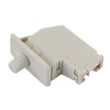
| Dryer won’t start when door is closed | Door switch not closing electrically | Dryer door switch WE04X28977 |
| No heat or poor temperature control | Heating element not heating (electric models) | Dryer heating element WE11M10001 |
| Overheating or erratic heat | Temperature sensing/control issue | Dryer heating element control thermistor WE4M398 |
Why it matters
Airflow problems can mimic “bad heat” and also cause overheating that leads to repeated shutdowns and longer dry times. Fixing venting and lint buildup often restores normal drying and helps protect key components like thermostats and the heater circuit.
Last updated: January 2026