Owner’s manual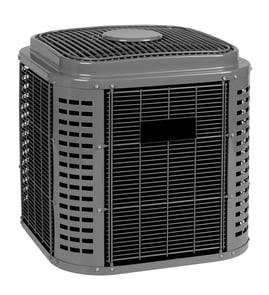



How to find AC tonnage with model number?
For Icp central air conditioner model N4A336AKB300, the tonnage is typically encoded in the model number: the “36” commonly indicates about 36,000 BTU/h, which equals 3 tons (36,000 ÷ 12,000). We still recommend confirming on the unit data plate and in the N4A336AKB300 owner’s manual.
How to decode tonnage from the model number
Many split system air conditioners use a two-digit capacity code that maps to nominal BTU/h.
- Find the two-digit number in the model number (often 18, 24, 30, 36, 42, 48, 60)
- Treat it as thousands of BTU/h (example: 36 = 36,000 BTU/h)
- Divide BTU/h by 12,000 to convert to tons
- Use the outdoor unit rating label to confirm the exact capacity
Quick capacity chart (common HVAC codes)
| Model code | Approx. BTU/h | Approx. tons |
|---|---|---|
| 24 | 24,000 | 2.0 |
| 30 | 30,000 | 2.5 |
| 36 | 36,000 | 3.0 |
| 48 | 48,000 | 4.0 |
| 60 | 60,000 | 5.0 |
Confirming tonnage on the actual unit (best practice)
Even when the model number suggests a nominal size, we confirm using the rating label because matched indoor coil/air handler combinations can affect the listed capacity.
- Look for the outdoor unit nameplate label (usually inside a service panel or on the cabinet)
- Check for “Cooling capacity” or BTU/h rating
- Record both model and serial numbers before ordering parts or scheduling service
Why it matters
Correct tonnage helps ensure you match compatible components (like a contactor or condenser fan motor), avoid airflow and efficiency issues, and communicate clearly with an HVAC technician when diagnosing cooling problems.
Last updated: January 2026
How many square feet will a 36000 BTU air conditioner cool?
A 36,000 BTU (3-ton) central air conditioner like Icp model N4A336AKB300 is commonly sized to cool roughly 1,500 to 2,500 sq. ft., but the “right” square footage depends more on your home’s heat gain (climate, insulation, windows, ductwork) than on BTU alone. For operating basics and maintenance that affect real-world cooling, use the N4A336AKB300 owner’s manual.
Quick sizing rule of thumb (and when it breaks)
A common planning shortcut is about 18 to 24 BTU per sq. ft. for many homes, then adjust for conditions.
- Hot, sunny climates often need more BTU per sq. ft.
- Older or under-insulated homes usually need more capacity
- High ceilings and lots of glass increase load
- Tight, well-insulated homes may need less capacity
- Duct leaks or poor airflow can make a correctly sized unit feel “too small”
What to check before blaming size
If your N4A336AKB300 is not keeping up, we recommend verifying these basics first (they are common causes of weak cooling):
- Thermostat set to COOL and setpoint below room temperature
- Return air filter is clean and correctly installed
- Outdoor condenser coil and fins are clear of debris
- Circuit breakers and disconnects are on
- Outdoor fan runs and airflow is not blocked
For electrical checks, use a safe test method and reference how to use a multimeter to test electrical parts video.
Typical coverage ranges for 36,000 BTU
| Home/condition (typical) | Approx. coverage for 36,000 BTU |
|---|---|
| Mild climate, good insulation | 2,000 to 2,500 sq. ft. |
| Average conditions | 1,700 to 2,100 sq. ft. |
| Hot climate, older/leaky home | 1,500 to 1,900 sq. ft. |
Why it matters
Oversizing can cause short cycling and humidity problems; undersizing can run constantly and still miss the set temperature. The best way to confirm sizing is a Manual J load calculation, but airflow and maintenance issues can mimic a sizing problem.
Last updated: January 2026
What is the most expensive part to replace on an AC unit?
On the Icp central air conditioner model N4A336AKB300, the compressor is typically the most expensive component to replace because it is the heart of the refrigerant system and a major labor job. Your N4A336AKB300 owner's manual also emphasizes maintenance that helps prevent compressor damage.
Why the compressor usually costs the most
A compressor replacement often involves more than swapping a part; it can include refrigerant handling and system cleanup.
- It is a sealed-system component that does the heavy work of compressing refrigerant
- Labor is higher because the repair is more complex than most electrical parts
- Refrigerant recovery and recharge may be required (R-410A systems)
- A compressor failure can be caused by airflow issues, dirty coils, or electrical problems
- Additional parts may be needed depending on the failure mode (for example, contactor or fan motor)
Common “high-cost” parts vs. “moderate-cost” parts
Costs vary by region and diagnosis, but this is a practical way to think about typical replacement impact.
| Part area | Typical cost impact | Notes |
|---|---|---|
| Compressor | Highest | Often the biggest parts plus labor combination |
| Coil (indoor or outdoor) | High | Can involve refrigerant work and significant labor |
| Condenser fan motor | Moderate | Often simpler than sealed-system repairs |
| Contactor | Moderate to lower | Electrical switching component; quicker service call |
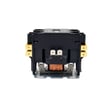
If troubleshooting points to electrical switching or outdoor fan issues on this model, compatible options include the central air conditioner contactor 1172472 and the central air conditioner condenser fan motor 1185924.
Why it matters (and how to avoid the big repair)
The homeowner maintenance steps matter because restricted airflow and dirty coils can overheat the system and contribute to compressor failure.
- Replace or clean the return air filter regularly
- Keep the outdoor coil clear of leaves, lint, and grass clippings
- Make sure the outdoor fan runs smoothly and the top is unobstructed
- Verify breakers and disconnects are in good condition
- Schedule periodic inspection by a qualified HVAC technician
Last updated: January 2026
What is a good brand of 1.5 ton AC?
A “good” 1.5-ton AC is usually the one that is correctly sized for your home and installed well by a qualified HVAC contractor. Your Icp N4A336AKB300 is a different size class than 1.5 ton, so brand comparisons for 1.5 ton do not directly translate; use the setup and maintenance guidance in the N4A336AKB300 owner’s manual to protect performance on your system.
First, match the tonnage to the job
For central air conditioners, the “right” brand will not fix an oversized or undersized system. We recommend confirming capacity with a load calculation and verifying your indoor coil or air handler is properly matched.
- Ask for a Manual J (or equivalent) load calculation
- Confirm the outdoor unit and indoor coil are a matched combination
- Verify ductwork can support the required airflow
- Choose a contractor with strong local parts and service support
- Prioritize correct refrigerant charge and electrical workmanship
How to compare brands (without getting misled)
Most major HVAC brands can be a good choice when installed correctly. Instead of chasing a single “best” brand, compare what affects ownership cost and comfort.
| Compare this | Why it matters | What to ask for |
|---|---|---|
| Warranty and local service | Faster repairs, lower downtime | Who handles warranty labor and parts? |
| Efficiency rating | Lower operating cost | What is the rated SEER/EER for the matched system? |
| Noise and build quality | Outdoor comfort and longevity | Published sound rating and cabinet protection |
What matters specifically for Icp N4A336AKB300 owners
Even if you are shopping brands for another property, the best way to keep your N4A336AKB300 running well is consistent maintenance and basic checks (thermostat, filter, breakers, outdoor coil cleanliness) as outlined in the manual.
Quick checks if cooling is weak on N4A336AKB300
These steps apply to many central AC systems and are safe homeowner checks:
- Set thermostat to COOL and set temperature below room temperature
- Inspect and replace or clean the return air filter
- Check breakers and fuses; reset or replace as needed
- Clear leaves, lint, and grass from the outdoor coil and around the unit
- If the outdoor fan will not run, a technician may test components such as the central air conditioner condenser fan motor 1185924 or central air conditioner contactor 1172472
Why it matters
Correct sizing and installation typically drive comfort, humidity control, and compressor life more than the brand name. Good maintenance reduces strain and helps any system meet its rated performance.
Last updated: January 2026