Owner’s manual
 Error Codes


What is the most common problem with a GE refrigerator?
The most common GE refrigerator complaint, including on model GSL25JFTABS, is not cooling properly (fresh food warm, freezer warming, or temperatures swinging). In many cases it traces back to airflow issues, a defrost problem, or a temperature-sensing/control issue rather than a single “one-size” failed part.
Quick checks we recommend first (no parts)
- Confirm controls are not set to 0 (off) and allow 12 hours for temps to stabilize after any change.
- Make sure doors fully close and seals are making contact all the way around.
- Avoid blocking vents with food packages; poor airflow can mimic a cooling failure.
- Listen for normal fan/compressor operation; unusual silence can point to a power or control issue.
- If the unit was just plugged in or recently moved, allow up to 24 hours to fully cool.
For control setting guidance and troubleshooting charts specific to this model, use the GSL25JFTABS owner’s manual.
If “not cooling” is the symptom: common causes on this style of GE side-by-side
Cooling problems usually fall into a few buckets:
| What you notice | Often related to | What to check next |
|---|---|---|
| Freezer OK, fresh food warm | Airflow/damper issue | Damper movement, blocked vents |
| Frost buildup, weak airflow | Defrost system issue | Heater/thermostat, heavy ice on evaporator |
| Temps swing or read wrong | Sensor/control feedback | Sensor placement, wiring, error behavior |
| Water flow slows and ice gets small/hollow | Restricted water flow | Filter condition, supply pressure |
Parts that commonly relate to these symptoms (when diagnosis points there)
If troubleshooting indicates a specific failure, these model-compatible parts are often involved:
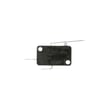
- Refrigerator temperature sensor WR55X10025 (can cause incorrect temperature feedback)
- Refrigerator defrost heater WR51X10055 (can contribute to frost buildup and airflow restriction)
- GE refrigerator water filter MWFP (restricted flow can affect dispenser and icemaker performance)
Why it matters
A refrigerator that is “kind of cooling” can still be unsafe for food storage and can run longer than normal, increasing wear on the compressor and fans. Catching airflow, defrost, or sensor issues early helps prevent bigger cooling failures.
Last updated: January 2026
What is the average lifespan of a GE refrigerator?
GE refrigerators (including the GE GSL25JFTABS side-by-side) typically last 10 to 20 years with normal household use and basic maintenance. In many homes, around 12 years is a practical “average” expectation before major repairs become more likely.
What affects lifespan the most
A refrigerator’s life is usually determined by how hard the sealed system and airflow components have to work day to day.
- Keeping condenser areas reasonably clean so heat can dissipate
- Maintaining good door sealing (gaskets not torn or warped)
- Avoiding overloading and frequent long door openings
- Using correct temperature settings and allowing time to stabilize after changes
- Replacing the water filter on schedule if your model uses one
Quick lifespan guide (what we see most often)
| Item | Typical range | What usually ends the run |
|---|---|---|
| GE side-by-side refrigerator | 10 to 20 years | Compressor or sealed-system repair cost, chronic cooling issues |
| Water/ice dispenser system | 5 to 10+ years | Valve leaks, low flow, dispenser wear |
| Icemaker assembly | 5 to 10+ years | Mechanical wear, fill issues, freezing/jamming |
Maintenance that helps your GSL25JFTABS reach the high end of the range
We recommend following the care and cleaning guidance in your GSL25JFTABS owner’s manual.
- Set controls near the normal midpoint and adjust one step at a time (then wait about 12 hours)
- Keep vents inside the fresh food and freezer sections unblocked
- Clean spills promptly to prevent odors and gasket damage
- If water flow slows, replace the filter and flush the system
- If you have an icemaker, keep the bin clean and discard old ice periodically
Parts that commonly support longer life (when symptoms show up)
If you are troubleshooting water taste/flow or ice production, these model-compatible parts are commonly involved:
Why it matters
Knowing the typical lifespan helps you decide when routine maintenance is enough versus when it makes sense to plan for a larger repair or replacement, especially if cooling performance or water/ice issues start happening repeatedly.
Last updated: January 2026
How to reset GE side-by-side refrigerator not cooling?
If your GE GSL25JFTABS side-by-side refrigerator isn’t cooling, the most reliable “reset” is a power reset: unplug it (or switch the breaker off) for 1 full minute, then restore power and allow the controls time to stabilize. For control and operating checks, follow the GSL25JFTABS owner’s manual.
Reset steps we recommend for GSL25JFTABS
- Make sure both temperature controls are not set to 0 (Off).
- Unplug the refrigerator for 60 seconds.
- Plug it back in (or turn the breaker back on).
- Set fresh food to 5 and freezer to 5 (normal starting point).
- Wait 12 hours before making another adjustment.
- If it was just installed or recently powered off, allow up to 24 hours to fully cool.
Quick checks if it still won’t cool
These items commonly prevent cooling even after a reset:
- Door left ajar or a package holding the door open
- Controls accidentally set too warm or to Off
- Heavy loading or frequent door openings (unit runs longer)
- Unit is in a defrost cycle (can take about 30 minutes)
- Fan or airflow issue (no air movement in freezer or fresh food section)
Parts that can be involved (when symptoms match)
If the refrigerator has power but temperatures keep rising, these model-compatible parts are often involved depending on symptoms:
| Symptom you notice | Common suspect part | Example compatible part for this model |
|---|---|---|
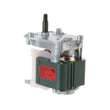
| Warm fridge/freezer, weak or no airflow | Evaporator fan system | Evaporator motor WR60X10185 |
| Temps seem erratic or incorrect | Temperature sensing | Refrigerator temperature sensor WR55X10025 |
| Frost buildup, warming after days | Defrost system | Refrigerator defrost heater WR51X10055 |
Why it matters
A power reset clears a temporary control “glitch” and forces the GE control system to restart. Waiting the full stabilization time helps you avoid chasing temperatures with constant adjustments, which can make cooling performance look worse.
Last updated: January 2026
How much freezer space is in a side-by-side?
Most side-by-side refrigerators, including the GE GSL25JFTABS, typically dedicate about 7.5 to 10 cubic feet of the total capacity to the freezer side. The exact freezer volume for your specific GSL25JFTABS isn’t identified in the model-specific information we have here, but that range is the normal expectation for this style.
What you can expect for a side-by-side freezer
Side-by-side designs split the cabinet vertically, so the freezer is narrower but tall. Typical freezer space depends on overall refrigerator size and how much room is taken by the icemaker, ice bin, and door bins.
- Typical freezer capacity: 7.5 to 10 cu. ft.
- Typical total capacity (fresh + freezer): 22.5 to 31 cu. ft.
- Common width range: 30 to 36 inches
- Common height range: 67 to 70 inches
- Common depth range: 29 to 35 inches
For operating and feature details that affect usable space (shelves, bins, icemaker storage), use the GSL25JFTABS owner’s manual.
Quick capacity guide (typical ranges)
| Refrigerator style | Typical total capacity | Typical freezer portion |
|---|---|---|
| Side-by-side | 22.5 to 31 cu. ft. | 7.5 to 10 cu. ft. |
| Top freezer | 14 to 22 cu. ft. | 4 to 6 cu. ft. |
| Bottom freezer | 18 to 28 cu. ft. | 5 to 9 cu. ft. |
Why it matters
Freezer cubic feet is a good planning number, but usable space is what you feel day to day. In a side-by-side like the GE GSL25JFTABS, items such as pizza boxes, wide platters, and large turkeys can be limited more by shelf width than by total cubic feet.
Tip: what reduces usable freezer space
- Automatic icemaker and ice storage bin
- Deep door bins (they steal interior width)
- Fixed shelf positions vs. adjustable shelves
- Frost buildup from frequent door openings
- Overpacking (blocks airflow and reduces performance)
Last updated: January 2026