Error Codes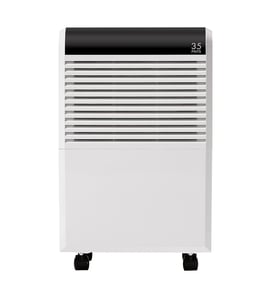




How many hours a day should you run a dehumidifier?
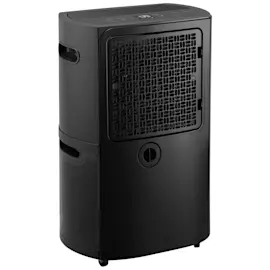
For the GE ADEL35LZQ1 dehumidifier, we recommend running it as long as needed to hold your target humidity (typically 45% to 55% RH). In many homes that means 8 to 12 hours per day, and in very damp areas it can run nearly continuously until conditions improve.
Best daily run-time guidelines
- Basement or damp crawlspace: 12 to 24 hours/day until humidity stabilizes
- Bathroom or laundry area: 2 to 6 hours/day (or after moisture-heavy use)
- General living space: 6 to 12 hours/day depending on weather and ventilation
- After a leak or water event: run continuously and empty/drain as needed
- If the unit short-cycles: check airflow and filter condition
What to set it to (simple targets)
Most comfort and mold-prevention goals are met by keeping indoor humidity in this range:
| Area | Good target RH | Notes |
|---|---|---|
| Living areas | 45% to 55% | Comfortable and helps prevent musty odors |
| Basement | 40% to 50% | Often needs longer run time |
| Very dry winter climates | 50% to 60% | Avoid going too low for comfort |
Quick checks that affect run time
- Clean or replace the air filter; restricted airflow reduces moisture removal (see dehumidifier air filter WK85X24759).
- Keep doors/windows closed while dehumidifying.
- Leave clearance around the intake and exhaust so the fan can move air.
- Empty the bucket regularly or use a drain setup if your model supports it.
- If you see frost on the coil, raise room temperature and let the unit defrost.
Why it matters
Running long enough to maintain a steady humidity level protects floors, drywall, and stored items from dampness, and it prevents the dehumidifier from constantly restarting, which can increase wear on the compressor and fan.
Last updated: January 2026
What is the life expectancy of a GE dehumidifier?
Most GE dehumidifiers, including the GE ADEL35LZQ1, typically last about 8 years with normal home use. Lifespan depends most on run time, humidity load, airflow (clean filter), and keeping the bucket and drain system clean so the unit does not overwork.
What affects dehumidifier lifespan most
- Airflow and filter condition: a clogged filter makes the fan and compressor run hotter and longer.
- Humidity load: basements and very damp spaces shorten life because the unit runs more.
- Drain setup: frequent bucket overflows or poor hose drainage can cause shutdowns and corrosion.
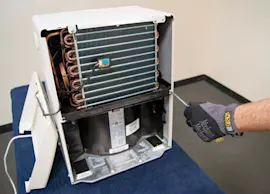
- Coil cleanliness: dust on the evaporator coil reduces moisture removal and increases run time.
- Operating temperature: cold rooms increase frost cycles and stress components.
Maintenance that helps you reach (or beat) 8 years
- Clean or replace the air filter on schedule; use the model-correct dehumidifier air filter WK85X24759.
- Wash and dry the water bucket regularly; replace a cracked or warped bucket with the dehumidifier water bucket WK10X24760.
- Keep the intake and exhaust grilles clear; leave several inches of clearance around the cabinet.
- Periodically clean the coil and interior; follow the steps in how to clean a dehumidifier.
Quick expectations by usage level
| Usage pattern | Typical lifespan | What usually wears faster |
|---|---|---|
| Seasonal, light duty | 8 to 10 years | Fan motor, controls |
| Year-round, moderate duty | About 8 years | Fan motor, compressor run time |
| Basement, heavy duty | 5 to 8 years | Compressor, sensors, drainage components |
Why it matters
A dehumidifier that is nearing end-of-life often runs longer but removes less moisture. Keeping airflow strong (filter) and drainage reliable (bucket or hose) reduces run time, lowers energy use, and helps protect major components like the compressor.
Last updated: January 2026
How many sq ft does a 35 pint dehumidifier cover?
A 35-pint dehumidifier like the GE ADEL35LZQ1 typically covers about 1,500 to 3,000 sq ft, depending on how damp the space is, ceiling height, temperature, and how often doors are opened. For very wet basements, expect coverage closer to the low end.
Coverage guidelines (what to expect)
- Mildly damp areas: up to ~3,000 sq ft
- Moderately damp areas: ~2,000 to 2,500 sq ft
- Very damp or wet basements: ~1,500 to 2,000 sq ft
- Cooler rooms (below ~65°F): effective coverage usually drops
- Open floor plans: one unit can work better than in many small rooms
Quick sizing table
| Room condition | Typical coverage for 35 pints | What you may notice |
|---|---|---|
| Light humidity (musty smell) | 2,500 to 3,000 sq ft | Steady but slower bucket fill |
| Damp (some condensation) | 2,000 to 2,500 sq ft | Regular bucket fills, better comfort |
| Very damp/wet (basement seepage) | 1,500 to 2,000 sq ft | Runs longer, bucket fills fast |
Why real-world coverage varies
Dehumidifier “pints per day” is measured under warm, humid test conditions. In real homes, performance changes with:
- Temperature (colder air holds less moisture)
- Airflow (blocked intake or exhaust reduces capacity)
- Filter cleanliness (a clogged filter restricts air)
- Drain setup (bucket vs. continuous drain)
- Moisture sources (leaks, damp concrete, frequent showers)
Tips to get the best performance from your ADEL35LZQ1
- Clean or replace the dehumidifier air filter WK85X24759 on schedule to keep airflow strong.
- Keep the unit a few inches from walls and curtains.
- Close windows and exterior doors while it runs.
- If you need nonstop operation, use continuous drain (if your setup supports it) instead of relying only on the bucket.
Why it matters
Choosing the right coverage helps the GE ADEL35LZQ1 control humidity faster, reduce musty odors, and prevent long run times that can increase wear on the fan and compressor.
Last updated: January 2026