Owner’s manual
 View engine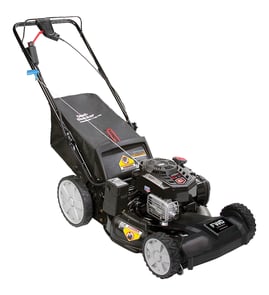



Should I use 87 or 93 for lawn mower?
For the Craftsman 9179994A gas walk-behind mower, use regular unleaded gasoline with a minimum of 87 octane. Using 93 octane does not improve power or reliability in this type of small engine; it mainly costs more. Confirm fuel details in the owner's manual.
What to put in the tank (and what to avoid)
- Use fresh, clean, regular unleaded fuel (87 octane minimum).
- Do not mix oil with gasoline (this mower uses separate engine oil).
- Avoid higher-ethanol blends (commonly E15 or higher) because they increase fuel-system risk in small engines.
- If you use ethanol-blended fuel, do not store it in the mower for long periods.
- Buy only what you can use in about 30 days to keep fuel fresh.
Storage tip for ethanol-blended fuel
The manual warns that alcohol-blended fuels can attract moisture and cause fuel separation and acids during storage. If you will store the mower 30 days or longer, empty the fuel system: drain the tank, then run the engine until the fuel lines and carburetor are empty (then refill with fresh fuel next season). See the owner's manual for the full storage procedure.
Quick comparison: 87 vs 93 in a walk-behind mower
| Fuel choice | Works in 9179994A? | What you gain | What you risk/lose |
|---|---|---|---|
| 87 octane (regular) | Yes (recommended) | Correct fuel for normal operation | None when fresh and properly stored |
| 93 octane (premium) | Yes | No meaningful performance benefit | Higher cost; still can go stale |
Why it matters
Using the right gasoline helps prevent hard starting, rough running, and carburetor issues caused by stale fuel or moisture-related fuel breakdown. Fresh 87 octane supports reliable starting and consistent engine speed.
Last updated: February 2026
What is the cheapest time of year to buy a lawn mower?
The cheapest time to buy a lawn mower is typically the off-season: fall through winter (roughly September through February). That is when leftover inventory is cleared out, so you usually see the biggest markdowns compared to peak mowing season. For model-specific operating and maintenance details for your Craftsman 9179994A, use the owner's manual.
Best times to shop (and what to expect)
- Late fall (October to November): clearance pricing as mowing season ends
- Mid-winter (January to February): closeout deals on remaining stock
- Holiday sale windows (May to June): smaller discounts, but more selection
- Avoid peak season (April to August): highest demand and fewer deep discounts
Quick timing guide
| Time of year | Typical pricing | Selection | Best for |
|---|---|---|---|
| Sep to Nov | Lowest to low | Medium | Clearance deals on gas walk-behind mowers |
| Jan to Feb | Low | Low | Final closeouts if you are flexible |
| May to Jun | Medium | High | Balancing price with model choice |
| Apr to Aug | Highest | High | Buying only if you need it immediately |
How to save money without buying the wrong mower
- Match the mower to your yard size and terrain (flat vs. slopes)
- Decide up front: bagging, mulching, or side discharge capability
- Budget for wear items you will replace over time (blade, wheels, hardware)
- If your current mower still runs, consider a tune-up and blade service first
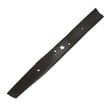
- When replacing worn cutting parts, use model-matched parts such as the husqvarna lawn mower 22-inch deck 3-in-1 blade 532421825
Why it matters
Buying in the off-season can save money, but buying the right configuration saves more over the life of the mower. A properly maintained blade and clean deck improve cut quality and reduce strain on the engine.
Last updated: February 2026
What year is Craftsman Model 9179994A?
Craftsman model 9179994A is identified by its model number, not by a built-in “year” field. The most reliable way to determine the year is to match the mower’s engine model/type/code and any date code shown in the documentation and on the engine itself; use the owner's manual to locate the correct identification points.
How to find the year on a 9179994A mower
Use these checks in order; they work for most Craftsman walk-behind mowers with Briggs & Stratton engines:
- Check the engine shroud for the Briggs & Stratton Model, Type, and Code numbers.
- Use the engine Code to determine the manufacture date of the engine (often the best “year” indicator).
- Look for a product label on the mower deck or rear housing with a serial or date code.
- Compare your mower’s configuration (electric start, 22-inch deck, drive system) to the diagrams and parts lists in the manual.
- If you are ordering parts, match by model number 9179994A and the exact part listing, not by year.
What the manual confirms about this model
The owner's manual identifies this unit as a Craftsman rotary lawn mower, power-propelled, 22-inch multi-cut, with a Briggs & Stratton 725 Series engine and electric start. That narrows the family and parts system, even when the exact build year is not printed on the cover.
Quick ID checklist
| Item to check | Where to look | What it tells you |
|---|---|---|
| Engine Model/Type/Code | On the engine shroud | Engine build date and exact engine variant |
| Mower label/serial tag | Deck, rear door area, or handle bracket area | Manufacturing run info (varies by unit) |
| Manual model number | Manual cover and parts diagrams | Confirms you are using the correct documentation |
Why it matters
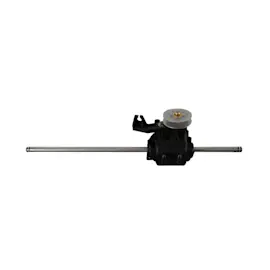
The “year” is less important than the exact engine identification and model number when you are troubleshooting or buying parts. For example, drive and cutting components must match the correct configuration, such as the husqvarna lawn mower 22-inch deck 3-in-1 blade 532421825 or the lawn mower transmission assembly 589600601.
Last updated: February 2026
How do you tell if a mower is commercial or residential?
A mower is typically commercial if it is built for daily, all-day use with heavier-duty components (deck, wheels, drive system, controls) and serviceable parts; it is typically residential if it is designed for weekly homeowner mowing with lighter-duty construction. For your Craftsman 9179994A walk-behind mower, the best way to confirm intended use is to compare its build features and maintenance requirements in the owner's manual.
Quick ways we identify commercial vs residential
- Duty cycle: commercial is designed for frequent, long run times; residential is for periodic use.
- Deck and frame: commercial decks are thicker and more rigid; residential decks are lighter.
- Drive system: commercial units use heavier transmissions and wheel hardware; residential is simpler.
- Serviceability: commercial mowers are built for fast, repeatable service (belts, cables, wheels, blade hardware).
- Controls and safety systems: both have safety controls, but commercial often has more robust linkages and guards.
- Parts wear rate: residential parts (wheels, cables, blades) typically need replacement sooner under heavy use.
What to check on a Craftsman 9179994A walk-behind mower
Use these practical checks (no special tools needed):
- Look for heavy-gauge deck metal and reinforced handle brackets.
- Check whether the self-propel drive feels strong and consistent on inclines.
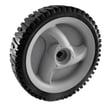
- Inspect wheel hardware for sturdiness; worn wheels are common on homeowner units. If needed, match your wheel to the lawn mower wheel and tire, 8 x 1.75-in 583719501.
- Review the manual for operator controls and safety requirements (guards, deflectors, and safe operation rules).
- Compare blade and blade-mounting hardware; commercial setups are usually more robust. A common replacement for this model is the husqvarna lawn mower 22-inch deck 3-in-1 blade 532421825.
Commercial vs residential: at-a-glance
| Feature | Residential walk-behind | Commercial walk-behind |
|---|---|---|
| Typical use | Weekly lawn care | Daily, multiple properties |
| Build | Lighter deck and components | Heavier deck, wheels, drivetrain |
| Maintenance | Seasonal tune-ups | Frequent service intervals |
| Cost | Lower | Higher |
Why it matters
Choosing parts and maintenance intervals based on the mower’s duty level helps prevent failures like abnormal vibration, premature wheel wear, and drive problems. The manual also reinforces key safety practices such as stopping the blade before servicing and keeping guards in place.
Last updated: February 2026
Is it cheaper to repair or replace a lawnmower?
For a Craftsman 9179994A walk-behind mower, repairing is usually cheaper when the fix is a common wear item (blade, wheel, cable) and you do the work yourself; replacement is often cheaper when the engine or drive system needs major labor or multiple expensive parts.
A practical way to decide (cost and effort)
Use this quick checklist before you spend money:
- Start with the symptom: no-start, poor cut, won’t self-propel, vibration, or fuel issues.
- Price the likely parts first (blade, wheels, cables, springs) and compare to mower value.
- Factor in labor: shop labor can exceed the mower’s value quickly.
- Avoid engine tampering: the manual warns not to change engine speed/governor settings.
- Consider safety: severe vibration or suspected bent crankshaft points to a bigger repair.
Common repairs that are typically cost-effective
These are the repairs we see most often that usually make sense to do:
- Replace a worn or bent blade (example: husqvarna lawn mower 22-inch deck 3-in-1 blade 532421825)
- Replace a damaged wheel/tire (example: lawn mower wheel and tire, 8 x 1.75-in 583719501)
- Fix drive issues by replacing a cable (example: drive cable 532447570)
- Replace a broken discharge/deflector part (example: lawn mower clipping deflector 532426129)
Typical “repair vs replace” guide
| Situation | Usually cheaper choice | Why |
|---|---|---|
| Poor cut, uneven cut, grass buildup | Repair | Blade and deck cleaning are low-cost fixes |
| Won’t start due to maintenance items | Repair | Air filter, spark plug, fresh fuel are inexpensive |
| Self-propel won’t move | Repair first | Often belt/cable/adjustment; parts are moderate |
| Bent crankshaft, persistent severe vibration | Replace | Major engine work is high labor and cost |
| Multiple systems failing at once | Replace | Parts plus labor adds up fast |
What the manual says that affects the decision
The owner's manual emphasizes that engine speed is factory set and the carburetor is not adjustable; if the engine runs too fast/slow or has suspected carburetor problems, it directs service/adjustment by a qualified service center. That guidance matters because engine and fuel-system labor is where repair costs can jump.
Why it matters
A mower that “sort of runs” but has a loose blade, worn blade, or heavy deck buildup can cut poorly and vibrate; fixing those basics restores performance and reduces the risk of bigger damage. On the other hand, major engine or drivetrain failures can cost more than the mower is worth once labor is included.
Last updated: February 2026