Installation guide
 Owner’s manual






What is the lifespan of a KitchenAid dishwasher?
A KitchenAid dishwasher typically lasts 10 to 13 years with normal use and basic maintenance. For your KitchenAid KUDS35FXSS5 undercounter dishwasher, good cleaning habits and prompt part replacement can help you reach the upper end of that range; see the KUDS35FXSS5 owner's manual for model-specific care steps.
Most dishwasher life expectancy comes down to water quality, loading habits, and how hard the wash system works each cycle.
- Hard water and heavy detergent use can speed up wear on seals and the pump system
- Clogged filters and spray arms reduce cleaning and strain the circulation system
- Frequent heated dry cycles add heat stress to the heater and wiring
- Overloading racks can damage rack wheels, adjusters, and rails
- Small leaks can corrode components and damage the door area over time
These are the highest-impact steps we recommend for KUDS35FXSS5 owners:
- Clean the filter and sump area regularly; remove debris like glass and labels
- Rinse heavy food soils off dishes to reduce recirculated grit
- Check spray arm holes for blockage and clear them as needed
- Inspect the door seal for tears, flattening, or gaps
- Run a monthly cleaning cycle using a dishwasher-safe cleaner
| Maintenance item | How often | Why it matters |
|---|---|---|
| Filter and sump cleaning | Monthly | Prevents poor wash and pump strain |
| Spray arm inspection | Every 1 to 3 months | Maintains water pressure and coverage |
| Door seal inspection | Every 3 to 6 months | Helps prevent leaks and corrosion |
| Deep clean cycle | Monthly | Reduces odor, grease, and mineral buildup |
If performance drops as the unit gets older, these parts are frequent culprits on many KitchenAid dishwashers:
- Drain pump (symptoms: standing water, slow drain)
- Water inlet valve (symptoms: not filling, weak fill)
- Heater (symptoms: poor drying, cool water)
- Door seal (symptoms: leaks at the bottom/front)
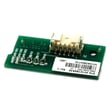
For example, if you are dealing with poor drying or lukewarm wash results, the dishwasher heater W10703867 is a common wear item to check.
Knowing the expected lifespan helps you decide whether to maintain, repair, or replace. A well-maintained dishwasher often needs only targeted repairs (like a pump, valve, or heater) to keep running reliably for years.
Last updated: January 2026
What is the most common problem with a KitchenAid dishwasher?
Drainage trouble is the most common issue we see with KitchenAid dishwashers like model KUDS35FXSS5. When the dishwasher will not drain or leaves water in the bottom, the cause is usually a clogged filter or hose, or a failing drain pump.
- Cancel the cycle and let the unit drain; then check for standing water in the tub.
- Remove and clean the filter area and sump screen (food and labels commonly block flow).
- Inspect the sink drain connection and garbage disposer inlet for a knockout plug (new installs).
- Verify the drain hose has a high loop or air gap and is not kinked or crushed.
- Run hot water at the sink before starting a cycle to improve wash and drain performance.
If cleaning and hose checks do not restore draining, these are the most common repair paths for KUDS35FXSS5:
| Symptom | Most likely cause | Common part to consider |
|---|---|---|
| Hums but will not drain | Pump impeller jammed or pump failed | Dishwasher drain pump WPW10348269 |
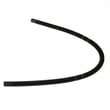
| Drains slowly or backs up | Restricted hose or check valve issue | Dishwasher drain hose 8269144A |
| Intermittent draining, poor wash | Sump or motor problem affecting flow | Dishwasher sump and motor assembly WPW10780877 |
A dishwasher that does not drain can re-circulate dirty water, leave odors, and trigger poor cleaning results. Fixing the drain path early also helps protect the motor and reduces the chance of leaks at the door from overfilling.
For KUDS35FXSS5, we recommend following the drain routing, high-loop/air-gap guidance, and diagnostic steps in the KUDS35FXSS5 owner's manual.
Last updated: January 2026
How many quarts is the KitchenAid KUDS35FXSS5?
The KitchenAid KUDS35FXSS5 is an undercounter dishwasher, so it is not rated by “quarts” the way a stand mixer bowl is. For capacity, we look at place settings and rack layout; check the KUDS35FXSS5 owner's manual for the exact capacity and loading guidance for this model.
Dishwashers are typically described by how many place settings they hold, not by liquid volume.
- “Quarts” is a common spec for stand mixer bowls, stock pots, and some countertop appliances
- Dishwashers use racks, tines, and spray coverage to determine usable capacity
- The most meaningful dishwasher capacity measure is place settings
- Rack adjusters and wheels affect how well you can fit tall items
If you need a quick real-world comparison for KUDS35FXSS5, use this approach.
| What you want to know | Best way to measure it | What to check |
|---|---|---|
| Overall capacity | Place settings | Rack layout and loading examples in the manual |
| Tall item fit | Clearance under upper rack | Upper rack height/adjustment features |
| Large pots fit | Lower rack spacing | Tine layout and spray arm clearance |
If your racks do not slide smoothly or sit level, you can lose usable capacity even if the tub size is unchanged.
- Worn rack adjusters can make the upper rack sag or bind
- Broken wheels can reduce smooth travel and alignment
- Missing rail stops can let the rack come off track
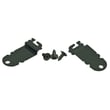
Helpful model-compatible examples include the dishrack adjuster kit (W10712394) - dishwasher rack component by whirlpool W10712394 and the whirlpool dishwasher dishrack wheel W10195416V.
Using the right capacity measure helps you load for better wash performance, drying, and fewer broken items. When racks sit correctly and spray arms rotate freely, you get more usable space and better cleaning.
Last updated: January 2026