Installation guide
 Owner’s manual


How do I find the dimensions of my dishwasher?
For KitchenAid model KUDE40FXSP0, you can confirm the correct dishwasher dimensions by measuring the cabinet opening (height, width, depth) and checking the required clearances in the installation guide. This ensures the dishwasher fits, levels correctly, and the door opens without hitting nearby cabinets or walls.
What to measure (and how)
Measure the opening where the dishwasher sits, not just the dishwasher door.
- Opening height: measure from the finished floor to the underside of the countertop.
- Opening width: measure between the cabinet sides at the front and near the back.
- Opening depth: measure from the back wall to the front of the cabinet opening.
- Door clearance: if installed in a corner, allow 2 inches minimum between the open door edge and the wall/cabinet.
- Floor level: check front-to-back; shims may be needed if the floor is uneven.
KUDE40FXSP0 height fit guidance (from the install instructions)
The install instructions include a height adjustment chart and note that the unit is typically preset for an opening around 34 1/4 inches (approximate). If your opening is tight, wheel position and leveling legs affect fit.
| Cabinet opening height (approx.) | What to do | What to expect |
|---|---|---|
| 34 inches or more | Adjust wheels and leveler legs per chart | Normal installation and easier sliding |
| About 33 7/8 inches | Rear wheels can be removed for extra clearance | Fits tighter; harder to move into place |
Why it matters
Correct dimensions prevent common installation problems like a dishwasher that will not slide in, a door that rubs a wall, leaks caused by poor leveling, or a drain hose and wiring getting pinched.
Quick tips before you measure
- Measure after flooring changes (tile, vinyl, underlayment) are complete.
- Confirm water line, electrical, and drain hose stay within the shaded routing area shown in the installation guide.
- If you are ordering a custom door panel, use the panel dimension diagrams in the installation guide so the toe-kick height and handle placement work correctly.
Last updated: February 2026
How to read KitchenAid dishwasher model numbers?
KitchenAid dishwasher model numbers identify the exact design series and configuration so you can match the right parts and instructions. For model KUDE40FXSP0, the most important step is copying the model number exactly as shown on the rating label inside the door.
Where to find the model number on KUDE40FXSP0
On this KitchenAid undercounter dishwasher, the rating label is typically located on the inside edge of the door (commonly along the left side when you open the door).
- Open the dishwasher door fully.
- Look along the inner door edge and tub frame area.
- Find the rating label with MODEL and SERIAL.
- Write the model number exactly, including all letters and numbers.
- Use the full model number when ordering parts or checking instructions in the KUDE40FXSP0 owner’s manual.
How to interpret the model number (practical breakdown)
Model numbers are best read as a structured code. You do not need to decode every character to get the right repair parts; you mainly need the full, exact model number.
| What to look at | What it tells you | Why you care |
|---|---|---|
| Brand prefix (example: “KUD…”) | Dishwasher product family | Helps narrow to the correct platform |
| Middle characters | Series and feature set | Affects racks, controls, wash system parts |
| Ending characters (example: “P0”) | Version/revision | Prevents ordering a similar but incorrect part |
Why it matters for parts and repairs
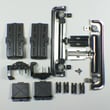
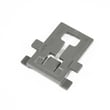
Even small model-number differences can change rack hardware, wash components, and electrical parts. Using KUDE40FXSP0 exactly helps us match items like the dishrack adjuster kit W10712394 or the correct pump, valve, or control.
Quick tips to avoid common mistakes
- Do not use only the “KUDE40” family; always use KUDE40FXSP0.
- Do not swap similar characters (O vs 0, I vs 1).
- If the label is worn, take a clear photo before ordering parts.
Last updated: February 2026
What are the commonly replaced parts in a dishwasher?
For the KitchenAid KUDE40FXSP0 dishwasher, the most commonly replaced parts are the ones that handle water flow, draining, heating, and door sealing, plus rack hardware that wears from daily loading. These parts typically fail first because they move, seal, or run every cycle.
Commonly replaced dishwasher parts (and what they do)
- Door seals: prevent leaks around the door and along the bottom edge.
- Spray arms and feed components: spin and distribute wash water; clogs reduce cleaning.
- Drain system parts: move dirty water out; restrictions cause standing water.
- Water inlet valve: controls fill; failures cause no fill or overfill symptoms.
- Heating element: heats water and helps drying; failures cause poor drying and cool washes.
- Controls: user interface and electronic control can cause dead panel or cycle issues.
- Rack hardware: wheels, adjusters, and stops wear, crack, or pop off.
KUDE40FXSP0 parts on this model that customers replace often
| Symptom | Likely part type | Example part for KUDE40FXSP0 |
|---|---|---|
| Water left in tub | Drain pump or drain hose | Dishwasher drain pump WPW10348269, dishwasher drain hose 8269144A |
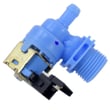
| Not filling or filling slowly | Water inlet valve | Dishwasher water inlet valve W11175771 |
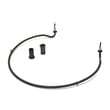
| Poor drying or lukewarm wash | Heater | Dishwasher heater W10703867 |
| Dishes not getting clean | Spray arm or filter | Dishwasher spray arm WPW10491331, dishwasher filter W10872845 |
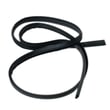
| Door leaks | Door seal | Seal WPW10497235 |
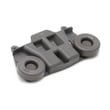
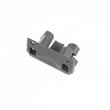
| Upper rack issues | Adjusters, wheels, rail stops | Adjuster W10712394, dishwasher dishrack slide rail stop, upper WPW10195622 |
Quick checks before you order parts
- Clean the filter and check spray arm holes for debris.
- Confirm the drain hose is routed correctly and not kinked.
- If the door drops open or slams shut, adjust door spring tension evenly on both sides.
- Verify the dishwasher is centered so the door does not rub.
- If you suspect an electrical part, use safe testing practices before replacing components.
Why it matters
Replacing the right part first saves time and prevents repeat problems. For example, a “won’t drain” complaint is often a hose routing or clog issue, while poor cleaning is frequently tied to a blocked filter or spray arm.
For model-specific diagrams, part locations, and installation notes, use the KUDE40FXSP0 installation guide and the KUDE40FXSP0 owner’s manual.
Last updated: February 2026
What's the average lifespan of a KitchenAid dishwasher?
A KitchenAid dishwasher like model KUDE40FXSP0 typically lasts 10 to 15 years. Consistent cleaning, correct loading, and fixing small issues early (drain problems, poor drying, leaks) are what most often determine whether you land closer to 10 years or closer to 15.
What helps KUDE40FXSP0 reach the high end of its lifespan
- Clean the filter and sump area regularly to prevent recirculating debris.
- Use rinse aid for better drying and to reduce hard-water deposits (this is especially important on energy-efficient designs).
- Keep the spray arm holes clear so wash pressure stays strong.
- Address slow draining quickly to avoid standing water and odors.
- Avoid overloading racks; it strains rack components and reduces cleaning performance.
For model-specific care and operating guidance, follow the KUDE40FXSP0 owner's manual.
Common wear items that can shorten lifespan (and what they affect)
| Symptom | Often involved system | Example part for this model |
|---|---|---|
| Water left in tub | Drain system | Dishwasher drain pump WPW10348269 |
| Poor cleaning | Wash circulation and spray | Spray arm, filter, pump and motor |
| Leaks at the bottom of the door | Door sealing | Lower door seal |
| Dishes not drying well | Heating and rinse aid use | Heater, rinse aid practices |
Quick “keep it running” checks (5 minutes)
- Confirm the door closes tightly and latches.
- Verify the water supply is turned on.
- Check the breaker or house fuse if the dishwasher will not start.
- Listen for draining at the end of the cycle; a weak or absent drain sound points to a drain restriction or pump issue.
- Expect longer cycle times on newer, energy-saving designs; 2 to 3 hours per load is normal, and some options can push cycles longer.
Why it matters
A dishwasher that is draining fully, heating correctly, and spraying with full pressure cleans better and runs with less strain on the motor, seals, and racks. That reduces repeat cycles and helps you get the full 10 to 15 years from your KitchenAid dishwasher.
Last updated: February 2026
What is the most common problem with KitchenAid dishwashers?
Drain and water-flow issues are the most common problems we see on KitchenAid dishwashers like model KUDE40FXSP0. Typical causes include a clogged filter, a restricted drain hose, or a failing drain pump, which can leave water standing in the tub or cause poor cleaning.
Most common symptoms (and what they usually point to)
- Water left in the bottom after a cycle: drain restriction or a weak drain pump
- Gurgling or slow drain: partial blockage in the drain hose or disposer connection
- Poor cleaning or gritty residue: filter needs cleaning, spray arm ports blocked
- Dishwasher stops mid-cycle: door not latching consistently, power interruption
- No water entering: water supply off, inlet valve issue
Quick checks we recommend first
Use the steps in the KUDE40FXSP0 installation guide to confirm basics like power, door latch, and water supply are correct before replacing parts.
- Verify the door closes tightly and latches
- Confirm the water supply is turned on
- Check the drain hose routing (no kinks; proper high loop/air gap setup)
- Look for standing water and clear obvious debris from the sump area
- Run the shortest cycle and confirm water enters the tub within the first few minutes
Parts that commonly solve drainage and flow problems
If the checks above point to a component failure, these are frequent fixes for KUDE40FXSP0:
| Problem you notice | Common part to inspect/replace | What it does |
|---|---|---|
| Won’t drain or drains weakly | Dishwasher drain pump WPW10348269 | Pumps water out to the drain line |
| Slow drain, leaks at hose | Dishwasher drain hose 8269144A | Carries drain water to disposer/standpipe |
| Not filling or fills slowly | Dishwasher water inlet valve W11175771 | Opens to let water into the dishwasher |
Why it matters
Drainage and water-flow problems affect everything: wash performance, odors, and cycle completion. Fixing restrictions early also helps prevent strain on the pump and motor assembly.
Last updated: February 2026