Error Codes


How to hard reset Kenmore washer?
To hard reset your Kenmore washer model 11091566200, we recommend a simple power reset first: unplug the washer (or switch off the breaker) for 1 minute, then restore power and try a normal cycle. This clears minor control glitches and cycle “hang-ups.”
Quick hard reset steps (power reset)
- Turn the washer OFF.
- Unplug the power cord (or turn the dedicated breaker OFF).
- Wait 60 seconds.
- Plug back in (or turn breaker ON).
- Wait 30 seconds before pressing any buttons.
- Select a Rinse/Spin or Normal cycle and press Start.
If it still will not run: what to check next
A “reset” will not fix a mechanical failure. If the washer still will not start, agitate, spin, or drain, check these common causes:
- Lid switch not closing or failing (washer may not spin or drain).
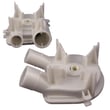
- Drain pump jammed or leaking (look at the water pump WP3363394).
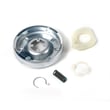
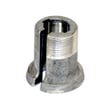
- Motor coupling broken (washer may fill and drain but not agitate or spin; see the coupling 285753A).
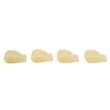
- Agitator dogs worn (agitator moves poorly or only in one direction; see the agitator dog 80040).
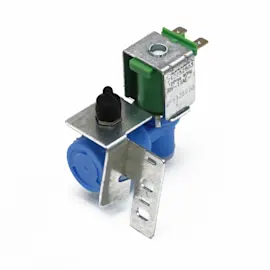
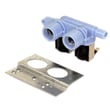
- Inlet valve screens clogged or valve failing (slow fill or no fill; see the inlet valve 285805).
Symptom-to-part cheat sheet
| What the washer does | What it usually points to | Example part for 11091566200 |
|---|---|---|
| Fills but will not agitate or spin | Drive connection issue | Coupling |
| Will not drain or drains slowly | Pump or drain restriction | Water pump |
| Agitator “slips” or barely moves | Worn agitator dogs/cam | Agitator dog |
| Will not fill or fills very slowly | Water supply/valve issue | Inlet valve |
Why it matters
A hard reset is great for clearing a temporary control hiccup, but repeated failures usually mean a worn drive part (coupling, clutch, gear case), a drain problem (pump), or a safety interlock issue (lid switch). Fixing the root cause prevents repeat no-spin, no-drain, and incomplete-cycle problems.
Last updated: February 2026
What is the average lifespan of a Kenmore washer?
A Kenmore washer typically lasts 10 to 15 years with normal household use; for Kenmore model 11091566200, keeping loads balanced, using the right detergent amount, and fixing small issues early helps you reach the upper end of that range.
What affects washer lifespan most
- Overloading (stresses the drive system and suspension)
- Chronic out-of-balance loads (wears suspension and drive components)
- Hard water and detergent overuse (buildup, poor rinsing, extra strain)
- Slow draining (can overwork the pump and leave water in the tub)
- Ignoring early symptoms like slipping agitation or burning/rubber smells
Common wear items that can shorten life (and what they do)
If performance drops, these are frequent culprits on many Kenmore top-load designs:
| Symptom you notice | Likely area | Example part for model 11091566200 |
|---|---|---|
| Won’t agitate well, “ratcheting” sound | Agitator drive | Agitator dog 80040 |
| Won’t spin or agitates weakly | Motor-to-transmission drive | Coupling 285753A |
| Won’t drain, water left in tub | Drain system | Water pump WP3363394 |
| Won’t fill or fills slowly | Water supply control | Inlet valve 285805 |
Simple maintenance that extends life
- Keep loads evenly distributed; wash bulky items with a few towels to balance.
- Use HE detergent only if your detergent calls for it; otherwise measure carefully and avoid oversudsing.
- Check fill hoses and screens periodically; restricted flow makes cycles run poorly.
- If draining is slow, inspect the drain hose for kinks and clear pump obstructions.
- Stop using the washer if you hear grinding during spin; that points to a developing drive or tub issue.
Why it matters
A washer that is maintained and repaired early usually avoids secondary damage (for example, a slipping drive coupling can lead to poor spin, wet loads, and extra strain on the clutch and gear case). Replacing a small wear part on time often prevents a much larger repair later.
Last updated: February 2026
How can I tell how old my Kenmore washer is?
You can tell how old your Kenmore washer model 11091566200 is by reading the serial number on the washer’s ID tag and decoding it into a manufacture month and year. Kenmore washers were built by different manufacturers, so the serial format varies; we use the serial pattern to identify the build date.
Where to find the serial number on a Kenmore 11091566200
Check these common locations on top-load Kenmore washers:
- Under the lid, around the tub opening
- On the back panel of the cabinet
- Along the rim of the washer opening (top edge)
- Inside the control console area (less common)
How to decode the date (what to look for)
Once you have the serial number, use these steps:
- Write down the full serial number exactly as shown (letters and numbers)
- Note the first 2 to 4 characters; these often identify the manufacturer and date code style
- Look for a month code (often 01 to 12, or a letter-based month code)
- Look for a year code (often a single digit or two digits)
- Confirm the result by checking whether the washer’s design era matches (controls, lid style, agitator type)
Quick guide: what the model number tells you
Kenmore model numbers starting with 110 (like 11091566200) are commonly associated with Whirlpool-built Kenmore washers. That helps narrow the serial-number decoding method.
| What you have | What it helps with | What it does not confirm |
|---|---|---|
| Model number (11091566200) | Likely manufacturer family | Exact manufacture date |
| Serial number | Manufacture month and year | Purchase date |
Why it matters
Knowing the manufacture date helps us match the right replacement parts and troubleshooting steps for your washer’s production run. It is especially useful when diagnosing common wear items like the coupling 285753A or the water pump WP3363394.
Last updated: February 2026
How to identify a Kenmore washer model?
To identify your Kenmore washer model, we look for the model number tag on the machine itself. For Kenmore model 11091566200, the tag is typically under the lid on top-load washers or on the back panel near the power cord; the full model number is what you use to match exact replacement parts.
Where to find the model number on Kenmore washers
Check these common locations (wipe dust off the tag and use a flashlight):
- Top-load washers: under the lid, around the tub opening
- Front-load washers: inside the door opening, along the door frame
- All styles: back panel near the power cord entry
- Some models: behind the control panel or along the cabinet edge
What the model number looks like (and what to write down)
Kenmore model numbers often start with 110 and include a longer string of digits. Record the model number exactly as shown, plus any extra identifiers.
- Model number (example format): 110.XXXXXXXX or 110XXXXXXXXXX
- Serial number (helps date the unit, not required for most parts)
- Any suffixes or revision codes printed near the model number
| Item on tag | Why it matters for parts | Example |
|---|---|---|
| Model number | Ensures diagrams and parts match your washer | 11091566200 |
| Serial number | Helps confirm production run details | Varies |
| Type/style | Helps narrow top-load vs front-load parts | Top-load |
Why it matters
A single digit off can point to a different Kenmore washer design, which changes key parts like the drive system, water inlet valve, and drain pump. Using the exact model number helps us match the correct parts the first time.
Helpful next step if you are troubleshooting
If your washer is showing an error code, use our Kenmore error code resources to narrow the issue before ordering parts: Kenmore 110 vmax top load washer error codes.
Last updated: February 2026
Is it worth repairing a Kenmore washing machine?
Yes, repairing a Kenmore washer is worth it when the fix restores reliable wash and spin performance for less than the cost of replacing the machine, especially on a proven direct-drive style model like Kenmore 11091566200 where common failures are straightforward parts replacements.
Quick way we decide: repair vs. replace
- Repair it when the problem is isolated (no spin, no drain, weak agitation) and the tub and cabinet are in good shape.
- Replace it when there is major structural rust, repeated leaks into the transmission area, or multiple major systems failing at once.
- Start with diagnosis: many “dead washer” symptoms are a lid switch, pump clog, or drive coupling.
Common repairs that are usually worth it on model 11091566200
These are frequent, cost-effective fixes on Kenmore 110-series top-load washers:
- No agitation or weak agitation: agitator dog 80040
- Washer won’t spin or agitates but won’t spin: coupling 285753A
- Won’t drain or drains slowly (often with noise): water pump WP3363394
- Spin issues with burning smell or slow basket ramp-up: clutch 285785
- Overfills or won’t fill correctly: inlet valve 285805
Cost and effort comparison (typical)
| Symptom | Likely part(s) | Typical DIY difficulty | Typical “worth it” signal |
|---|---|---|---|
| Agitator not moving properly | Agitator dogs | Easy | Low cost, fast fix |
| No spin / loud grinding | Motor coupling | Easy to moderate | Common wear item |
| No drain / water left in tub | Drain pump | Moderate | Restores basic function |
| Poor spin / clothes wet | Clutch, suspension | Moderate | Improves performance |
| Leaks from center / bearing roar | Gear case, bearing/seal | Hard | Consider total machine condition |
Why it matters
A repair that restores drain, spin, and agitation protects clothing, prevents mildew from standing water, and reduces strain on the drive motor and gear case. Fixing a small failure early can prevent a bigger, more expensive breakdown later.
Practical checklist before you spend money
- Confirm the washer fills, agitates, drains, and spins in a short cycle.
- Listen for grinding, squealing, or pump noise during drain and spin.
- Check for oil leaks under the gear case area.
- Inspect hoses and the tub area for active leaks.
- If the basket is off-balance often, check suspension components (springs, plate) before replacing major drive parts.
Last updated: February 2026