Owner’s manual
 Error Codes


How to find the model number on Kenmore 79576082600 Elite refrigerator?
On Kenmore Elite model 79576082600, the model and serial number are printed on an identification label inside the fresh food (refrigerator) compartment, typically on the right-hand side wall. Use that label when ordering parts or checking specifications in the 79576082600 owner's manual.
Where to look (fast checklist)
- Open the refrigerator (fresh food) door and check the right interior side wall
- Look for a white or silver rating label with model and serial information
- Check near the crisper area and along the side liner where labels are commonly placed
- Use a flashlight; labels can be hard to read in low light
- Write down the full model number and serial number exactly as shown
What the label usually includes
| Label item | What it’s used for | Example for this refrigerator |
|---|---|---|
| Model number | Matching parts and diagrams | 79576082600 |
| Serial number | Identifying production run | Varies by unit |
| Electrical info | Verifying power requirements | Varies by label |
Why it matters
We use the exact model number to match the correct Kenmore parts list, diagrams, and compatible replacements. Even small model variations can change door hardware, sensors, or water system parts.
Tip for ordering the right part
If you are replacing a common wear item, confirm the model number first, then match the part by name and ID. For example, a door light issue can involve the refrigerator door push-button switch 6600JB1010A.
Last updated: February 2026
How to raise a refrigerator off the floor?
To raise your Kenmore Elite refrigerator model 79576082600 off the floor, adjust the two front leveling screws. Turn the screws clockwise to raise the front (the manual recommends the front slightly higher than the rear for easier door closing). See the owner's manual.
How to raise it using the leveling screws
- Move the refrigerator into position and make sure it is stable.
- Have someone push gently against the top of the cabinet to take weight off the screws.
- Use a screwdriver to turn the front leveling screws:
- Clockwise: raises that side
- Counterclockwise: lowers that side
Quick checklist before you adjust
- Unplug the refrigerator if you will be working near wiring or moving it significantly.
- Remove the base grille or toe grille if it blocks access to the leveling screws.
- Raise the front a little at a time, alternating sides to keep the cabinet square.
- Recheck door swing and door closing after each adjustment.
- Confirm the refrigerator rests solidly on the floor (no rocking).
What “raised enough” looks like
Use these simple checks to confirm the height and tilt are correct.
| Check | What you want | What to do if it fails |
|---|---|---|
| Door closing | Doors close easily on their own | Raise the front slightly more |
| Stability | No rocking or vibration | Adjust both leveling screws until solid |
| Drawer operation | Freezer drawer slides smoothly | Re-level; confirm cabinet is not twisted |
If you need extra clearance (beyond leveling)
Leveling legs are meant for leveling and small height changes, not major lift. If you need more space for flooring transitions or airflow, use a rigid, fully supported platform designed for appliance weight and ventilation.
Why it matters
Proper leveling reduces vibration and rattling, helps the doors seal correctly, and improves temperature stability. The manual also notes that a weak or uneven floor can cause noise and instability, so leveling is a key first fix.
Last updated: February 2026
How to adjust door height on Kenmore 79576082600 Elite refrigerator?
To adjust door height on your Kenmore Elite 79576082600 bottom-mount refrigerator, we level the cabinet first using the two front leveling screws; raising or lowering the front changes how the doors sit and close. Follow the leveling and door alignment steps in the owner's manual.
Step-by-step: level the refrigerator to correct door height
- Plug the refrigerator in and move it into its final position.
- Locate the two front leveling screws (one left, one right).
- Use a screwdriver to turn the leveling screw:
- Clockwise: raises that side of the refrigerator
- Counterclockwise: lowers that side of the refrigerator
- Make small adjustments, then re-check door alignment and closing.
Tips that make the adjustment easier
- Have someone push back against the top of the refrigerator to take weight off the leveling screws.
- Turn the screw a little at a time; it often takes several turns to see a change.
- Confirm both doors close smoothly and the gasket seals all the way around.
- Re-check after the refrigerator has been loaded with food; weight can slightly change how it sits.
Quick checks before you adjust
- Make sure the refrigerator is fully in position and not rocking.
- Check that nothing inside is preventing the door from closing (bins, shelves, or food packages).
- Inspect the door seal for gaps, folds, or areas that do not contact the cabinet.
What to adjust (and what it affects)
| What you adjust | What it changes | Best for fixing |
|---|---|---|
| Front leveling screw (left/right) | Cabinet tilt and door alignment | Uneven door height, doors not closing easily |
| Both front leveling screws equally | Overall front height | Door closing effort, cabinet stability |
Why it matters
A refrigerator that is not level can leave the doors slightly out of alignment, which causes warm air leaks, moisture buildup, and harder door closing. Proper leveling helps the doors seal correctly and keeps temperatures stable.
Last updated: February 2026
What is the average lifespan of a Kenmore 79576082600 Elite refrigerator?
A Kenmore Elite refrigerator like model 79576082600 typically lasts 10 to 15 years. Regular maintenance (especially cleaning condenser coils and keeping door gaskets sealing well) helps you reach the higher end of that range and reduces the chance of expensive sealed-system problems.
Typical lifespan and what affects it
Most bottom-mount refrigerators fall into a similar life range, but real-world lifespan depends heavily on heat, airflow, and how hard the unit has to run.
- Condenser coil cleanliness (dusty coils raise compressor run time)
- Door seal condition (air leaks cause temperature swings and frost)
- Room temperature and ventilation (tight cabinets trap heat)
- Ice maker and water system health (leaks and clogs create secondary damage)
- How full the refrigerator is (overpacking blocks airflow; too empty can warm faster)
For model-specific care and cleaning guidance, follow the maintenance schedule in the owner's manual.
Maintenance checklist to help it last longer
Use this quick routine to extend the life of your Kenmore Elite 79576082600:
- Vacuum and brush condenser coils regularly
- Keep vents clear for proper air circulation inside the compartments
- Clean and inspect door gaskets; replace if torn or deformed
- If you see water under the unit, check the drain path and consider replacing the refrigerator drain tube 5251JA3003D
- If the interior light does not respond to the door opening, test the refrigerator door push-button switch 6600JB1010A
Common “age-related” repairs (what’s normal vs. costly)
These are typical repair categories as refrigerators approach the 10+ year mark:
| Repair type | What you might notice | Typical impact |
|---|---|---|
| Air leaks / gasket issues | Frost, warm spots, longer run times | Efficiency and cooling problems |
| Defrost/drain issues | Ice buildup, water puddles | Can lead to fan noise and poor cooling |
| Sensors/controls | Temps fluctuate, error codes | Can mimic bigger failures |
| Sealed system (compressor/refrigerant) | Not cooling well despite running | Highest-cost repair |
Why it matters
Knowing the expected lifespan helps you decide when maintenance and part replacement make sense versus planning for replacement. Preventive care is the best way to avoid compressor overwork and temperature instability.
Last updated: February 2026
What are the common problems with Kenmore 79576082600 Elite refrigerators?
Common problems on the Kenmore Elite 79576082600 bottom-mount refrigerator are warm temperatures (often from airflow or defrost issues), water leaks (frequently from a clogged defrost drain), ice maker or dispenser problems, doors not sealing or closing correctly, and unusual noises from fans. Our 79576082600 owner's manual also points to basics like dirty condenser coils and door alignment as frequent causes.
Most common symptoms and what they usually mean
- Not cooling or temps too warm: blocked vents, dirty condenser coils, failed fan, or a defrost problem causing frost buildup
- Ice not made fast enough: freezer temp not cold enough, heavy use, door openings, or airflow blocked (manual recommends waiting 24 hours after changes)
- Water under the refrigerator or in the freezer: defrost drain restriction; the drain tube can be the fix on many bottom-mount designs
- Doors will not close completely: unit not level, bins/shelves out of position, packages blocking the door, or gasket sticking
- Noisy operation: condenser fan or evaporator fan issues; noise often changes when doors open or when the compressor cycles
Quick checks we recommend first (no parts required)
- Confirm doors close firmly and nothing is holding them open.
- Clean condenser coils; dirty coils reduce heat transfer and make the compressor work harder.
- Make small control changes and wait 24 hours between adjustments (manual guidance).
- Check that interior air vents are not blocked by food packages.
- If doors are hard to open right after closing, wait about 5 minutes for pressure to equalize (manual guidance).
Parts that commonly solve these issues on this model
| Symptom | Common part to inspect/replace | Example from this model’s parts list |
|---|---|---|
| Water leaks/puddles | Defrost drain path | Refrigerator drain tube 5251JA3003D |
| Door light not working or door-ajar behavior | Door switch | Refrigerator door push-button switch 6600JB1010A |
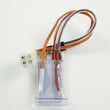
| Poor temperature control or erratic readings | Temperature sensor/thermistor | Refrigerator thermistor 6500JB2002T |
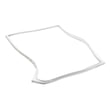
| Door not sealing well | Door gasket | Refrigerator gasket assembly ADX73350922 |
Why it matters
Catching airflow, door-seal, and drain issues early helps prevent food spoilage, ice buildup, and compressor overwork. Many “not cooling” complaints start with simple causes like dirty coils, blocked vents, or doors not sealing.
For display or diagnostic codes on Kenmore 795 bottom-freezer models, use our Kenmore 795 model bottom freezer refrigerator error codes guide.
Last updated: February 2026