Owner’s manual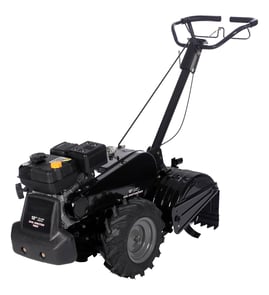




Where is the model number on a tiller?
On the Craftsman rear-tine tiller model 247298770, the model number is stamped on a plate attached to the chassis. We use that exact model number to match the correct parts list, diagrams, and service information in the 247298770 owner’s manual.
Where to look on the tiller
Check these common chassis locations first (clean dirt and grease off the frame so the stamping is visible):
- On the main frame rails near the engine mounting area
- On the chassis near the tine shield or tine guard area
- On a metal plate riveted or fastened to the chassis (not on the handlebar foam or controls)
- Near the transmission housing area on the frame
Quick tips to find it faster
A stamped plate can be hard to spot, especially on older tillers. These steps usually help:
- Use a flashlight and look at a low angle to make stamped numbers stand out
- Wipe the area with a rag and mild degreaser; avoid soaking decals or wiring
- Lightly brush rust or packed soil off the plate with a nylon brush
- Write the number down exactly as shown (include all digits)
Why the model number matters
Craftsman tillers often have similar-looking frames, but parts can vary by model and engine type. Using the correct model number helps us match the right drive components, tine hardware, and engine-related parts.
| What you’re ordering | What to provide | Example for this tiller |
|---|---|---|
| Replacement part | Part number + model number | Part number plus 247298770 |
| Service help | Model number | 247298770 |
Last updated: January 2026
How much does a Craftsman rear tine tiller weigh?
The Craftsman rear-tine tiller model 247298770 is a heavy, steel-framed 5-HP chain-drive tiller; most rear-tine tillers in this class weigh about 150 to 220 lb depending on tine setup and accessories. For the exact shipped or assembled weight for your unit, check the specifications section in the 247298770 owner's manual.
What affects the weight on model 247298770
Rear-tine tiller weight can vary noticeably based on what is installed on the machine.
- Engine and transmission configuration (chain drive is typically heavier than front-tine designs)
- Tine assemblies and shields installed
- Counterweight and depth stake hardware installed
- Optional accessories such as wheel weights or depth gauge wheels
- Fuel level (a full tank adds a small amount)
Typical weight ranges (so you can plan transport)
| Tiller type | Typical weight | What it means for you |
|---|---|---|
| Front-tine tiller | 90 to 140 lb | Often manageable with 1 strong person and ramps |
| Rear-tine tiller (5 to 6 HP class) | 150 to 220 lb | Plan for 2 people or a loading ramp |
| Rear-tine tiller with weights/accessories | 200 to 300+ lb | Use a ramp, tie-downs, and a solid trailer/truck bed |
How to estimate your actual weight quickly
If you need a practical estimate for loading today, use this approach.
- Start with 180 lb as a realistic midpoint for a 5-HP rear-tine tiller
- Add 20 to 60 lb if wheel weights or other heavy accessories are installed
- Add 5 to 10 lb if the fuel tank is full
- Subtract 10 to 20 lb if major assemblies are removed for transport (for example, tines)
Why it matters
Knowing the weight helps you choose the right ramps, tie-down points, and help for loading. It also reduces the chance of tipping the tiller forward into the tine area; our manual safety guidance includes keeping hands and feet away from the tines and disconnecting the spark plug wire before maintenance. See the 247298770 owner's manual.
Last updated: January 2026
What are the common problems with lawn tillers?
Common problems on the Craftsman 247298770 5-hp chain drive rear-tine tiller include hard starting or stalling (often fuel or ignition related), poor tilling performance from incorrect depth stake settings or soil conditions, and vibration or handling issues from loose hardware. Use the Craftsman 247298770 owner's manual for safe checks and operating adjustments.
Most common symptoms and what they usually point to
- Engine will not start or starts then dies: old fuel, restricted fuel flow, dirty carburetor, fouled spark plug
- Runs rough or lacks power under load: clogged air filter, stale fuel, incorrect choke use, spark plug issues
- Tines do not dig well or tiller “bounces”: soil too dry or too wet, depth stake set wrong, trying to go too deep too fast
- Tiller “walks” or jumps when it hits a hard spot: rock or hardpan; handle pressure and depth stake need adjustment
- Excessive vibration or rattling: loose nuts/bolts/screws, damaged tine hardware
Quick checks we recommend (safe, fast, and effective)
Before maintenance or adjustments, follow the manual’s safety guidance: stop the engine, disconnect the spark plug wire, and ground it on the engine block.
- Drain and replace old gasoline; refill with fresh fuel (never refuel with the engine running)
- Inspect the spark plug; clean or replace if fouled
- Check fuel line and fuel filter for restriction
- Verify the shift lever is in neutral before starting
- Tighten visible fasteners on the tine and engine mounting areas
Tilling performance problems: depth stake and soil conditions
The manual calls out that dry, hard soil resists tine penetration and can cause excessive bounce; extremely wet soil can clump and ball up. For sod, start shallow with the depth bar about 1 to 2 inches above the tines, then make additional passes for more depth.
| Problem you see | Most likely cause | Best first adjustment |
|---|---|---|
| Tines barely scratch surface | Depth stake too low (too shallow) or hard soil | Moisten hard soil; adjust depth stake gradually |
| Tiller bounces and is hard to control | Soil too dry/hard; trying to dig too deep | Start shallow; make multiple passes |
| Tiller “walks” after hitting rock | Hard spot/rock lifts tines | Raise up on handles; reduce depth |
Why it matters
Most tiller “problems” are really fuel quality, basic ignition upkeep, or setup issues (depth stake, gear selection, and soil prep). Fixing those first prevents unnecessary parts replacement and makes the tiller safer to operate.
Last updated: January 2026
What is the back of a tiller called?
On the Craftsman 247298770 rear-tine tiller, the back area is typically referred to as the rear of the tiller, and the digging blades at the back are called the rear tines. The rear also includes the depth stake (drag stake) that controls how deep the tines bite into the soil; see the Craftsman 247298770 owner's manual.
Common names for the “back” of a rear-tine tiller
Depending on what you mean by “back,” these are the most common terms:
- Rear tines: the rotating blades that dig and mix soil.
- Tine shaft: the shaft the tines mount to (vines and grass can wrap around it during fall tilling).
- Depth stake (drag stake): the adjustable bar behind the tines that sets tilling depth.
- Rear shield / tine shield: the guard area behind or around the tines (name varies by design).
- Rear of the tiller: general directional term used in operating and safety instructions.
How to tell which part you are talking about
Use this quick guide to match the term to the job it does.
| If you mean the part that… | It’s usually called… | What it affects |
|---|---|---|
| Digs and throws soil | Rear tines | Soil breakup, traction, and tilling quality |
| Limits how deep the tines go | Depth stake (drag stake) | Tilling depth and stability |
| Gets wrapped with vines/grass | Tine shaft | Tilling performance and vibration |
| Helps protect you from debris | Rear/tine shield | Safety and debris control |
Why it matters
Using the right term helps you pick the correct diagram and parts list for the Craftsman 247298770. It also helps with safe operation because the manual warns that if the tines hit a hard spot, the back of the tiller can lift and the machine can “walk” across the ground; raising up on the handles helps correct that.
Helpful operating tip (depth and control)
If the tiller feels like it is bouncing or lifting at the rear:
- Start with shallow tilling and lower the depth stake gradually.
- Moisten dry, hard soil before tilling for better tine penetration.
- Remove long vines/grass so they do not wrap around the tine shaft.
- Make multiple passes, raising the depth stake between passes as needed.
Last updated: January 2026