
What is the oil to gas ratio for a 2 stroke leaf blower?
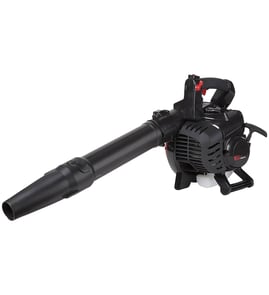
For the Homelite BX90-UT08026-C 2-stroke gas leaf blower, most two-cycle engines run on a 50:1 fuel mix (gasoline to 2-cycle oil); some older or higher-load designs use 40:1. Use fresh, ethanol-free fuel when possible and mix accurately to protect the piston, cylinder, and spark plug.
Quick mix chart (common 2-stroke ratios)
| Gasoline amount | 50:1 oil | 40:1 oil |
|---|---|---|
| 1 gallon | 2.6 oz | 3.2 oz |
| 2 gallons | 5.1 oz | 6.4 oz |
| 1 liter | 20 ml | 25 ml |
How we recommend mixing fuel
- Use 2-cycle oil made for air-cooled engines (leaf blowers, trimmers, chainsaws).
- Add half the gas to an approved fuel can first.
- Measure oil precisely, then pour it in.
- Add the remaining gas, cap, and shake to blend.
- Mix only what you will use in 30 days; stale fuel causes hard starting and poor power.
Symptoms of the wrong mix (and what to check)
| If you notice | Likely cause | What to do next |
|---|---|---|
| Excess smoke, oily muffler | Too much oil (rich mix) | Remix at 50:1; inspect/replace the spark plug 79252 |
| Runs hot, surges, loses power | Too little oil (lean mix) | Stop use; remix correctly; check air filter and fuel quality |
| Hard starting, misfire | Old fuel or fouled plug | Drain and remix; replace the spark plug 79252 |
Why it matters
The oil in a 2-stroke mix lubricates the crankshaft bearings, piston ring, and cylinder wall. Too little oil accelerates wear and scoring; too much oil increases carbon buildup and can foul the plug and exhaust.
Last updated: February 2026
How long does a gas leaf blower last?
A gas leaf blower like the Homelite BX90-UT08026-C typically lasts about 7 to 10 years with normal homeowner use and consistent maintenance. Heavy use, dusty conditions, and running old fuel can shorten life; routine tune-ups and clean airflow keep it running longer.
Typical lifespan by use level
| Use pattern | Typical lifespan | What usually ends it first |
|---|---|---|
| Occasional (seasonal cleanup) | 10+ years | Fuel system varnish from storage |
| Regular homeowner (weekly in season) | 7 to 10 years | Ignition wear, air leaks, clogged filter |
| Heavy/near-daily | 3 to 6 years | Engine wear, vibration damage, heat stress |
Maintenance that adds years
- Use fresh, properly mixed fuel; empty the tank for long storage.
- Replace the spark plug on schedule; a worn plug causes hard starting and misfires.
- Keep the air intake and filter clean; restricted airflow makes the engine run hot.
- Check fasteners and housings for vibration loosening; replace missing hardware.
- Inspect for air leaks around the cylinder area if performance drops after a rebuild.
Helpful model-matched parts we stock include the spark plug 79252, filter 49422, and cylinder gasket 04388.
Quick “replace or repair” checklist
Use this as a practical decision guide:
- Repair makes sense when it starts reliably, has good power, and only needs routine items (plug, filter, loose screws).
- Replacement makes sense when compression is low, it will not stay running after fuel-system cleaning, or it needs multiple major engine parts.
Why it matters
Most “short lifespan” complaints on gas blowers come from storage and airflow issues, not the engine itself. Keeping fuel fresh and the intake clean prevents hard-starting, overheating, and premature wear on your BX90-UT08026-C.
Last updated: February 2026
What is the most reliable gas leaf blower?
The most reliable gas leaf blower is the one that matches your workload and is kept in tune; for homeowners, a well-maintained 2-cycle handheld unit is typically the most dependable day to day. For your Homelite BX90-UT08026-C, reliability improves fastest with routine service parts like the spark plug 79252 and a clean air filter.
What “reliable” means for a gas leaf blower
Reliability usually comes down to easy starting, steady idle, strong airflow under load, and fewer fuel-related issues. In a 2-cycle power blower, the biggest drivers are ignition, air filtration, and fuel quality.
Most common reliability factors
- Fresh, properly mixed 2-cycle fuel (correct oil ratio for your engine)
- Clean air filter and unobstructed intake
- Strong ignition spark and correct plug condition
- No air leaks at the cylinder or crankcase sealing surfaces
- Clear blower tubes and tight fasteners (no vibration loosening)
Quick “best choice” guide by user type
| User type | Most reliable style | Why it tends to be reliable | Tradeoffs |
|---|---|---|---|
| Typical homeowner | Handheld 2-cycle gas blower | Simple design, easy to store, quick maintenance | More arm fatigue |
| Large yard or heavy debris | Backpack gas blower | Runs longer with less fatigue, better sustained output | More cost, more storage space |
| Noise-sensitive areas | Battery blower | Fewer starting issues, minimal routine maintenance | Battery runtime limits |
How to make your BX90-UT08026-C more reliable
These steps prevent the most common “won’t start” and “bogs down” complaints.
- Replace the spark plug 79252 on a regular schedule or when starting becomes inconsistent
- Clean or replace the air filter (your model lists a filter 49422)
- Inspect the blower tube for cracks or loose joints; replace damaged sections such as the leaf blower tube, upper 02898 or tube elbow 02899
- Check for air leaks during reassembly; a damaged cylinder gasket 04388 can cause hard starting and poor power
- Tighten loose hardware; replace missing fasteners with the correct screw 82540 (or the exact screw shown in your parts diagram)
Why it matters
A “reliable” gas leaf blower is mostly a maintenance outcome: clean air, good spark, and sealed engine surfaces keep the fuel mixture stable so the engine starts easily and makes consistent power.
Last updated: February 2026
Are Homelite gas blowers any good?
Homelite gas blowers like the Homelite BX90-UT08026-C are a solid choice for typical homeowner cleanup when they are tuned correctly and maintained (fresh fuel mix, clean air filter, good spark). For heavy, all-day leaf and debris work, a higher-output blower is usually a better fit.
What “good” means for a gas leaf blower
A gas blower is “good” when it starts reliably, holds a steady idle, accelerates without bogging, and produces consistent airflow. Most performance complaints come from basic maintenance items rather than the blower being inherently bad.
Quick checklist we use to judge condition
- Starts within a few pulls when cold (with choke used correctly)
- Idles without stalling once warmed up
- Throttle response is crisp (no hesitation)
- Airflow feels strong at the nozzle (no loose or leaking tube joints)
- No fuel smell or wetness around the tank/carb area
Most common fixes that improve performance fast
These are the first things we address on a BX90-UT08026-C when it feels weak or hard to start:
- Replace the spark plug if it is fouled or old: spark plug 79252
- Clean or replace the air filter if it is dirty or oil-soaked: filter 49422
- Inspect the blower tube for cracks, missing pieces, or loose connections: leaf blower tube, upper 02898 and tube elbow 02899
- Check for air leaks at the cylinder area if you notice surging or poor power: cylinder gasket 04388
- Verify fasteners are snug so the housing and tube stay sealed (air leaks reduce output): screw 82540
Symptoms and what they usually point to
| Symptom | Most likely cause | What to do first |
|---|---|---|
| Hard starting | Fouled plug, dirty filter, stale fuel | Replace plug, service filter, refresh fuel mix |
| Weak airflow | Tube leak, blockage, loose joints | Inspect tube/elbow, clear debris, reseat connections |
| Bogging under throttle | Restricted air, fuel delivery issue, air leak | Check filter, inspect gasket area, basic tune-up |
Why it matters
A gas blower’s airflow and reliability depend heavily on sealing (tube and housing), ignition (spark plug), and breathing (air filter). Keeping those items in good shape makes the BX90-UT08026-C perform the way it was designed to.
Last updated: February 2026