

Is it worth replacing the heating element in a dryer?
Yes, it’s usually worth replacing the heating element when your Estate TEDS740JQ1 tumbles but won’t heat, because the part cost is typically far less than replacing the dryer. It’s most worthwhile when the dryer is otherwise in good shape and airflow issues are corrected.
- The drum turns normally, but clothes stay cold or take much longer to dry
- The dryer has good airflow after you clean the lint screen and vent duct
- The breaker is not tripping and the dryer has proper power (electric models need full 240V)
- The cabinet, drum, and controls are in decent condition (no major rust or damage)
- You’re already planning a basic refresh of wear items (belt, rollers, idler)
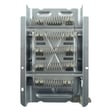
A common replacement for this model is the dryer element 279838.
- The dryer has multiple major failures (no heat plus no tumble, loud grinding, burning smell)
- The venting is crushed, clogged, or excessively long and can’t be corrected (it will keep overheating parts)
- You’ve replaced heat-related parts before and the dryer still overheats or shuts down
| Option | Typical parts cost | Typical time | Best for |
|---|---|---|---|
| Replace heating element | Low to moderate | 1 to 2 hours | “No heat” with good tumble |
| Replace heat safety parts too | Moderate | 1 to 2.5 hours | Overheating, repeated no-heat |
| Replace dryer | High | N/A | Multiple major issues or severe wear |
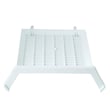
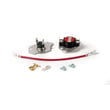
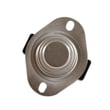
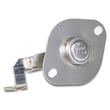
If the dryer overheated, we often replace the element along with the dryer thermal cut-off fuse kit 279816 and check the dryer high-limit thermostat WP3977767.
A failed element is often a single-part fix, but restricted airflow can cause repeat failures. Cleaning the lint screen, blower housing, and vent path protects the new heater and improves drying time.
For step-by-step airflow and long-dry guidance, use dryer takes a long time to dry.
Last updated: February 2026
How do I find out what size dryer belt I need?
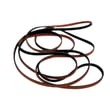
For your Estate dryer model TEDS740JQ1, the safest way to get the right belt size is to match by model number, not by measuring. This model uses the correct-fit belt shown in our parts list: dryer drum belt 341241.
Use these checks before ordering:
- Confirm the model number on the dryer’s ID tag is TEDS740JQ1 (match every character).
- Use the model-based parts list to select the belt (avoids length and rib-count guesswork).
- If your old belt is broken, look for any printed numbers on it and compare to the listed belt.
- If the belt is intact, note whether it rides on the motor pulley and idler in the normal path (a wrong belt often slips or won’t tension).
Measuring can help as a backup, but it is easy to get a wrong result because belts stretch and can be routed incorrectly.
- If the belt is unbroken: wrap a string around the belt’s full loop, then measure the string.
- If the belt is broken: lay it flat without stretching and measure end-to-end, then double it.
- Compare your measurement to the belt you’re replacing by model match first.
A worn belt often shows up with other wear items. If the dryer squeals, thumps, or the drum feels rough, a kit can save a second teardown.
| Symptom | Common related wear item | Example part on this model |
|---|---|---|
| Belt broke or slips | Drum support parts, idler/rollers | Dryer repair kit 4392065 |
| Loud rumble or thump | Drum support/roller components | Support 349241T |
| Drum hard to turn by hand | Pulley or motor load | Motor pulley WP8066184 |
Using the correct belt size keeps proper drum speed and tension. A belt that is too loose can slip and overheat; a belt that is too tight can strain the motor and pulley system.
Last updated: February 2026
What are common dryer part failures?
On the Estate TEDS740JQ1 dryer, the most common part failures are in the drive system (belt and drum support parts), the heating and safety circuit (heating element and thermal cut-off), and airflow components (blower wheel). These issues typically show up as no heat, long dry times, squealing, or a drum that will not turn.
- Drum belt: dryer runs but drum will not tumble, or you hear the motor running with no drum movement (see dryer drum belt 341241).
- Heating element: tumbles but does not heat, or heat is weak/intermittent (see dryer element 279838).
- Thermal cut-off fuse kit: no heat, or dryer shuts down after overheating from restricted venting (see dryer thermal cut-off fuse kit 279816).
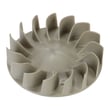
- Blower wheel: poor airflow, long dry times, thumping/rattling, or burning smell from lint buildup and reduced ventilation (see dryer blower wheel WP694089).
- High-limit thermostat: overheating symptoms, cycling heat problems, or repeated thermal cut-off failures (see dryer high-limit thermostat WP3977767).
- Drum support wear items (rollers, shafts, bearing surfaces): squealing, rumbling, thumping, or a drum that feels rough to turn by hand (a bundled option is dryer repair kit 4392065).
| Symptom | Most likely area | Parts to check first |
|---|---|---|
| Drum will not turn | Drive system | Dryer drum belt 341241, motor pulley, drum supports |
| No heat | Heating circuit | Dryer element 279838, dryer thermal cut-off fuse kit 279816, dryer high-limit thermostat WP3977767 |
| Takes too long to dry | Airflow | Venting, lint screen, dryer blower wheel WP694089 |
| Loud squeal/rumble | Drum support | Dryer repair kit 4392065 |
- Clean the lint screen every load; wash it with mild soap if you see fabric softener residue.
- Inspect the vent path (behind dryer to outside hood) for kinks, crushing, lint, or a stuck damper.
- Run a timed dry test; if heat is present but drying is slow, airflow is the first priority.
- Listen and observe: motor running with no tumbling points to the belt; loud rumbling points to drum support wear.
- Unplug power before opening panels; dryers use high voltage.
Most repeat failures (especially thermal cut-off and overheating) are caused by restricted airflow. Fixing venting and lint buildup first helps the new heating or safety parts last longer and restores normal dry times.
Last updated: February 2026
How to tell if a dryer idler pulley is bad?
A bad idler pulley on your Estate TEDS740JQ1 dryer typically causes loud squealing or grinding, a thumping rhythm as the drum turns, or a drum that stops turning because the belt loses tension. If the noise changes when you press on the belt path (with power off), the pulley is usually the culprit.
- High-pitched squeal that gets worse as the dryer warms up
- Grinding or metal-on-metal sound from the lower front area
- Drum turns, but you smell hot rubber (belt slipping)
- Drum stops mid-cycle, but the motor still hums
- Belt looks glazed, frayed, or has flat spots from slipping
- Unplug the dryer (or switch off the breaker) before opening any panels.
- Remove the lint screen and check for heavy lint buildup inside the chute area; restricted airflow can overheat parts and accelerate wear.
- If you open the cabinet, spin the idler pulley by hand:
- It should spin freely and smoothly.
- It should not wobble side-to-side.
- It should not feel gritty or bind.
- Inspect the belt for cracks, missing ribs, or shiny glazed sections.
| What you notice | Most likely issue | What to inspect/replace |
|---|---|---|
| Squealing that comes and goes | Dry idler bearing | Idler pulley (often replaced as part of a kit) |
| Grinding noise | Seized idler bearing | Idler pulley and belt condition |
| Thumping each drum revolution | Flat-spotted roller or belt damage | Drum rollers and belt |
| Drum not turning | Belt slipped off or broken | Belt routing, belt condition |
On many Estate and Whirlpool-built dryers, we replace wear items as a set so the new belt is not riding on worn bearings.
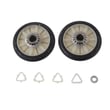
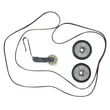
- Dryer repair kit 4392065 (common wear-item bundle)
- Dryer drum belt 341241 (if the belt is stretched, cracked, or glazed)
The idler pulley keeps proper tension on the drum belt. When it drags, wobbles, or seizes, it can shred the belt, overheat the motor, and turn a simple noise issue into a no-start or no-tumble problem.
Last updated: February 2026