Owner’s manual
 Error Codes


How much does it cost to replace water heater elements?
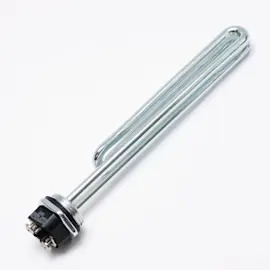
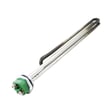
For Kenmore model 153320592HT, a typical professional heating element replacement runs about $150 to $350 per element (parts plus labor). DIY cost is usually the price of the element plus a new gasket, but the total depends on whether your heater is set up for a 3800W or 5500W element (the rating plate “If Converted” box). See the 153320592HT owner's manual for the correct element selection and safe service steps.
Typical cost breakdown
- DIY parts only: commonly $70 to $200+ (element plus gasket, depending on which element you need)
- Professional replacement (one element): commonly $150 to $350
- Professional replacement (both elements): commonly $250 to $600
- Possible add-ons: thermostat replacement, wiring repair, or sediment flush
| Scenario | What you usually pay | What drives the price |
|---|---|---|
| DIY replace one element | Parts cost only | Correct wattage/voltage match, gasket, tools |
| Pro replace one element | $150 to $350 | Labor rates, access, condition of fittings |
| Pro replace both elements | $250 to $600 | Time on site, additional diagnostics |
Picking the right element for this model
This Kenmore Power Miser 12 series uses 240V elements; the manual notes ordering depends on whether the heater was converted.
- If you need a 3800W, 240V replacement element, use element 100108346
- If the heater was converted to 5500W, use element 100093526
- Plan to replace the seal when you pull an element; use water heater heating element gasket 100108379
Why it matters
Using the correct element rating helps prevent nuisance tripping, slow recovery, and repeat failures. The manual also warns to never energize the heater unless the tank is completely full of water, because a dry-fired element can fail immediately.
Last updated: January 2026
Do water heaters use 120V or 240V?
Kenmore model 153320592HT is built for one voltage only, and you must match your home’s supply to the voltage shown on the water heater’s rating plate. In this Power Miser 12 series, the heating elements are designed to run at their rated wattage on 240V systems.
How to tell which voltage your water heater uses
Use the rating plate near the bottom access panel as the deciding factor.
- Turn OFF power at the breaker before opening any access panel
- Check the rating plate for the listed voltage (commonly 240V on full-size electric tanks)
- Confirm the breaker size and wire gauge match the heater requirements
- Never connect the heater to a different voltage than listed
- If you are converting the lower element wattage, confirm the supply is 240V first
For model-specific safety and electrical details, follow the 153320592HT owner's manual.
120V vs 240V: what changes in real use
Most residential electric tank water heaters are 240V because they recover (reheat) hot water faster.
| Voltage | Typical use case | What you notice most |
|---|---|---|
| 120V | Point-of-use or very small tanks | Slower recovery, lower power draw |
| 240V | Standard residential tank heaters | Faster recovery, supports higher watt elements |
What the manual says about this Kenmore Power Miser 12 series
This series is equipped for one voltage only, and the upper element (on double-element models) operates at its rated wattage on 240 volts. The lower element can be configured to operate at 3800W or converted to 5500W on a 240V system (when the installation supports it).
Why it matters
Using the wrong voltage can cause no-heat symptoms, nuisance breaker trips, damaged components (like the thermostat or heating element), and unsafe operation. Matching the rating plate protects the heater and keeps hot water recovery consistent.
Last updated: January 2026
What are the three most important parts of a water heater?
For the Kenmore 153320592HT electric water heater, the three most important parts are the dip tube (brings cold water into the tank), the anode rod (protects the tank from corrosion), and the temperature-pressure relief valve (helps prevent dangerous pressure buildup). For locations and service steps, use the 153320592HT owner's manual.
What each part does
- Dip tube: Directs incoming cold water to the bottom of the tank so hot water at the top stays hot.
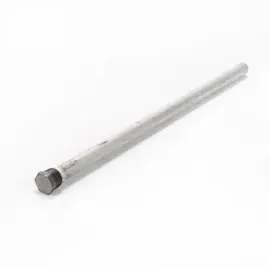
- Anode rod: Sacrifices itself to slow rusting inside the tank; this helps extend tank life.
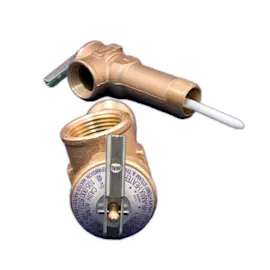
- Temperature-pressure relief valve (T&P valve): Opens if temperature or pressure gets too high; the manual notes it can relieve excess pressure from thermal expansion, but it is not meant to discharge constantly.
Quick symptoms checklist
- Dip tube problem: Lukewarm water quickly, reduced hot-water volume.
- Anode rod worn out: Rusty odor, discolored water, faster tank corrosion.
- T&P valve issue: Dripping or discharge (especially after heating cycles), or a valve that will not open when tested by a pro.
Related parts you may replace on this model
If you are troubleshooting hot-water performance or leaks, these model-listed parts often come up:
| Part | What it affects | Common reason to replace |
|---|---|---|
| Water heater dip tube 100108708 | Hot-water delivery | Cracked or deteriorated tube |
| Anode rod 100108660 | Tank protection | Rod depleted from corrosion |
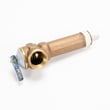
| Relief valve 100108779 | Safety pressure relief | Leaking, sticking, or age |
Why it matters
These three components protect hot-water performance, tank longevity, and system safety. For example, a closed plumbing system can build pressure as water heats (thermal expansion); the T&P valve may open to relieve pressure, but the long-term fix is addressing the cause (such as adding an expansion tank when needed).
Last updated: January 2026
Do I need 10 2 or 10 3 for a water heater?
For Kenmore model 153320592HT, the wire size and conductor count depend on how the heater is configured and how your utility feeds it. The manual calls out 10 AWG copper with 30-amp overcurrent protection for 240V, higher-wattage operation; use 10/2 with ground for a standard 2-wire 240V feed, and 10/3 with ground only for a 3-wire (time clock or off-peak meter) setup. Confirm your exact connection type in the 153320592HT owner's manual.
What the manual says for this model
The 153320592HT documentation includes both 2-wire and 3-wire connection diagrams and specifies wiring and breaker sizing when configured for higher wattage.
- 240V supply required; match the rating plate voltage
- 10 AWG copper (60°C) is specified for 30-amp loading in the higher-wattage configuration
- Two-wire connection is the most common household hookup
- Three-wire connection is used with a utility time clock or off-peak meter
- For long runs (about over 90 ft), wire sizing can change per electrical code
10/2 vs 10/3: which one to buy
Both are 10-gauge cable; the difference is the extra insulated conductor in 10/3.
| Cable | What you get (typical) | Use it when | What happens to the extra wire |
|---|---|---|---|
| 10/2 w/ground | 2 insulated conductors + ground | Standard 240V, 2-wire feed | None (no extra conductor) |
| 10/3 w/ground | 3 insulated conductors + ground | Off-peak or time-clock, 3-wire feed | Used as the third conductor required by that system |
Quick safety and install checks
- Turn off power at the breaker before opening the junction box
- Verify the heater voltage and wiring diagram before pulling cable
- Use a dedicated circuit sized to the heater configuration
- Tighten junction box connections securely; overheating starts at loose terminals
Why it matters
Choosing the correct cable prevents overheated connections and nuisance breaker trips, and it ensures the thermostats and heating elements in the 153320592HT operate on the intended 240V circuit.
Last updated: January 2026