 Owner’s manual


What is the difference between 4.5 cu ft and 5.0 cu ft washer?
A 5.0 cu. ft. washer holds about 0.5 cu. ft. more than a 4.5 cu. ft. washer, so you can wash bulkier items and slightly larger loads with fewer cycles. For your GE GTW685BSL0WS, use the loading guidance in the GTW685BSL0WS owner's manual to avoid overloading and poor cleaning.
What that extra 0.5 cu. ft. means in real use
That capacity bump is most noticeable with bulky, air-trapping loads.
- Fewer loads per week if you wash for a larger household
- More room for bulky items (comforters, blankets, jackets)
- Less “packed-in” clothing, which improves agitation and rinsing
- Slightly better odds of balancing large loads for spin
Quick comparison
| Feature | 4.5 cu. ft. washer | 5.0 cu. ft. washer |
|---|---|---|
| Load size | Large | Extra-large |
| Bulky items | Fits many, may be tight | Fits more comfortably |
| Cycle count | More loads | Fewer loads |
| Overload risk | Higher if you try to “make it fit” | Lower for the same items |
How to choose the right size
We recommend deciding based on what you wash most often.
- If you regularly wash king bedding or multiple towels/jeans at once, 5.0 cu. ft. is the better fit.
- If most loads are everyday clothing for 1 to 4 people, 4.5 cu. ft. is typically plenty.
- If you often see out-of-balance shaking, downsizing the load usually helps more than upsizing the tub.
Why it matters (performance and wear)
In top-load washers like the GE GTW685BSL0WS, overloading can reduce wash action and rinsing because items cannot move freely. Following the load examples and detergent guidance in the GTW685BSL0WS owner's manual helps you get better cleaning and reduces strain on suspension and drive components.
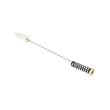
If your washer is already struggling with heavy loads (banging, walking, or poor spin), common fixes include checking the suspension system such as the washer suspension rod and spring assembly WH16X26911.
Last updated: February 2026
What is the life expectancy of a GE washing machine?
A GE washing machine typically lasts 10 to 14 years. For your GE GTW685BSL0WS top-load washer, consistent maintenance (cleaning, correct loading, and good water supply care) is what most directly determines whether you land closer to 10 years or push beyond it; see the GTW685BSL0WS owner's manual for model-specific care guidance.
Typical lifespan and what changes it
Most washer lifespan differences come down to how hard the machine works and how well it is maintained.
- Load habits: frequent overloading shortens life by stressing the drive system and suspension
- Water quality: sediment can clog inlet screens and affect fill performance
- Drain health: slow draining makes the pump work harder and can leave water behind
- Vibration control: an unlevel washer increases wear on suspension and bearings
- Preventive care: periodic cleaning and checking hoses reduces avoidable failures
Maintenance that extends life (high impact)
These steps are the most practical ways to keep a GE top-load washer running longer.
- Keep the washer level to reduce cabinet rubbing and excessive movement
- Avoid consistently washing single heavy items (rebalance with similar items)
- Use the right amount of HE detergent to reduce residue buildup
- Turn off water faucets when not in use; replace fill hoses about every 5 years
- Address slow drain symptoms early (standing water, long drain times, drain errors)
Common wear items vs. what you’ll notice
| Symptom | Likely wear area | Example part for GTW685BSL0WS |
|---|---|---|
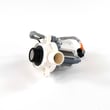
| Won’t drain, water left in tub | Drain system | Washer drain pump assembly WH23X28418 |
| Excessive shaking or banging | Suspension | Washer suspension rod and spring assembly WH16X26911 |
| Won’t fill or fills slowly | Water inlet | Washer water inlet valve assembly WH13X26637 |
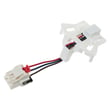
| Won’t start, lid won’t lock | Lid lock system | Washer lid lock WH08X37938 |
Why it matters
Knowing the expected 10 to 14 year lifespan helps you decide when a repair is a smart investment. If your GTW685BSL0WS is within that range, replacing a common failure part (like a drain pump, lid lock, or inlet valve) often restores reliable operation without replacing the whole washer.
You can order replacement parts for your GTW685BSL0WS from the parts list for this model, or search by model number on Sears PartsDirect.
Last updated: February 2026
How to tell if washing machine transmission is bad?
A bad transmission (gear case) in your GE GTW685BSL0WS washer typically shows up as agitation or spin problems even though the washer fills and the motor runs. Grinding noises, burning odor, or a basket that will not spin up under load are strong indicators; confirm normal operation notes in the GTW685BSL0WS owner's manual.
Symptoms that point to a gear case problem
Watch for these repeatable patterns:
- Agitator action is weak, jerky, or stops while the motor continues running
- Washer cannot reach full spin speed; clothes come out wetter than normal
- Loud grinding, rumbling, or clunking during agitate or spin
- Burning smell after a spin attempt
- Excessive basket wobble that continues after you redistribute the load
Quick checks to rule out common look-alikes
Many “transmission” complaints are caused by simpler issues.
- Out-of-balance: If the washer struggles to balance, it can reduce spin speed; redistribute and run Drain & Spin.
- Drain issue: Poor draining prevents proper spin; check for a kinked drain hose and a noisy or non-pumping washer drain pump assembly WH23X28418.
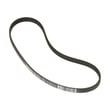
- Belt or clutch slip: Inspect the washer drive belt WH01X24180 for glazing/cracks and the washer clutch WH05X24185 for slipping.
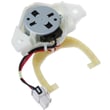
- Shift failure: If it will not shift between agitate and spin, suspect the washer shifter WH03X30517.
What you can test safely
Unplug the washer before any inspection.
- Note whether the noise happens in drain, agitate, or spin
- With the washer off, rotate the basket by hand; roughness, binding, or abnormal play points to drivetrain wear
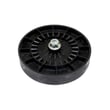
- If it drains normally but repeatedly fails to ramp up to spin, focus on belt, clutch, shifter, pulley, and gear case components
Symptom-to-cause guide
| What you notice | Most likely cause |
|---|---|
| Won’t spin and water remains | Drain pump or drain restriction |
| Motor runs but basket barely spins | Belt or clutch slipping |
| Won’t switch between agitate and spin | Shifter problem |
| Grinding plus poor agitation/spin | Gear case wear (transmission) |
Why it matters
A failing gear case can increase vibration and strain other drive parts, and it often leaves clothes wetter because the washer cannot reach full spin speed.
For replacement parts for GTW685BSL0WS, use the parts list for this model or search by model number on Sears PartsDirect.
Last updated: February 2026


