Installation guide
 Error Codes


How many cubic feet is a KitchenAid Superba refrigerator?
KitchenAid Superba refrigerators are commonly around 25 cubic feet total capacity; a typical Superba side-by-side is about 25.3 cu. ft. For your KitchenAid built-in refrigerator model KSSC42QKS00, confirm the exact listed capacity in the KSSC42QKS00 installation guide.
Capacity can vary by Superba series, year, and configuration (built-in vs freestanding). We recommend checking the model-specific spec section.
- Look for “capacity”, “total volume”, or “cu. ft.” in the specifications
- Verify whether the number is total, refrigerator-only, or freezer-only
- Use the full model number KSSC42QKS00 when comparing specs
- If you are measuring usable space, remember shelves and bins reduce practical storage
These are common ranges customers see across KitchenAid Superba refrigerators.
| Superba style | Typical total capacity | Notes |
|---|---|---|
| Side-by-side (freestanding) | 23 to 26 cu. ft. | Often listed near 25 cu. ft. |
| Built-in side-by-side | 20 to 25 cu. ft. | Built-ins can be lower due to insulation and cabinet fit |
Knowing cubic feet helps us match your needs for food storage and also helps when comparing replacement parts and accessories (like bins, shelves, and ice maker components) for the correct KitchenAid platform.
Last updated: February 2026
What is the average lifespan of a KitchenAid refrigerator?
A KitchenAid refrigerator typically lasts 12 to 17 years with normal household use and basic maintenance. For a built-in model like KSSC42QKS00, keeping airflow clear, temperatures stable, and the water system maintained helps you reach the upper end of that range.
Most refrigerators fail early due to cooling-system strain, poor airflow, or water and ice maker issues. These factors have the biggest impact:
- Condenser cleanliness (dust buildup raises compressor load)
- Door seal condition (warm air leaks increase run time)
- Ice maker and dispenser use (more moving parts, more wear)
- Water quality (scale and sediment can restrict flow)
- Room temperature and ventilation (built-ins need steady airflow)
Use this simple cadence to protect the compressor, evaporator, and fans.
| Task | How often | What it helps prevent |
|---|---|---|
| Clean condenser area and grille | Every 6 months | Overheating, long run times |
| Check door closing and gasket seal | Every 3 months | Frost, temperature swings |
| Replace water filter (if equipped) | Every 6 months | Slow dispensing, bad taste/odor |
| Verify temps (37°F fridge, 0°F freezer) | Monthly | Food spoilage, ice maker issues |
For model-specific access points and built-in clearance guidance, follow the installation guide.
If you see these repeatedly, repairs may become more frequent:
- Compressor runs almost constantly or is unusually loud
- Freezer warms up or frost builds up quickly
- Water dispenser slows even after filter changes
- Ice production drops or cubes are hollow
- Interior temperatures swing more than a few degrees
A built-in refrigerator like the KitchenAid KSSC42QKS00 is designed for long service life, but it also runs hard to hold tight temperatures. Preventive care reduces stress on high-cost components such as the compressor and control board.
Last updated: February 2026
What is the most common problem with a KitchenAid refrigerator?
The most common KitchenAid refrigerator problem we see is cooling trouble (temperatures too warm, too cold, or inconsistent). On the KitchenAid built-in refrigerator model KSSC42QKS00, the next most frequent complaints are ice maker issues and water leaks, which often trace back to airflow, defrost, or water-supply components.
- Fresh food section warms up while the freezer seems OK
- Freezer warms up and ice cream gets soft
- Frost buildup on the back wall or on the evaporator cover
- Ice maker stops making ice or makes small/hollow cubes
- Water under the refrigerator or dripping from the dispenser area
- Confirm settings: Set refrigerator to about 37°F and freezer to about 0°F.
- Check door sealing: Make sure doors close fully and gaskets are clean.
- Look for blocked vents: Do not pack food tightly against air vents.
- Listen for fans: You should typically hear an evaporator fan running at times.
- Inspect for ice or water: Frost or puddles point to defrost or water-line issues.
| Problem area | What it can cause | Example part for KSSC42QKS00 |
|---|---|---|
| Defrost system | Frost buildup, warm temps | Refrigerator defrost bi-metal WPW10225581 |
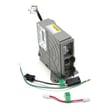
| Ice maker system | No ice, irregular cubes | Ice maker assembly 4317943 |
| Water delivery | Leaks, slow dispensing | Refrigerator water tube W10823511 |
| Temperature sensing | Temps swing, erratic cycling | Refrigerator thermistor WP2188820 |
Cooling problems can spoil food quickly, and ice maker or water leaks can damage flooring and create recurring ice buildup that makes cooling even worse.
For built-in units like KSSC42QKS00, airflow and defrost performance are especially important because restricted ventilation or frost on the evaporator can reduce cooling fast. Use the KSSC42QKS00 installation guide for clearances, water hookup basics, and installation checks that can prevent repeat issues.
Last updated: February 2026
Why is my Kitchenaid side-by-side ice maker not dispensing ice?
If your KitchenAid KSSC42QKS00 side-by-side refrigerator is not dispensing ice, the most common causes are a dispenser selection or paddle issue, an ice clump/jam in the chute or bucket, or the freezer door switch not closing so the dispenser is disabled.
- Confirm Cubed/Crushed is selected (not Water) and any control lock is off.
- Press the dispenser paddle firmly with a sturdy glass so the switch fully engages.
- Open the freezer door and check for ice clumps in the bin or a blocked chute.
- Make sure the freezer door closes completely; the dispenser will not run if the door switch is not made.
- If you hear the auger motor hum but no ice moves, the ice may be frozen together in the bucket.
- Break up clumped ice: Dump the ice bin, rinse and dry it completely, then reinstall.
- Clear the chute: With the door open, look up the chute for a stuck cube; clear it carefully.
- Check the door switch: If the interior lights do not respond correctly when the door opens/closes, the switch can be the issue.
- Inspect the dispenser lever area: A loose retainer can prevent the lever from actuating the switch.
| Symptom | Likely area | Example part for KSSC42QKS00 |
|---|---|---|
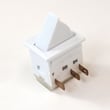
| No response when pressing paddle | Door switch not closing | Refrigerator freeer door switch W11457217 |
| Paddle/lever feels loose | Lever hardware | Refrigerator dispenser lever retainer WP2194719 |
| Ice maker makes little or no ice | Ice maker assembly | Ice maker assembly 4317943 |
When the freezer door switch is open or the dispenser paddle is not fully engaged, the refrigerator can intentionally disable the dispenser for safety. Clearing jams and confirming the switch and lever action restores normal ice delivery in many cases.
Use the KSSC42QKS00 installation guide to confirm dispenser operation basics, door closing/alignment expectations, and any model-specific control features.
Last updated: February 2026
How old is my refrigerator KitchenAid?
To estimate the age of your KitchenAid refrigerator (including model KSSC42QKS00), we use the serial number to find the manufacturing date. On many KitchenAid-built units, a letter in the serial number indicates the year, and the numbers around it help identify the week it was made (your KSSC42QKS00 installation guide shows where to find the model and serial tag).
Look for the model and serial tag in one of these common locations:
- Inside the fresh food compartment on a side wall
- Along the ceiling of the fresh food compartment
- Behind the crisper drawers area (on the liner)
- On the hinge-side door frame area
Once you have the serial number, focus on these items:
- Year code letter: commonly the 2nd character is the year indicator
- Week code: often the next 2 digits indicate the production week
- Plant code: another letter may identify the factory (not needed for age)
If your serial number looks like XL149003:
- The second letter “L” indicates the year 2001
- The digits that follow help identify the production week
Use this to turn the manufacture year into an approximate age.
| If it was made in... | Approximate age in 2026 |
|---|---|
| 2001 | 25 years |
| 2010 | 16 years |
| 2015 | 11 years |
| 2020 | 6 years |
Knowing the manufacture date helps us match the right KitchenAid parts and revisions for your refrigerator, especially for common repairs like ice maker issues, cooling problems, or water dispenser leaks.
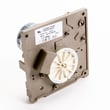
If you are troubleshooting an ice maker problem while checking the unit’s age, the ice maker assembly 4317943 is a common replacement part used on this model family.
Last updated: February 2026
What is the maximum ice on a KitchenAid refrigerator?
On KitchenAid refrigerators, “Max Ice” usually refers to a temporary ice-production boost, not a specific “maximum ice” amount. For your KitchenAid built-in refrigerator model KSSC42QKS00, use the control instructions in the KSSC42QKS00 installation guide to see whether your dispenser/control panel includes a Max Ice option.
Customers use this phrase in a few different ways:
- A Max Ice (or Fast Ice) feature that boosts production for a set period
- The ice bin’s fill level or storage capacity
- The ice maker’s daily production rate (lbs per 24 hours)
- The maximum fill line in the bin to prevent jams
Use your model’s control-panel instructions to confirm the feature name and how it operates.
- Look for a button or menu item labeled Max Ice, Fast Ice, or Ice
- If present, turn it on before heavy use (parties, filling coolers)
- Keep freezer temperature steady and limit door openings
- Make sure the shutoff arm is down and the bin is seated correctly
- If ice production is low, inspect the ice maker and water supply components
Here is what to measure so you get a clear “maximum” number:
| What you want to know | What to check | Where to look |
|---|---|---|
| Bin capacity | How much the bin holds when level | Bin markings and user instructions |
| Daily production | How much ice is made in 24 hours | Feature/spec section for your model |
| Fill limit | Where to stop filling to avoid jams | Bin label or manual guidance |
Using the correct setting and fill level prevents clumping, dispenser jams, and slow ice recovery. If the ice maker is not keeping up even with proper settings, the ice maker assembly is the next place we check.
If you need to replace the ice maker on this model, match it by model number and use the ice maker assembly 4317943.
Last updated: February 2026