Owner’s manual
 Error Codes



How to lower wheels on Maytag refrigerator?
On Maytag refrigerator model MFI2269VEM5, you typically lower the front by turning the front leveling legs to drop the cabinet and transfer more weight onto the front rollers. This improves door closing and helps the refrigerator sit level; use the exact adjustment points shown in the owner's manual.
How to lower the front (common method)
- Unplug the refrigerator or switch off power at the breaker.
- Remove the toe grille (kick plate) at the bottom front.
- Locate the front leveling legs (one on each front corner).
- Use a wrench to turn the leveling legs:
- Clockwise: raises the front
- Counterclockwise: lowers the front
- Recheck door swing and sealing after each small adjustment.
Quick checks before and after adjusting
- Make sure the refrigerator is not loaded so heavily that it rocks when you open a door.
- Confirm both front corners are adjusted evenly (unless you are correcting a side-to-side lean).
- Verify the doors self-close from a partially open position.
- Check the door gasket for full contact all the way around.
- Ensure the toe grille is reinstalled without rubbing the floor.
Leveling targets (what “right” looks like)
| What you’re checking | What you want | Why it matters |
|---|---|---|
| Side-to-side level | Cabinet looks level | Prevents door misalignment and uneven cooling |
| Front-to-back tilt | Slight tilt back | Helps doors close and seal consistently |
| Stability | No rocking | Reduces noise and wear on hinges/rollers |
Why it matters
If the front is too high or too low, the doors can drift open, the gasket may leak air, and you can see temperature swings, frost, or extra compressor run time. Proper leveling is one of the fastest fixes for door-closing and sealing complaints.
Last updated: February 2026
Is a top mount or bottom mount fridge better?
A bottom-mount refrigerator like the Maytag MFI2269VEM5 is usually better for everyday convenience because fresh foods sit at eye level and the freezer is in a pull-out drawer. A top-mount is often the better pick if you want the simplest layout and typically lower energy use.
Quick comparison
| Feature | Bottom-mount (like MFI2269VEM5) | Top-mount |
|---|---|---|
| Fresh food access | Easier (eye level) | More bending |
| Freezer access | Drawer, organized bins | Shelf-style, easier to see everything at once |
| Organization | Usually more drawers and zones | Usually simpler, fewer zones |
| Energy use | Often slightly higher | Often slightly lower |
| Cost to buy/repair | Often higher | Often lower |
When a bottom-mount is the better choice
- You use the refrigerator section more than the freezer
- You want better day-to-day ergonomics (less bending)
- You like pull-out baskets and drawer-style freezer storage
- You want more “zones” for produce, deli items, and beverages
- You are willing to keep door seals clean and aligned for best performance
When a top-mount is the better choice
- You want a straightforward, no-frills layout
- You prefer a freezer you can scan quickly on shelves
- You want a design that is typically more energy-efficient
- You want a model that is often less expensive to purchase and maintain
Why it matters
The “better” fridge is the one that matches how your household eats and shops. If you open the fresh-food doors dozens of times a day, a bottom-mount design reduces strain and helps you keep frequently used items organized. If you prioritize simplicity and efficiency, a top-mount layout can be a strong fit.
Tips to get the best performance from either style
- Keep the refrigerator at about 37°F and the freezer at 0°F
- Avoid overpacking; airflow helps prevent warm spots
- Clean and inspect door gaskets so they seal tightly
- Replace the water filter on schedule if your model has one (for MFI2269VEM5, see owner's manual)
Last updated: February 2026
What is the average lifespan of a Maytag refrigerator?
Most Maytag refrigerators, including the Maytag MFI2269VEM5 bottom-mount style, typically last about 10 to 15 years with normal household use and basic maintenance. How long yours lasts depends most on compressor run time, door-seal condition, airflow, and keeping the condenser area clean; see the owner's manual for model-specific care guidance.
Typical lifespan and what affects it
A refrigerator’s life is usually limited by wear on the sealed system (compressor, evaporator, condenser) and by airflow and temperature-control components.
- Usage patterns: frequent door openings and warm kitchens increase run time
- Maintenance: dirty condenser area and blocked vents shorten life
- Water and ice system care: filter changes help protect valves and the ice maker
- Door seal condition: leaks force longer run cycles and can cause frosting
- Power quality: repeated outages or surges can stress controls and the compressor
Quick maintenance checklist to help it reach the high end of the range
- Keep food from blocking interior air vents
- Clean dust from the condenser area periodically (unplug first)
- Confirm doors close fully and the gasket seals all the way around
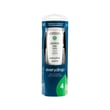
- Replace the water filter on schedule; the correct filter is the refrigerator water filter EDR4RXD1
- Keep freezer drawers and rails aligned so the door seals evenly
What “end of life” usually looks like
| Symptom | Common cause | What to check first |
|---|---|---|
| Warm fridge or freezer | Airflow issue or sealed-system problem | Vents, condenser cleanliness, fan operation |
| Loud humming/clicking | Compressor start components or compressor strain | Listen for repeated start attempts, check airflow |
| Frost buildup | Door leak or defrost issue | Gasket seal, door alignment, defrost symptoms |
| Weak ice production | Water supply or ice maker issue | Filter, supply line, ice maker function |
Why it matters
Knowing the typical 10 to 15 year lifespan helps you decide whether to repair or replace. If your MFI2269VEM5 is near that range and needs a major sealed-system part (like a compressor), comparing repair cost to remaining service life usually leads to a clearer decision.
Last updated: February 2026
Why does my Maytag bottom freezer build up ice on the bottom?
Ice building up on the bottom of your Maytag MFI2269VEM5 freezer almost always happens when the defrost drain clogs; defrost water cannot flow to the drain pan, so it refreezes on the freezer floor and gradually forms a thick ice sheet. Check the drain path and clear the blockage.
What to check first (fast diagnosis)
- Look for a solid ice slab on the freezer floor or under the lower basket.
- Check for water dripping or freezing at the back wall after a defrost cycle.
- Inspect the drain trough under the evaporator cover for ice or debris.
- Confirm the freezer door closes fully and the gasket seals all the way around.
- If the refrigerator section is warm and the freezer is frosty, suspect airflow restriction from ice buildup.
How we fix a clogged defrost drain
- Unplug the refrigerator.
- Remove the freezer bin(s) and the rear inside panel to access the evaporator area.
- Melt ice in the drain trough using warm water (a turkey baster works well) until water flows freely.
- Flush the drain several times with hot water to push debris through.
- Clean the drain opening and check the drain tube for gunk buildup.
For model-specific panel removal and access details, use the MFI2269VEM5 owner's manual.
Parts that commonly relate to this problem
A clogged drain is usually a cleaning issue, but heavy frost and recurring ice can be tied to defrost or air leak problems.
| Symptom you see | Most common cause | What to do next |
|---|---|---|
| Ice sheet only on freezer bottom | Clogged defrost drain | Thaw and flush drain thoroughly |
| Frost on back wall plus poor cooling | Defrost system issue | Check defrost components and airflow |
| Condensation, frost near door edges | Door not sealing | Inspect and reshape gasket, level doors |
If you also have heavy frost that keeps returning, a failed defrost thermostat can contribute; the refrigerator defrost bi-metal WP627985 is one of the defrost-related parts used on this model.
Why it matters
When defrost water cannot drain, it refreezes and can block airflow, reduce cooling performance, and eventually cause water leaks during thawing. Clearing the drain early prevents repeat ice buildup and temperature swings.
Helpful DIY guidance
Last updated: February 2026