Installation guide
 Owner’s manual
 Error Codes


How to add rinse aid to Kenmore Elite dishwasher?
On the Kenmore 66513173K703 dishwasher, add liquid rinse aid by opening the rinse aid dispenser cap, filling until the indicator shows FULL (do not overfill), then reinstalling the cap and turning it to LOCK. Rinse aid improves drying and helps prevent spots and streaks.
Steps to fill the rinse aid dispenser
- Open the dishwasher door fully so the fill indicator reads correctly.
- Turn the dispenser knob/cap to REFILL and remove it.
- Pour liquid rinse aid into the opening until the indicator points to FULL.
- Wipe up any spills right away (spilled rinse aid can cause excessive suds).
- Reinstall the knob/cap and turn it to LOCK.
For the exact dispenser location and illustrations for your model, use the 66513173K703 owner’s manual.
How to adjust the rinse aid setting (if you see spots)
Your dispenser is adjustable. The factory setting is typically 2, which works well for most homes. If you have hard water and notice calcium buildup or spotting, increase the setting.
- Turn the knob to REFILL and remove it.
- Turn the arrow inside the dispenser to a higher number.
- Reinstall the knob and turn it to LOCK.
Quick guide: what to change
| What you notice on dishes | What to do | Why it helps |
|---|---|---|
| Water spots or white film | Increase rinse aid setting | Helps water sheet off and reduces mineral spotting |
| Streaks or bluish haze | Lower rinse aid setting slightly | Too much rinse aid can leave residue |
| Poor drying overall | Use rinse aid and Heated Dry | Improves evaporation and reduces moisture |
Why it matters
High-efficiency dishwashers rely on rinse aid for strong drying performance. Using rinse aid (and pairing it with Heated Dry when needed) reduces moisture inside the tub and helps prevent spots on glassware.
Last updated: January 2026
What are common problems with Kenmore dishwashers?
Common Kenmore dishwashers issues include poor cleaning, draining problems, odors, noisy operation, and blinking lights that stop a cycle. On Kenmore Pro model 66513173K703, many of these problems trace back to filters, drain path restrictions, water temperature, or a small number of serviceable parts listed in the 66513173K703 owner's manual.
Most common symptoms and what to check first
- Food soils remain on dishes: clean the filter system, load correctly, use fresh detergent and rinse aid.
- Not draining or water left in tub: check for kinks in the drain hose, disposer or drain obstructions, and the drain pump.
- Odors: clean filters monthly and run a dishwasher cleaner cycle (especially with hard water).
- Noisy: confirm spray arms spin freely and nothing is contacting the arm during rotation.
- Blinking lights or won’t start: press START/RESUME and close the door within 3 seconds; check water supply is on and the overfill float moves freely.
Quick troubleshooting table
| Symptom | Most likely cause | Best first action |
|---|---|---|
| Dishes still dirty | Clogged filter, poor loading, hard water | Clean filter; use rinse aid; adjust detergent |
| Standing water | Drain restriction or failed pump | Inspect drain hose and drain path; test/replace pump |
| Sanitized light blinking | Cycle interrupted or water too cool | Run full cycle; set water heater to 120°F (49°C) |
| Blinking Start/Resume | Door not latched in time | Press Start/Resume; close door within 3 seconds |
Parts that commonly solve these problems
If your checks point to a failed component, these model-matched parts are common fixes:
- Dishwasher filter W10872845 (helps with poor cleaning, residue, odors)
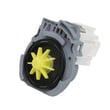
- Dishwasher drain pump WPW10348269 (helps with standing water and drain errors)
- Dishwasher water inlet valve W10648041 (helps with no fill or weak fill)
- Fuse W10258275 (helps with no power symptoms)
Why it matters
A dishwasher that is not draining, not heating properly, or running with a clogged filter can leave residue, create odors, and shorten the life of the wash system. Keeping the filter clean and the drain path clear is the fastest way to restore normal performance.
Last updated: January 2026
How do I get rid of standing water in my Kenmore dishwasher?
To get rid of standing water in your Kenmore Pro dishwasher model 66513173K703, first stop the cycle, turn off power, then remove as much water as possible with a cup and towels. Next, correct the most common causes: a blocked drain path, a kinked drain hose, or an air gap/disposer restriction.
Safe, quick water removal
- Turn off power at the breaker (or unplug the dishwasher).
- Place towels at the toe-kick area to catch spills.
- Scoop water out with a cup, then soak up the rest with towels or a sponge.
- Remove the lower rack to improve access.
- If you need access under the unit, follow the safety notes in the 66513173K703 installation guide.
Fix the most common reasons water is left behind
Standing water usually means the dishwasher cannot drain fast enough.
- Check the drain hose for kinks or crushing (especially where it passes through the cabinet).
- If you have a garbage disposer, confirm the disposer inlet knockout plug was removed.
- Check for food obstructions in the drain path or disposer.
- Clean the sink drain air gap (if installed); the manual notes it is typically on the sink/countertop and can clog with soil buildup.
- Restart and complete a drain by pressing Start/Resume and closing the door promptly (the manual notes the cycle must complete for normal operation).
Drain system checklist (what to inspect)
| What to check | What you are looking for | Typical result |
|---|---|---|
| Drain hose routing | Kinks, low spots, rubbing on moving parts | Better draining, fewer clogs |
| Disposer connection | Knockout plug removed, no blockage | Water exits to disposer |
| Air gap (if used) | Soil buildup under cap/cover | Restores proper flow |
| Pumping action | You hear the drain motor run during drain | Confirms drain command |
When a part is likely needed
If the hose and plumbing are clear but the dishwasher still will not drain, the drain pump can be the failure point. On this model, a common replacement is the dishwasher drain pump WPW10348269.
Why it matters
Standing water can cause odors, redeposit food soil on dishes, and lead to poor wash results. Clearing the drain path and ensuring proper hose routing restores normal drainage and helps protect the motor and pump system.
Last updated: January 2026
How to hard reset a Kenmore dishwasher?
To hard reset your Kenmore Pro dishwasher model 66513173K703, we recommend using the built-in control reset: press CANCEL/DRAIN twice to reset the control, then reselect a cycle and press START/RESUME and close the door within 3 seconds. For the exact button layout, use the 66513173K703 owner's manual.
Hard reset steps (control reset)
- Open the door slightly to pause the cycle; wait for spraying to stop.
- Open the door fully.
- Press CANCEL/DRAIN twice to reset the control.
- Select your new wash cycle and options.
- Press START/RESUME, then firmly close the door within 3 seconds.
Quick checks that prevent a “reset” from working
- Make sure Control Lock is off (press and hold HEATED DRY for about 4 seconds to toggle).
- Close the door fully; the dishwasher will not start if the latch is not engaged.
- If you opened the door during a delay start, press START/RESUME again within 3 seconds of closing.
- If the detergent door popped open mid-cycle, refill before restarting.
- If the tub is full of water, let the drain cycle finish after pressing CANCEL/DRAIN.
If the dishwasher won’t drain after the reset
A reset will not clear a physical drain problem. If water remains in the bottom, check the drain path and common drain components.
| Symptom | Most common cause | What to check next |
|---|---|---|
| Hums but won’t drain | Drain pump issue | Inspect/replace dishwasher drain pump WPW10348269 |
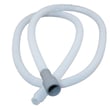
| Drains slowly | Kinked/clogged hose | Inspect high loop and hose; consider dishwasher drain hose 8269144A |
| Stops mid-cycle, dead panel | Blown fuse | Test/replace fuse W10258275 |
Why it matters
Resetting the control clears a stuck cycle and lets you restart safely, but it will not fix issues like a clogged drain hose, failed drain pump, or an electrical open in the fuse.
Last updated: January 2026