Owner’s manual
 Error Codes



What is the bottom part of a refrigerator called?
On the Kenmore 79572597711 bottom-mount refrigerator, the “bottom part” is most commonly the machine compartment (where the compressor and condenser-side components live) and, on the front, the bottom freezer drawer area. The exact naming and access points are shown in the 79572597711 owner's manual.
Common names you will hear (and what they mean)
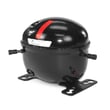
- Machine compartment: The lower rear area that houses the compressor, condenser fan, and related wiring.
- Base grille or toe grille: The lower front trim or vent area (varies by design).
- Bottom freezer drawer: The pull-out freezer section on a bottom-mount refrigerator.
- Drain pan: A pan underneath that collects defrost water so it can evaporate.
- Condenser cover/vents: The protective cover and venting around the condenser area.
What’s typically located down there
| Area | What it does | Examples of parts you may see |
|---|---|---|
| Lower rear machine compartment | Moves heat out of the refrigerator | Compressor, condenser fan motor, condenser assembly |
| Bottom freezer drawer section | Stores frozen food and supports drawer movement | Drawer rails, basket, divider, door hardware |
| Under-unit drainage area | Manages defrost water | Drain tube, drain pan |
Why it matters
Knowing the correct “bottom part” name helps you order the right Kenmore parts and follow safe service steps. For example, our manual cautions against putting hands or objects into vents or the bottom area during service and cleaning.
Helpful model-specific tips
- For cleaning, use a vacuum attachment on the condenser cover and vents; do not remove the panel covering the condenser coil area (per the manual).
- If you mean the freezer drawer, use two people when removing or installing it because of weight.
- If you are troubleshooting cooling, the lower rear machine compartment is a common focus area.
Last updated: January 2026
What is the advantage of a bottom mount fridge?
A bottom-mount refrigerator like Kenmore model 79572597711 keeps the fresh-food section at eye and waist level, so everyday items are easier to see and reach without bending. The freezer stays in the lower drawer, which helps keep frequently used foods more accessible.
Key benefits you will notice day to day
- Less bending for fresh food: produce, drinks, and leftovers are in the upper compartment.
- Better organization for refrigerated items: shelves and bins are easier to scan quickly.
- Freezer drawer storage: the lower drawer can hold bulky frozen items in baskets and sections.
- Door closing and alignment can be tuned: this model uses front leveling legs and door alignment adjustments to help doors close properly.
What to keep in mind with a bottom freezer drawer
Bottom freezer drawers are convenient, but they are heavier and need safe handling.
- Use two people when removing or installing the freezer drawer.
- Do not step or sit on the freezer drawer.
- Keep children and pets away from an open drawer.
- Make sure the refrigerator is level so the doors close easily.
| Feature | Bottom-mount (like 79572597711) | Top-freezer style |
|---|---|---|
| Fresh food access | Higher, easier reach | Lower, more bending |
| Freezer access | Lower pull-out drawer | Upper swing door |
| Best for | Frequent fresh-food use | Frequent freezer use |
Why it matters
Most households open the refrigerator section far more often than the freezer. With a bottom-mount design, we get faster access to the foods we use every day, which can also reduce door-open time and help temperature stability.
For model-specific use, leveling, and drawer handling details, follow the 79572597711 owner's manual.
Last updated: January 2026
Is it worth replacing the ice maker on a refrigerator?
Yes, replacing the ice maker is usually worth it on a Kenmore 79572597711 when the refrigerator is otherwise cooling normally and you rely on the dispenser for daily ice. This model’s automatic icemaker is designed to produce ice consistently, so a failed ice maker is typically a fixable, part-level repair rather than a reason to replace the whole refrigerator.
Quick decision checklist
- The freezer holds 0°F and food stays frozen (cooling system is healthy).
- You use ice often and want the in-door bin and dispenser working.
- The issue is isolated to ice making (no widespread cooling or control problems).
- You have good water supply flow and the shutoff valve is fully open.
- You are comfortable doing a basic repair or hiring a technician.
Before you buy an ice maker: confirm it is really the problem
Many “bad ice maker” symptoms on the 79572597711 are caused by setup, temperature, or water supply issues.
- Give it time after install or reconnect: it can take 12 to 24 hours to start making ice.
- Check the bin and shutoff system: ice making stops when the in-door bin is full; uneven ice can also cause misreads. Keep the feeler arm clean and unobstructed.
- Verify freezer temperature: normal ice production expects about 0°F.
- Rule out a restricted filter: slow water or small cubes often point to a spent filter; follow the flushing and replacement guidance in the 79572597711 owner's manual.
What “normal” looks like on this model
| Item | Typical for this model (from the manual) |
|---|---|
| Startup time to first ice | 12 to 24 hours |
| Daily ice production | 70 to 182 cubes per 24 hours |
| Bin capacity (in-door) | About 6 to 8 glasses (12 to 16 oz each) |
Parts that commonly affect ice production
If troubleshooting points to a component failure, these are common repair paths:
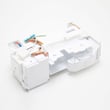
- Ice maker assembly (if it will not cycle or harvest)
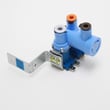
- Water inlet valve (if the ice maker is not filling); consider lg refrigerator water inlet valve AJU72992601
- Ice maker and auger drive issues (if dispensing is weak or jammed); consider lg refrigerator ice maker and auger motor assembly EAU60783850
Why it matters
A working ice maker depends on stable freezer temperature, a clear shutoff (feeler arm) signal, and steady water flow. Replacing the ice maker without correcting a warm freezer, a blocked feeler arm, or a restricted filter can lead to repeat failures and wasted cost.
Last updated: January 2026