Owner’s manual
 Error Codes



Why does my Kenmore dryer keep saying check vent?
On Kenmore model 79691282310, the CHECK VENT light means the dryer’s duct blockage sensing system is detecting restricted exhaust airflow in your home venting. It is an airflow problem (crushed, clogged, too long, or wrong vent material), not a dryer failure.
What to check first (fast airflow fixes)
- Clean the lint screen before every load and make sure it seats fully.
- Pull the dryer out and straighten the vent hose; remove any kinks or crushing.
- Inspect the entire vent run to the outside hood for lint buildup or a stuck damper.
- Replace plastic or foil venting with rigid or semi-rigid metal duct.
- Reduce vent length and elbows; long runs and multiple 90° turns trigger the warning.
- If drying times suddenly increased, check immediately for a partial blockage.
How the CHECK VENT light behaves
The dryer monitors airflow over multiple loads to avoid false alarms. If several consecutive cycles exceed the restriction limit, the control will blink CHECK VENT. The light can stay active until:
- the restriction is corrected, and
- the dryer verifies improved airflow over several cycles.
Common causes and what they look like
| What’s wrong | What you notice | What to do |
|---|---|---|
| Lint buildup in duct | Longer dry times, hotter cabinet | Clean duct run and outside hood |
| Crushed/kinked vent | Light comes on soon after start | Re-route and shorten flex duct |
| Vent too long/many elbows | Chronic warning, slow drying | Reduce length and turns |
| Wrong vent material (foil/plastic) | Frequent restrictions | Upgrade to metal venting |
Why it matters
Restricted venting greatly increases drying time and energy use, and it can lead to overheating and repeated shutdowns. Keeping airflow strong protects the heater system and helps clothes dry evenly.
For model-specific venting guidance and maintenance intervals, follow the 79691282310 owner’s manual.
Last updated: January 2026
How do I reset a Kenmore dryer?
To reset your Kenmore dryer model 79691282310, we recommend a hard reset: turn the dryer off, unplug it (or switch the breaker off) for about 1 to 5 minutes, then restore power and press POWER. If the controls are locked, unlock them first.
Quick reset steps (most common)
- Press POWER to turn the dryer off.
- Unplug the power cord (or turn the circuit breaker off).
- Wait 1 to 5 minutes.
- Restore power.
- Press POWER, select a cycle, then press START/PAUSE.
If the dryer still will not start or respond
A “reset” often clears a temporary control glitch, but it will not fix a safety lockout caused by power, door, or airflow problems. Check these items next:
- Control lock: If CL shows or buttons do not work, press and hold TOUCH UP for 5 seconds to toggle Control Lock.
- Auto shutoff after pause: If the dryer is stopped for more than about 4 minutes, it can turn off; press POWER again.
- Power supply: Reset the breaker or replace the fuse (do not increase fuse size).
- Door and start: Close the door firmly, then press START/PAUSE.
- Venting and lint: Clean the lint filter and check the vent duct for lint buildup or blockage (clean ductwork at least yearly).
When “resetting” is really a heating or airflow issue
If your goal is to reset after a no-heat complaint, run the built-in heating check described in the 79691282310 owner's manual. After starting a Normal cycle, check for warm air inside the drum after about 3 minutes.
| Symptom after reset | Most likely area to check | What to do first |
|---|---|---|
| Buttons disabled or CL | Control lock | Hold TOUCH UP 5 seconds |
| Dryer runs but no heat | Gas ignition or airflow | Run heating test; inspect venting |
| Dryer shuts off after pausing | Normal control behavior | Press POWER, restart cycle |
Why it matters
Resetting is a fast way to clear a temporary electronic control issue, but consistent shutdowns, no-heat symptoms, or long dry times usually point to airflow restrictions, power supply problems, or a control setting such as Control Lock.
Last updated: January 2026
Why does my dryer keep saying check lint screen?
On Kenmore dryer model 79691282310, the Check filter light is designed to blink before each load as a reminder to clean and reinstall the lint filter; it does not automatically mean the dryer has a failure. If the message stays on or drying is slow, airflow is usually restricted by lint buildup in the filter or venting.
What to do first (fast checks)
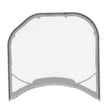
- Clean the lint filter by rolling lint off with your fingers; reinstall it fully seated.
- If the filter looks dark or “waxy,” wash it with hot soapy water and a stiff brush; dry it completely before reinstalling.
- Confirm the lint filter is present and not loose; running without it can cause poor airflow and damage.
- Check the exhaust hood outside while the dryer runs; weak airflow points to a vent restriction.
- Inspect the vent hose behind the dryer for kinks, crushing, or heavy lint buildup.
When it points to a vent restriction
Your model’s display can also show a Check vent indicator (duct blockage sensing system). If that light blinks, it means the home exhaust duct has a serious restriction, not a problem with the dryer itself.
Airflow symptoms that match a clogged vent
- Loads take much longer than normal
- Clothes feel hot but still damp
- Dryer shuts off early on sensor cycles
- Excess lint around the dryer or at the vent outlet
Cleaning guidance and intervals
| Item | What we recommend | Why |
|---|---|---|
| Lint filter | Clean every load; deep-clean if coated | Keeps airflow strong and drying times normal |
| Vent ductwork | Check monthly; clean at least yearly | Prevents restrictions that trigger vent warnings |
| Around/under dryer | Vacuum regularly | Reduces lint and dust buildup |
Why it matters
Good airflow is what lets the burner and blower move heat through the drum efficiently. A restricted lint filter or vent increases drying time and can overheat components like thermostats and sensors.
For model-specific control panel lights and cleaning steps, follow the 79691282310 owner’s manual.
Last updated: January 2026
Where is the lint sensor on a Kenmore dryer?
On Kenmore dryer model 79691282310, the lint sensing area is at the lint filter location: open the dryer door and pull the lint filter straight up from its housing. Keeping that filter and housing clean helps airflow and prevents lint-related drying problems (and the Check Lint Filter light reminder).
Where to look on model 79691282310
- Open the dryer door.
- Look just inside the door opening for the lint filter handle.
- Pull the lint filter straight up and out.
- The lint filter sits in the lint screen housing; lint buildup here is what the dryer is monitoring for airflow restriction.
- For diagrams and cleaning details, use the 79691282310 owner's manual.
Quick cleaning steps (best practice)
We recommend doing this before every cycle:
- Remove the lint from the filter by rolling it off with your fingers.
- Reinstall the lint filter fully so it seats flat.
- If the screen looks dark or “waxy,” wash it with hot soapy water and a stiff brush.
- Let the filter dry completely before reinstalling.
- Never run the dryer without the lint filter installed.
Lint filter vs. moisture sensor (common mix-up)
| Item | What it does | Where you’ll find it |
|---|---|---|
| Lint filter area | Protects airflow by catching lint | In the door opening; filter pulls straight up |
| Moisture sensor | Helps Auto/Sensor cycles stop at the right dryness | Inside the drum area near the front (two metal bars) |
If you are troubleshooting sensor-dry issues, the moisture sensor is a separate part from the lint filter area; see dryer moisture sensor 6500EL3001A for the correct replacement component.
Why it matters
A restricted lint filter or lint screen housing reduces airflow, which increases dry times and can cause overheating symptoms. Cleaning the filter and maintaining the exhaust system are two of the most effective ways to keep your Kenmore dryer drying efficiently.
Last updated: January 2026