Installation guide
 Owner’s manual
 Error Codes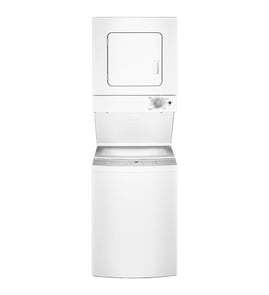



How to find Kenmore washer model number?
For the Kenmore stacked laundry center model 41797922700, the model number is printed on a rating label on the washer section. On this style of unit, it’s most often on the back of the control panel, on the cabinet side near the bottom, or around the door opening (for front-load designs). See the 41797922700 owner's manual for the exact label location and a diagram.
Where to check on a stacked laundry center
Look in these common spots first (check the washer portion, not the dryer):
- Back of the washer control panel (upper rear area)
- Left or right side of the main cabinet near the bottom edge
- Behind the washer door or in the door jamb (if your washer is front-load)
- Under the washer lid area near the opening (if your washer is top-load)
- Inside the service panel area if the label was moved during a past repair
What the label looks like and what to write down
The rating label usually includes several identifiers. We recommend copying all of these:
- Model number (example format: 417.97922700 or 41797922700)
- Serial number
- Electrical rating (volts/amps)
- Manufacturing code/date (varies by unit)
| Item on label | Why we need it | Used for |
|---|---|---|
| Model number | Identifies the exact design | Correct parts diagrams and parts fit |
| Serial number | Identifies production run | Service bulletins and revisions |
| Electrical rating | Confirms power requirements | Troubleshooting and safe replacement parts |
Why it matters
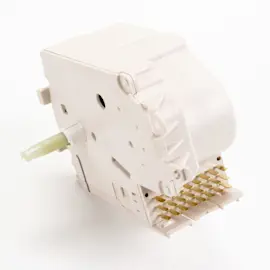
Kenmore laundry centers share similar cabinets across multiple series, so the model number is what ensures you get the right washer parts (like a drain pump, drive belt, or timer) and the correct repair instructions.
Last updated: February 2026
What is the cubic feet capacity of a Kenmore washer model 41797922700?
The Kenmore stacked laundry center washer in model 41797922700 is a 27-inch-wide top-load washer. The exact cubic-feet capacity is listed in the specifications for your unit; we recommend confirming it in the 41797922700 owner's manual so you get the correct number for detergent dosing and load sizing.
Where the capacity is listed
Check these common spots for the cubic-feet (cu. ft.) rating:
- Specifications section (often near the front or back of the guide)
- Feature chart or “Washer features” pages
- The model and serial tag (commonly under the washer lid or on the cabinet rim)
- Any product data/spec sheet pages included in the manual packet
What to do if the manual lists load level instead of cu. ft.
Some laundry center manuals focus on practical loading guidance rather than a tub-volume number. Use these steps:
- Follow the manual’s load height guidance (do not pack above the agitator vanes)
- Choose cycle and water level by fabric type and soil level
- Avoid overloading; it causes poor cleaning and out-of-balance spinning
- If you need a numeric capacity for planning, measure the tub and calculate volume, then convert to cubic feet
| What you have | What it tells you | How to use it |
|---|---|---|
| Capacity in cu. ft. | Tub volume rating | Match load size and detergent amount |
| Load height guidance | Real-world usable capacity | Prevents overload and improves spin balance |
Why it matters
Capacity affects how much laundry you can wash per load, how much detergent to use, and how likely the washer is to go out of balance. Using the model-specific spec prevents underfilling or overstuffing the tub.
Last updated: February 2026
What is the life expectancy of a Kenmore washing machine?
For a Kenmore washing machine like the washer in model 41797922700 stacked laundry center, the typical life expectancy is 10 to 15 years with normal household use and routine care (proper loading, cleaning, and avoiding chronic overheating or drainage issues).
What affects washer lifespan the most
A washer usually fails early from avoidable stress on the drive system, motor, and drain components. We see the biggest impact from:
- Overloading or consistently washing heavy, unbalanced loads
- Using too much detergent (causes residue and extra drag)
- Poor drainage (standing water, slow drain, repeated pump strain)
- Repeated motor overheating events (long cycles, heavy loads, restricted airflow around the unit)
- Skipping routine cleaning and inspection steps listed in the 41797922700 owner's manual
Maintenance checklist to reach 10 to 15 years
Use these habits to extend the life of the washer section of your Kenmore laundry center:
- Keep loads balanced; mix large and small items to reduce vibration
- Use the correct amount of HE detergent (even if the cycle is “deep fill”)
- Leave the door/lid area open after use so moisture can dry out
- Check pockets and remove coins, screws, and debris before washing
- If draining slows, address it quickly; a failing pump can damage other components
Quick troubleshooting guide (symptom to watch)
| Symptom | What it often points to | What to do first |
|---|---|---|
| Won’t drain or drains slowly | Drain restriction or drain pump wear | Check the hose for kinks; then inspect the pump |
| Burning smell or stops mid-cycle | Motor overheating/overload protection | Reduce load size; allow cool-down; verify normal operation |
| Loud banging in spin | Unbalanced load or suspension wear | Rebalance load; avoid single heavy items |
If you’re seeing drain problems on this model, the washer drain pump 137221600 is a common wear item to check when the tub will not empty.
Why it matters
A washer that is forced to run overloaded, out of balance, or with poor drainage wears the belt, motor, and pump faster. Keeping the unit operating smoothly reduces heat and mechanical stress, which is what gets you into that 10 to 15 year range.
Last updated: February 2026