Owner’s manual
 Error Codes


What is the average lifespan of a Kenmore refrigerator?
Most Kenmore refrigerators last 12 to 15 years on average. For your Kenmore Elite bottom-mount refrigerator model 59676599600, regular preventive care (especially cleaning and temperature management) is what most often determines whether it reaches the typical lifespan or exceeds it; see the 59676599600 owner's manual for the care schedule and operating tips.
What affects refrigerator lifespan the most
A refrigerator’s life is usually shortened by heat buildup, poor airflow, and door seal leaks. We see the biggest gains in longevity when owners stay on top of these basics:
- Keep condenser and ventilation areas clean so the compressor runs cooler
- Make sure doors close fully and gaskets seal all the way around
- Avoid overpacking; allow air to circulate through shelves and drawers
- Keep temperatures steady (frequent warm-ups add compressor run time)
- Address unusual noises, warming, or frost buildup early
Typical lifespan by major system
These are practical, real-world expectations for common refrigerator systems.
| System | Typical lifespan impact | What you’ll notice when it’s struggling |
|---|---|---|
| Compressor and sealed system | Often the “end-of-life” driver | Warm temps, long run times, clicking, poor cooling |
| Evaporator fan and airflow | Medium to high | Warm fresh food section, weak airflow, noise |
| Defrost system | Medium | Frost on back wall, freezer icing, warming |
| Door gaskets and alignment | Medium | Moisture, condensation, temperature swings |
Maintenance that helps you reach 12 to 15 years
Your 59676599600 manual includes a dedicated care and cleaning section; these habits are the most important for long service life:
- Vacuum dust from condenser/airflow areas on a routine schedule
- Clean door gaskets with mild soap and water; dry thoroughly
- Keep the freezer drain area clear to prevent ice and water issues
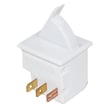
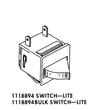
- Replace failed lights or switches promptly so doors are not left ajar
- Use the troubleshooting section to catch small issues before they become major repairs
Parts that commonly restore performance (when needed)
If cooling, icing, or door sealing problems show up, these model-matched parts are often involved:
- Refrigerator door gasket W11368721 (helps stop air leaks and moisture)
- Refrigerator electronic damper WPW10196393 (controls cold air flow to fresh food)
- Refrigerator defrost heater WP67002493 (helps prevent heavy frost buildup)
Why it matters
A refrigerator that runs hot, leaks air, or has restricted airflow works harder. That extra run time accelerates wear on the compressor, fan motors, and defrost components, which is why basic cleaning and sealing checks are the fastest way to protect lifespan.
Last updated: January 2026
What are the common problems with Kenmore Elite refrigerators?
Common problems on the Kenmore Elite 59676599600 bottom-mount refrigerator include weak or uneven cooling, excessive run time, water leaks, slow water flow or small ice cubes, and drawers or doors that do not close smoothly. Many issues trace to airflow restrictions, dirty condenser coils, door sealing problems, or water supply pressure.
Most common symptoms and what usually causes them
- Not cooling well or temperature swings: dirty condenser coils, blocked vents, evaporator fan issues, or a damper that is not opening correctly.
- Runs too often: frequent door openings, warm room conditions, dirty condenser coils, or doors not sealing/closing fully.
- Water leaking: water line connection problems, kinked tubing, or installation choices that restrict flow.
- Slow water dispensing or hollow ice cubes: low household water pressure, clogged filter, or a valve/line restriction.
- Drawers not sliding/closing: drawer not seated correctly, refrigerator not level, or dirty drawer channels.
Quick checks we recommend first (safe, high-impact)
- Confirm doors close fully and gaskets seal all the way around.
- Clean condenser coils and make sure airflow around the cabinet is not blocked.
- Verify freezer temperature is set near 0°F for proper ice production.
- Check household water pressure; refrigerators with filters typically need at least 35 psi (35 to 100 psi range).
- Inspect the water line for kinks and make sure the shutoff valve is fully open.
Parts that commonly solve these problems
| Symptom | Part to consider | What it affects |
|---|---|---|
| Warm fridge section | Refrigerator electronic damper WPW10196393 | Controls cold-air flow into fresh food section |
| Noisy or warm temps | Evaporator motor WPW10128551 | Moves air across the evaporator for cooling |
| Slow water or ice issues | Refrigerator water inlet valve assembly WP67006531 | Supplies water to dispenser and ice maker |
| Frost or defrost-related cooling loss | Refrigerator defrost heater WP67002493 | Melts frost off the evaporator |
Why it matters
Cooling, ice, and water issues often get worse when airflow is restricted or water pressure is low. Fixing the root cause early helps prevent food spoilage, excessive compressor run time, and repeat icing or leaking problems.
For model-specific operating and troubleshooting steps, follow the 59676599600 owner's manual.
Last updated: January 2026
What size is Kenmore refrigerator model 59676599600?
Kenmore Elite bottom-mount refrigerator model 59676599600 is a full-size, 33-inch class refrigerator; use the model’s specification and measuring instructions in the 59676599600 owner's manual to confirm the exact width, height, depth, and required clearances for your installation.
How we recommend confirming the exact dimensions
Use the manual’s measuring and installation guidance so the refrigerator fits your cabinet opening and the doors and freezer drawer operate correctly.
- Measure the cabinet opening width, height, and depth at multiple points
- Include baseboards, trim, and flooring changes (new tile can reduce height clearance)
- Plan clearance for door swing and full pull-out of the freezer drawer
- Confirm whether handles add depth beyond the cabinet
- If you have an ice maker, allow space for the water line and avoid kinks
Typical planning ranges for this style (not a substitute for the manual)
These ranges help with early planning for a Kenmore 596-series bottom-mount, but the manual provides the exact numbers for model 59676599600.
| What you are sizing for | Typical range for 33-inch class bottom-mounts | What commonly changes it |
|---|---|---|
| Width | About 33 inches | door design, trim, hinge covers |
| Height | About 66 to 70 inches | leveling legs, hinge style |
| Depth | About 30 to 35 inches | handles, door thickness, rear clearance |
Why it matters
Accurate sizing prevents door interference with cabinets, ensures the freezer drawer opens fully, and maintains airflow for efficient cooling. It also helps you avoid stressing the water supply line if the refrigerator has an ice maker.
Last updated: January 2026