Installation guide
 Owner’s manual
 Error Codes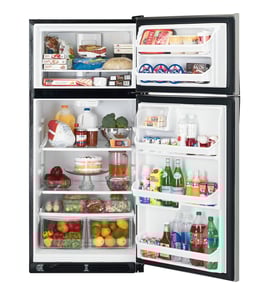



What is the life expectancy of a refrigerator fan?
In a Frigidaire top-mount refrigerator like model LFTR2032TF1, the evaporator fan and condenser fan typically last 5 to 10 years with normal use. Keeping air vents clear and the refrigerator level helps the fan run cooler and last longer; see the LFTR2032TF1 owner’s manual for airflow and operating guidance.
Your refrigerator uses more than one fan, and each one affects cooling differently:
- Evaporator fan: circulates cold air through the freezer and fresh food sections
- Condenser fan: moves air across the condenser area to remove heat
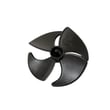
- Fan blade: can crack or slip and cause noise even if the motor is still good
| Fan type | Common symptoms when failing | What you may notice |
|---|---|---|
| Evaporator fan | Squealing, rattling, intermittent airflow | Warm refrigerator, uneven temps, louder freezer area |
| Condenser fan | Grinding, buzzing, stops running | Hot cabinet sides, poor cooling, compressor running longer |
These are the most common “end-of-life” clues we see:
- New or worsening rattling, squealing, or grinding sounds
- Fan noise that comes and goes as the door opens or closes
- Warm spots in the refrigerator section even when settings are correct
- Frost buildup or restricted airflow in the freezer (often tied to airflow issues)
- The refrigerator seems to run longer than usual to hold temperature
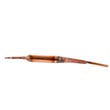
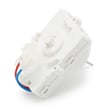
If you suspect the evaporator fan motor is the issue, the model LFTR2032TF1 uses a fan motor assembly such as the blower motor 242077705 and a separate refrigerator evaporator fan blade 242219302 on some configurations.
A weak fan cannot move enough air to maintain stable temperatures. That can lead to food spoiling, excess frost, and longer run times that put extra strain on the compressor and defrost system.
- Do not block cold air vents with food packages
- Keep the cabinet level to reduce vibration and noise
- Clean dust from the rear/bottom area periodically (improves heat removal)
- Set temperatures gradually and allow time to stabilize (helps prevent overworking)
Last updated: February 2026
What are signs of a failing refrigerator?
A failing Frigidaire LFTR2032TF1 top-mount refrigerator usually shows up as temperature problems, unusual noises, leaks, or heavy frost. Before assuming a major failure, we recommend checking basic settings and “common occurrences” troubleshooting in the LFTR2032TF1 owner's manual.
- Food spoils faster than normal (fresh food section too warm)
- Freezer frost or ice buildup that keeps coming back
- Water leaking under or inside the refrigerator
- Loud new noises, vibration, or a change in normal operating sounds
- Back of the cabinet feels unusually hot for long periods
- Runs constantly or cycles oddly (short cycling)
Use these steps to separate a simple setup problem from a true component failure:
- Confirm the refrigerator control is not set to “0” (cooling off)
- Give temperature changes 24 hours to stabilize after adjusting controls
- Make sure the unit is level; an unlevel cabinet can cause noise and door sealing issues
- Check door closing and sealing; gaps cause warm temps, condensation, and frost
- If it is not running, check the outlet, breaker, and a 15 amp time-delay fuse (if applicable)
| Symptom | Most common cause | What to do next |
|---|---|---|
| Fresh food warm, freezer OK | Airflow or control setting issue | Adjust controls; allow 24 hours; check vents |
| Frost buildup in freezer | Door not sealing or defrost issue | Inspect gasket; look for heavy ice patterns |
| Noisy or vibrating | Cabinet not level, weak floor, normal sounds | Level unit; compare to normal sound list |
| Water on floor | Defrost drain or water system issue | Check for puddles source; inspect drain area |
Catching these signs early helps prevent food loss and can keep a small issue (like a poor door seal or airflow restriction) from turning into bigger problems such as compressor overwork.
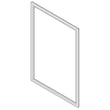
- If you find a torn, warped, or leaking door seal, the refrigerator door gasket (white) 242193213 is a common fix for warm temps and condensation.
- If you hear abnormal fan noise or have weak cooling, the evaporator fan system is often involved; the blower motor 242077705 is one of the related components.
Last updated: February 2026
What does f mean on a fridge?
On the Frigidaire LFTR2032TF1, an “F” typically refers to the temperature being shown in Fahrenheit (not a failure code). If you are seeing an “F” on the control display or label, it is pointing you to the temperature scale or temperature setting for the fresh food and freezer compartments.
Use these quick checks to confirm what the “F” is telling you:
- Look for a C/F option or a temperature scale marking near the control.
- Confirm whether the number shown changes when you adjust the refrigerator control.
- Set controls to the recommended starting point, then wait 24 hours before making another change.
- Adjust in small increments and allow temperatures to stabilize.
- If the refrigerator is in a garage or area below 55°F, set the freezer control colder to improve performance.
For the exact control layout and temperature adjustment steps for your model, follow the LFTR2032TF1 owner’s manual.
Here is a quick way to separate a normal “F” indicator from a problem symptom:
| What you see | Most likely meaning | What to do |
|---|---|---|
| “F” near temperature info | Fahrenheit temperature scale | Verify settings and adjust gradually |
| “F” with warm temps or spoiled food | Cooling not keeping up | Check door seal, airflow, and condenser area |
| Flashing letters/numbers | Possible diagnostic code | Use the model’s troubleshooting steps |
If you suspect you are seeing an actual error code (not Fahrenheit), use Frigidaire refrigerator error codes to match the code to the symptom.
Misreading “F” as a failure code can lead to unnecessary part replacement. Correctly setting the refrigerator and freezer controls helps stabilize food-safe temperatures and reduces compressor run time.
Last updated: February 2026
How do I know if my refrigerator fan is bad?
If your Frigidaire LFTR2032TF1 isn’t cooling evenly, is unusually warm in the fresh-food section, or you no longer hear steady airflow, the evaporator fan motor is likely failing. We confirm it by checking for airflow and then testing the motor for continuity and free rotation using the steps in the LFTR2032TF1 owner’s manual.
Your refrigerator normally makes airflow sounds when the evaporator fan is running; the manual notes you may hear air being forced through the refrigerator by the evaporator fan. Use this quick check:
- Open the freezer and listen for a smooth, steady fan sound (not grinding or squealing)
- Hold your hand near the air vents; you should feel consistent airflow
- Check for warm refrigerator temps while the freezer seems closer to normal (common airflow symptom)
- Look for frost buildup on the freezer back wall (can indicate an airflow or defrost issue)
- Note intermittent clicking with poor airflow (fan may be stalling)
- Unplug the refrigerator before touching any wiring or removing panels.
- Inspect the fan area for ice, debris, or a loose fan blade.
- Spin the blade by hand; it should turn freely without rubbing.
- Restore power briefly and listen: a bad motor often hums, squeals, or never starts.
| What you notice | Most likely issue | What to check next |
|---|---|---|
| No airflow, warm fridge | Evaporator fan not running | Fan blade obstruction; motor continuity |
| Loud grinding/squeal | Worn motor bearings | Replace motor and inspect blade |
| Fan runs but weak airflow | Ice blockage or duct issue | Defrost/air passages; door sealing |
| Heavy frost on back wall | Defrost problem (not just fan) | Defrost thermostat and heater circuit |
After unplugging the unit and accessing the fan, we test the motor windings with a multimeter:
- No continuity (open circuit) across the motor terminals: motor is bad and needs replacement
- Continuity present but the motor binds, stalls, or is noisy: motor is still considered failed in real-world operation
If replacement is needed for this model, the evaporator fan motor is commonly listed as the blower motor 242077705.
The evaporator fan moves cold air from the evaporator through the freezer and into the refrigerator section. When it fails, temperatures rise, food spoils faster, and the compressor may run longer than normal.
Last updated: February 2026