Error Codes


What are signs of a bad dryer heating element?
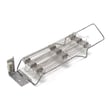
On Kenmore electric dryer model 11086681100, a failing heating element most often shows up as a dryer that tumbles normally but produces little to no heat, so clothes stay damp after a full cycle. In some cases, heat can be inconsistent, causing long dry times.
Common symptoms you can check
- Dryer runs but there is no heat on any heat setting
- Very long dry times even with small loads
- Heat that cuts in and out during the cycle
- Burning smell (lint or wiring overheating can mimic a bad element)
- Dryer repeatedly trips a breaker (can be element, wiring, or motor load)
Quick checks before replacing parts
- Clean airflow first: clean the lint screen, check the lint chute, and confirm strong airflow at the outside vent.
- Confirm power supply (electric dryers): the dryer can run on 120V but needs full 240V to heat; a tripped breaker leg can cause “runs but no heat.”
- Try a timed dry cycle: moisture-sensing cycles can end early if the sensor bars are dirty.
What typically fails (and what it looks like)
| What you notice | Likely area to inspect | What it means |
|---|---|---|
| Tumbles, no heat | Heating circuit (element, thermostats, wiring) | Element may be open or a safety device opened |
| Long dry times | Venting, blower wheel, lint buildup | Restricted airflow overheats the heater housing |
| Heat comes and goes | Cycling thermostat, loose connection | Intermittent heating or poor electrical contact |
Parts that are commonly involved
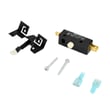
If you confirm good airflow and correct power but still have no heat, inspect the heater wiring and connections. On this model, the dryer heating element wire kit 279457 is a common fix when terminals are heat-damaged.
Why it matters
A weak or failed heating element can turn a simple load into multiple cycles, and restricted airflow can overheat components. Fixing airflow and electrical issues first helps prevent repeat failures.
Last updated: January 2026
How to hard reset a Kenmore dryer?
To hard reset your Kenmore electric dryer model 11086681100, disconnect power for a few minutes so the control can fully clear, then restore power and try a normal cycle. This often fixes a frozen control panel, a stuck cycle, or a no-start caused by a temporary glitch.
Hard reset steps (safe and effective)
- Turn the dryer OFF.
- Unplug the power cord; if you cannot access the plug, switch the dryer circuit breaker OFF.
- Wait 1 to 5 minutes.
- Restore power (plug back in or turn the breaker ON).
- Select a Timed Dry cycle and press Start.
If the dryer still will not start after a reset
A reset will not fix a failed door switch, broken belt, or motor problem. Check these common causes next:
- Confirm the door closes firmly and the latch engages.
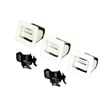
- Test the door switch; a bad switch can prevent starting (see dryer door switch W10820036).
- Listen for a motor hum with no drum movement; that can point to a belt or idler issue.
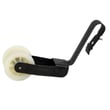
- If the drum does not turn, inspect the belt and idler pulley (see belt 341241 and dryer idler pulley WP691366).
- If the control shows an error, use Kenmore 110 series electronic control model dryer error codes to match the code to a likely failure.
Quick checks: reset vs. repair
| Symptom | Reset helps most when | More likely a part issue when |
|---|---|---|
| Control panel unresponsive | Buttons stopped responding mid-cycle | Panel responds but dryer will not start |
| Dryer will not start | Power glitch after outage | Door switch, belt, motor, or thermal cut-off problem |
| Cycle stuck or acting odd | Cycle logic froze | Repeats every load with no change |
Why it matters
Hard resetting clears the electronic control’s temporary memory and restores normal operation without replacing parts. If the problem returns quickly, checking start-interlock parts (door switch, belt drive, motor) prevents repeat no-start situations.
Last updated: January 2026
What size is a Kenmore Model 11086681100?
For the Kenmore electric dryer model 11086681100, the typical exterior size is about 27 inches wide, 43.5 inches high, and 27.5 inches deep, with a 7.0 cu. ft. drum capacity. These are the common specs for this model family and help you plan fit, venting, and clearance.
Quick size specs
| Spec | Typical measurement |
|---|---|
| Width | 27 in. |
| Height | 43.5 in. |
| Depth | 27.5 in. |
| Capacity | 7.0 cu. ft. |
What to measure at home (so it fits the first time)
- Width: measure the cabinet side-to-side at the widest point.
- Height: measure floor to the top of the cabinet (include leveling legs if extended).
- Depth: measure front-to-back; include the door and control panel if they protrude.
- Clearance: leave room behind for the power cord and vent duct.
- Door swing: confirm the door can open fully without hitting a wall or washer.
Why it matters
Dryer “size” affects more than the space it sits in. Correct dimensions help prevent crushed venting (long dry times), make stacking or side-by-side layouts easier, and reduce installation surprises when moving the dryer through doorways and hallways.
Related DIY help
If you are planning a move, reinstall, or airflow check, we recommend reviewing how to keep a dryer clean and economical to reduce lint buildup and keep drying performance consistent.
Last updated: January 2026
How much does it cost to replace a heating element in a Kenmore dryer?
For Kenmore electric dryer model 11086681100, replacing a heating element typically costs about $150 to $350 total (part plus labor). If you do it yourself, the cost is usually $40 to $150 for the part, depending on whether you replace just the element or an element-and-housing style assembly.
Typical cost breakdown
- Heating element part: $40 to $150
- Service call / diagnostic (if used): $75 to $125
- Labor (install): $75 to $200
- Total installed cost (common range): $150 to $350
| Repair approach | What you pay for | Typical total cost |
|---|---|---|
| DIY replacement | Part only | $40 to $150 |
| Pro repair | Part + labor + possible service call | $150 to $350 |
Before you buy a heating element (common “no heat” checks)
A Kenmore electric dryer can run but not heat for reasons other than the element. We recommend checking these first because they can change the total repair cost.
- Confirm the dryer has 240V power (a tripped breaker can leave you with 120V and no heat)
- Clean the lint screen and verify strong airflow at the exhaust
- Check the thermal fuse and high-limit thermostat (often open when venting is restricted)
- Inspect element coil for a visible break or burn spot
- Look for heat-damaged wiring at the heater terminals; a repair kit like dryer heating element wire kit 279457 can be needed if connectors are burnt
Why it matters
A failed heating element is common, but restricted venting and overheated wiring can cause repeat failures. Fixing airflow issues and any damaged heater wiring helps the new element last longer and keeps drying times normal.
Related DIY help
Last updated: January 2026