Installation guide
 Owner’s manual



Is 4.5 cu ft a large capacity washer?
Yes. A 4.5 cu. ft. washer is considered large capacity for a front-load washer like the Whirlpool WFW90HEFC0; it typically handles bulky items (such as towels or a comforter) as long as the load can tumble freely. For the best results, follow the load-size guidance in the owner's manual.
Large capacity is about both tub volume and how you load it. Even with a big drum, performance drops if items are packed tight.
- Small load: about 1/4 full (3 to 4 items)
- Medium load: about 1/2 full
- Large load: about 3/4 full
- Extra-large load: drum looks full, but clothes must tumble freely
These examples help you visualize what 4.5 cu. ft. can handle in one cycle.
| Load type | What usually fits | Key tip |
|---|---|---|
| Towels | A large batch of bath towels | Avoid “brick-like” packing |
| Bedding | Many queen sets; some king comforters | Use a bulky/bedding cycle if available |
| Mixed laundry | 2 to 3 baskets worth (varies) | Keep heavy items balanced |
Correct loading protects the drive system and suspension, improves rinsing, and reduces vibration. Overloading can also lead to longer cycle times because the washer may sense excess suds or an unbalanced load.
- Use HE detergent and measure carefully to prevent oversudsing.
- Load loosely; place items around the drum, not in a tight ball.
- Mix sizes (small items with larger ones) to help balance.
- Wash one bulky item with a few smaller items to stabilize the load.
- If the washer shakes, pause and redistribute the load before continuing.
Last updated: February 2026
Is there a way to reset a whirlpool WFW90HEFC0 washer?
Yes. For the Whirlpool WFW90HEFC0 washer, the most reliable reset is a power reset: touch Power to clear the display, then unplug the washer for 30 seconds and plug it back in. Many error codes also clear by pressing Power once, then restarting the cycle.
- Touch Power once to cancel the cycle and clear the display.
- Wait 10 seconds, then touch Power again to turn the washer back on.
- If the issue remains, unplug the washer for 30 seconds, then plug it back in.
- If the door is locked due to an error, let the washer finish any automatic drain period before trying to restart.
- If the display shows a door-lock error, confirm the door is fully closed and nothing is caught in the bellow.
| What you see | What to do | What it resets |
|---|---|---|
| Random glitch, unresponsive controls | Unplug 30 seconds, plug back in | Control logic reboot |
| F## E## system-type code | Touch Power once to clear; touch Power again to restart | Clears code and restarts cycle |
| Water supply error (Lo FL, F8 E1, or similar) | Let the washer drain completely; then touch Power to clear and restart | Clears code after drain completes |
| Door will not lock (F5 E2) | Touch Power to cancel; close door firmly; restart | Clears lock-related stop |
Some faults keep the door locked and force a drain for safety. Until that drain finishes, the code will come right back. After the drain completes, clearing the code with Power and restarting is the correct reset sequence.
If resets work only temporarily, a failing part can be the real cause.
- Drain and no-start symptoms: washer drain pump WPW10605427
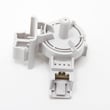
- Door won’t lock or won’t start: washer door lock WPW10443885
- Slow fill or fill errors: washer water inlet valve WPW10435242
We recommend following the troubleshooting and error-code steps for WFW90HEFC0 in the owner's manual, since the correct reset can depend on the specific code shown.
Why it matters: Resetting the right way prevents repeated lockouts, protects the drain pump system, and helps you tell the difference between a one-time control glitch and a part failure.
Last updated: February 2026
What does f mean on a washing machine?
On a Whirlpool WFW90HEFC0 washer, an “F” on the display is part of an error code (for example, F09 E01 for a drain problem or F05 E02 for a door lock problem). Read the full code, then follow the troubleshooting steps in the owner's manual.
On the WFW90HEFC0, “F” codes commonly relate to a system condition the control detected, such as draining, filling, or door locking.
Common examples you may see:
- F09 E01 (drain pump system error): washer is not draining correctly
- F08 E01 (water supply error): washer is not filling correctly
- F05 E02 (door will not lock): door latch or lock issue
Before replacing parts, we recommend these basic checks (power off the washer first if you are inspecting hoses or connections):
- Make sure the door closes fully and latches (no laundry caught in the opening)
- Check the drain hose for kinks, pinches, or a clog
- Confirm the drain hose is installed correctly (not shoved too far into the standpipe)
- Verify both hot and cold faucets are fully on
- Check inlet hoses for kinks and make sure water is flowing
- Use only HE detergent and measure carefully (too many suds can contribute to drain issues)
If the code and symptoms point to a specific system, these parts are common suspects for this Whirlpool front-load platform.
| What you see | Most likely system | Common part to inspect/replace |
|---|---|---|
| F09 E01, won’t drain, water left in tub | Drain system | Washer drain pump WPW10605427 or washer internal drain hose WPW10562025 |
| F05 E02, door won’t lock/start | Door lock system | Washer door lock WPW10443885 |
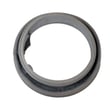
| Leaks at the door, musty smell, water at front | Door boot/seal | Washer bellow W11106747 |
“F” codes help you avoid guesswork. Matching the exact code to the right system (drain, fill, or door lock) prevents unnecessary part replacement and gets your WFW90HEFC0 back to normal operation faster.
Last updated: February 2026
What is the most common problem with Whirlpool washers?
For the Whirlpool WFW90HEFC0, the most common issues we see are water leaks and drain or spin problems (clothes stay wet). Many of these start with simple causes like loose fill hoses, debris in the drain system, or a dirty door seal; the owner's manual outlines the key checks.
- Leaks at the door: lint, hair, or residue on the inner door glass or rubber seal; clean both surfaces.
- Leaks at the back: fill hoses not tight, missing or mis-seated flat washers, or a loose drain hose connection.
- Won’t drain or drains slowly: small items from pockets can block the pump or drain path.
- Won’t start, won’t fill, or stops mid-cycle: water supply off, kinked inlet hoses, clogged inlet screens, or power supply issues.
- Excess suds, poor rinsing, odd behavior: using non-HE detergent or too much HE detergent.
- Unplug the washer and turn off both water faucets.
- Inspect fill hoses: tighten connections and confirm all four flat washers are seated.
- Check the drain hose: make sure it is secured to the standpipe or laundry tub and not kinked.
- Clean the door glass and seal: wipe the underside of the glass and the rubber seal to prevent seepage.
- Reduce suds: use only HE detergent and measure carefully.
| Symptom | Most likely area | Common part on this model page |
|---|---|---|
| Water on floor during wash | Fill hoses, inlet valve, drain hose | Washer water inlet valve WPW10435242 |
| Water at front of washer | Door seal area | Washer bellow W11106747 |
| Humming, gurgling during drain | Pump removing final water (often normal) | Washer drain pump WPW10605427 |
| Door won’t lock or cycle won’t start | Door latch/lock system | Washer door lock WPW10443885 |
Leaks can damage flooring and lead to corrosion, and drain or spin problems can leave clothes soaking wet and strain the drive system. Catching simple issues early (hose washers, door seal cleaning, pocket debris) prevents bigger repairs.
Last updated: February 2026