Installation guide
 Owner’s manual
 Error Codes



How do you put the bottom grill on a GE refrigerator?
On the GE GFE26GMHFES bottom-mount refrigerator, the bottom grille (base grille/toe grille) typically installs by aligning the grille with the lower front opening, engaging the tabs or clips, and then securing any retaining screws so it sits flush and doesn’t rattle. For your exact clip and screw locations, use the installation guide.
Steps to reinstall the bottom grille
- Unplug the refrigerator or switch off power at the breaker (safer when working near wiring).
- Pull the refrigerator forward a few inches so you can see the lower front edge clearly.
- Line up the grille with the lower front opening; start by engaging the tabs/clips on one side.
- Press along the length of the grille until it snaps fully into place.
- Reinstall any screws (commonly Phillips or 1/4-inch hex head) and tighten until snug.
- Push the refrigerator back, keeping the grille from catching on flooring.
Quick checks after installation
| What to check | What “good” looks like | What to do if it’s not right |
|---|---|---|
| Fit | Grille sits flat and even | Reseat the tabs, then retighten screws |
| Noise | No buzzing or rattling | Make sure all clips are engaged; add missing screws |
| Airflow | Front vents are not blocked | Clear dust and keep items away from the grille |
Why it matters
The bottom grille helps protect components and supports proper airflow across the condenser area. If it’s loose or missing, you can get extra noise, reduced cooling efficiency, and faster dust buildup.
If it still won’t stay on
- Check for broken tabs or warped plastic on the grille.
- Confirm the grille is oriented correctly (top edge and bottom edge are not interchangeable on many designs).
- Make sure the refrigerator is level; a tilted cabinet can keep the grille from seating.
Last updated: February 2026
What does the 26 stand for?
On the GE GFE26GMHFES bottom-mount refrigerator, the “26” in the model name is a model-series identifier GE uses to group similar designs and feature sets; it is not a service code and it does not tell you a specific part size. For operating details and specifications, use the owner's manual.
What “26” usually means on GE refrigerator model numbers
In most GE refrigerator model names, the number block helps identify the product family and general platform. It is commonly used for:
- Grouping similar cabinet designs and configurations (such as French door, bottom-freezer layouts)
- Indicating a feature tier within a broader series
- Helping match the correct parts list and documentation to the exact model number
- Differentiating revisions that may use different control boards, sensors, or dispenser components
What it does not mean
The “26” is often mistaken for a capacity or a measurement. For this model, treat it as a naming convention, not a spec.
- Not a guaranteed cubic-foot capacity
- Not the freezer size
- Not a temperature setting or error code
- Not a part number reference
Quick guide: where to find the specs that matter
Use the model’s documentation and rating label for the details you actually need.
| What you need | Best place to check | Why it matters |
|---|---|---|
| Exact capacity and dimensions | Owner's manual | Confirms fit, clearance, and storage volume |
| Electrical requirements | Installation guide | Prevents nuisance tripping and wiring issues |
| Parts compatibility | Model-based parts list for GFE26GMHFES | Ensures the correct sensor, fan motor, gasket, etc. |
Why it matters
When you are troubleshooting cooling, ice maker, or dispenser issues, the exact model number (GFE26GMHFES) is what ensures you get the right repair steps and compatible parts, such as a temperature sensor or evaporator fan motor.
Last updated: February 2026
What is the life expectancy of a GE GFE26GMHFES refrigerator?
A GE GFE26GMHFES bottom-mount refrigerator typically lasts 15 to 20 years with normal household use and consistent maintenance (clean coils, good door sealing, and stable temperatures). This is the standard lifespan range for modern full-size GE refrigerators.
Typical lifespan and what affects it
The biggest drivers of refrigerator life are heat removal (condenser airflow), door sealing, and how hard the sealed system has to work.
- Condenser cleanliness: dust-clogged coils raise compressor run time
- Door gasket condition: air leaks cause temperature swings and frost
- Room temperature and ventilation: tight cabinets and hot garages shorten life
- Ice maker and water system upkeep: reduces leaks and valve wear
- Temperature settings: steady settings reduce cycling stress
Maintenance checklist (best ROI)
Use these steps to help your GFE26GMHFES reach the 15 to 20 year range:
- Vacuum and brush the condenser area regularly
- Keep freezer and fresh food vents unblocked
- Replace the water filter on schedule (if equipped)
- Inspect and clean the door gaskets; correct gaps and warping
- Level the refrigerator so doors close fully on their own
Quick guide: symptoms that shorten lifespan
| Symptom | Common cause | What to check first |
|---|---|---|
| Warm fridge, freezer OK | Airflow issue | Evaporator fan operation, blocked vents |
| Frost buildup in freezer | Door leak or defrost issue | Gasket seal, defrost components |
| No ice or slow ice | Water supply issue | Filter, inlet valve, frozen fill tube |
| Temperature swings | Sensor or control issue | Thermistor readings, control board |
Parts that commonly impact cooling and longevity
If you are troubleshooting performance issues, these model-matched parts are often involved:
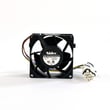
- Refrigerator evaporator fan motor WR60X26866 (moves cold air through the compartments)
- Refrigerator freezer door gasket WR14X36194 (prevents warm air leaks and frost)
- Refrigerator temperature sensor WR55X10025 (helps regulate temperatures accurately)
Why it matters
A refrigerator that runs warmer than normal or runs constantly wears the compressor and electronics faster. Keeping airflow clear, seals tight, and water filtration current reduces strain and helps prevent early failures.
For model-specific care and maintenance intervals, follow the owner's manual.
Last updated: February 2026
What is the most common problem with a GE refrigerator?
The most common GE refrigerator problem is a cooling issue: the fresh food section gets warm, temperatures swing, or the unit runs constantly. On the GE GFE26GMHFES, this is often tied to airflow (evaporator fan), defrost performance, or a temperature-sensing/control issue; use the owner's manual for model-specific checks and settings.
Most common symptoms you will notice
- Refrigerator section warm but freezer still cold
- Frost or ice buildup on the freezer back wall
- Loud humming, rattling, or a fan noise that comes and goes
- Food freezing in the refrigerator section
- Temperature display looks normal but food temps are off
Quick checks we recommend first (no parts yet)
- Confirm settings: refrigerator about 37°F and freezer about 0°F
- Make sure vents are not blocked by food packages
- Check door sealing and closing; a poor seal causes long run times and temperature swings
- Clean dust from the condenser area and ensure good airflow around the cabinet
- If the door alarm is sounding or won’t reset, follow how to reset the door alarm on a GE refrigerator
Parts that commonly cause “not cooling” complaints on this model
If the quick checks don’t help, these parts are frequent culprits for cooling and temperature problems:
| Symptom | Common cause | Example part for GFE26GMHFES |
|---|---|---|
| Warm fridge, freezer OK | Weak/no evaporator airflow | Refrigerator evaporator fan motor WR60X26866 |
| Temps swing, false readings | Bad sensor input | Refrigerator temperature sensor WR55X10025 |
| Frost buildup, warm temps | Defrost system issue | Refrigerator defrost heater WR51X10132 and refrigerator defrost bi-metal thermostat WR50X10108 |
Why it matters
A refrigerator that can’t hold steady temperatures can spoil food, overwork the compressor, and create ice buildup that blocks airflow. Catching a fan, defrost, or sensor problem early usually prevents bigger cooling failures.
Last updated: February 2026