Error Codes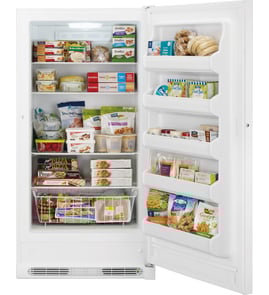

What is the disadvantage of an upright freezer?
An upright freezer like the Wc Wood F1613RW3 is easiest to organize, but its main disadvantage is efficiency: when you open the door, cold air spills out quickly, so the compressor often runs more and temperatures can swing more than in a chest freezer.
Common disadvantages (what you will notice day to day)
- More cold-air loss when the door opens, which can mean higher energy use.
- Less “forgiving” during long outages because cold air escapes more easily once the door is opened.
- More parts that must seal tightly (door gasket and hinges); small leaks can cause frost and longer run times.
- Fixed shelves and bins can limit bulky storage, such as large boxes or odd-shaped cuts of meat.
- Frost buildup can be more noticeable if the door is opened frequently or the seal is weak.
Upright vs. chest freezer: quick comparison
| Feature | Upright freezer | Chest freezer |
|---|---|---|
| Door-open cold loss | Higher | Lower |
| Organization | Easier (shelves) | Harder (stacking) |
| Bulky items | Sometimes limited | Usually easier |
| Power outage performance | Typically weaker | Typically stronger |
| Footprint | Smaller floor space | More floor space |
What to do if your upright seems “extra inefficient”
If your F1613RW3 is running a lot, warming up, or frosting heavily, these checks usually help:
- Confirm the door closes squarely and nothing inside is blocking it.
- Inspect the door gasket for gaps, tears, or hardened sections.
- Clean dust from the condenser area (where accessible) to improve heat release.
- Keep the freezer reasonably full; thermal mass helps stabilize temperature.
- Set the control to a normal mid-range setting and avoid frequent door openings.
Why it matters
More warm-air intrusion means more compressor run time, which affects energy use, frost buildup, and how steadily food stays frozen. If you rely on long-term storage or want the best outage protection, these differences can be important.
For model-specific replacement parts and diagrams for the Wc Wood F1613RW3, start with the parts list for this model, or search by model number on Sears PartsDirect.
Last updated: February 2026
Is it okay to transport a freezer on its side?
Yes, but we only recommend transporting your Wc Wood upright freezer model F1613RW3 on its side if you have no other option. Keep the tilt under about 45 degrees when possible, and always let the freezer stand upright (unplugged) long enough for the compressor oil to settle before you power it back on.
Safe transport rules (what we recommend)
- Keep the freezer as upright as possible; avoid laying it fully flat.
- If you must lay it down, protect the cabinet and door with moving blankets.
- Secure the door shut with tape or a strap so it cannot swing open.
- Move it gently; hard bumps can damage the sealed system and tubing.
- Do not plug it in immediately after transport if it was tilted or on its side.
How long should it sit upright before plugging in?
Use the time it was tilted as your guide.
| How it was transported | What to do before plugging in |
|---|---|
| Tilted briefly (under 45 degrees) | Stand upright for the same amount of time it was tilted |
| On its side for a few hours | Stand upright for several hours (same-time rule is a solid minimum) |
| On its side for most of a day or longer | Stand upright for 24 hours before running |
Why it matters
When a freezer is on its side, compressor oil can migrate into the refrigerant lines. Letting the unit sit upright helps the oil drain back to the compressor, which reduces the risk of poor cooling, noisy operation, or compressor damage when you restart it.
Parts and model lookup tip
If you need shelves, a door gasket, a start device, or other replacement parts after a move, search by model number F1613RW3 on the parts list for this freezer, or use Sears PartsDirect to look up parts by model.
Last updated: February 2026
What is the average life expectancy of an upright freezer?
Most upright freezers, including the Wc Wood upright freezer model F1613RW3, typically last 10 to 15 years with normal use. Consistent temperatures, clean airflow, and good door-seal condition are the biggest factors that help an upright freezer reach the high end of that range.
Typical lifespan and what affects it
An upright freezer’s service life depends more on operating conditions than brand name.
- Room temperature: Hot garages and utility rooms make the compressor work harder.
- Door gasket condition: Leaks cause longer run times and frost buildup.
- Condenser airflow: Dust and blocked vents raise operating temperatures.
- Defrost performance: Heavy frost reduces efficiency and stresses components.
- Loading habits: Overpacking can block air circulation; underfilling can increase temperature swings.
Quick checklist to help your freezer last longer
Use these habits to reduce wear on the sealed system and controls:
- Keep the freezer level so the door seals evenly.
- Leave air space around interior vents and shelves.
- Clean dust from the condenser area (where accessible) every 6 to 12 months.
- Confirm the door closes fully; avoid slamming or forcing it shut.
- Defrost (if manual-defrost) when frost reaches about 1/4 inch.
What “end of life” usually looks like
These symptoms often show up as a freezer nears the end of its useful life:
| Symptom | Common cause | What to do first |
|---|---|---|
| Warmer temps, food softening | Weak compressor, low refrigerant, airflow issue | Check door seal and airflow; verify settings |
| Constant running | Dirty condenser area, gasket leak, hot location | Improve ventilation; inspect gasket |
| Heavy frost | Door leak or defrost problem | Check gasket; reduce door openings |
| Clicking, then no start | Start device or compressor issue | Unplug 5 minutes; retry; then diagnose |
Why it matters
A freezer that runs longer than necessary uses more electricity and can struggle to hold safe food-storage temperatures. Simple maintenance helps protect the compressor, which is the most expensive system to repair.
For model-specific replacement parts and diagrams for F1613RW3, start with the parts list for this model, or search by model number on Sears PartsDirect.
Last updated: February 2026
Why is the upright freezer not freezing?
If your Wc Wood upright freezer model F1613RW3 isn’t freezing, the most common causes are restricted airflow (overpacked shelves or blocked vents), heavy frost from a door seal leak, dirty condenser coils, or a failed fan or defrost component. Start with airflow and cleaning checks first.
Quick checks that fix many “not freezing” problems
- Confirm the temperature control is set colder and give it 24 hours to stabilize.
- Make sure packages are not blocking interior air vents; leave space around the back wall.
- Check the door closes tightly; look for gaps, torn gasket areas, or warm air leaks.
- Clean dust from the condenser area (unplug first); poor heat release can stop cooling.
- Listen for the evaporator fan (inside) and condenser fan (near compressor, if equipped).
What to look for (symptom-to-cause guide)
| What you notice | Most likely cause | What to do next |
|---|---|---|
| Frost blanket on back wall | Defrost system issue or door leak | Manually defrost, then watch for rapid frost return |
| Freezer runs but stays warm | Dirty condenser, poor airflow, weak compressor start | Clean coils, verify fans, check start components |
| No fan sound inside | Evaporator fan motor issue or ice blockage | Defrost and recheck; inspect fan area |
| Intermittent cooling | Door not sealing, control/thermostat issue | Check gasket seal and temperature setting consistency |
Step-by-step troubleshooting (in order)
- Unplug and inspect airflow: remove items touching the back wall; clear vents.
- Defrost if frost is heavy: unplug and leave door open until ice melts; dry thoroughly.
- Clean condenser coils/area: dust buildup can cause warm temps and long run times.
- Check fans: a working freezer typically has steady airflow; no airflow points to a fan or ice obstruction.
- Basic electrical checks (if you DIY): test for a blown fuse or broken wire connections before replacing major components.
Why it matters
A freezer that can’t move air across the evaporator or can’t release heat at the condenser will not pull temperatures down, even if the compressor is running. Fixing airflow, frost, and coil cleanliness often restores normal freezing without major repairs.
For model-specific replacement parts and diagrams for F1613RW3, use the parts list for this model, or search by model number on Sears PartsDirect. You can also use our DIY help like how to tell if a fuse is blown and how to use a multimeter to test electrical parts video when diagnosing electrical issues.
Last updated: February 2026
What are the parts of a standing freezer?
A standing (upright) freezer like the Wc Wood F1613RW3 uses a sealed refrigeration system plus airflow and controls to remove heat and keep food frozen. The core cooling components are the compressor, condenser, metering device (capillary tube), and evaporator; fans, thermostats, and door sealing support stable temperatures.
Main parts you will find in most upright freezers
- Compressor: pumps refrigerant through the sealed system.
- Condenser coil: releases heat to the room air.
- Metering device (capillary tube): drops refrigerant pressure to create cooling.
- Evaporator coil: absorbs heat inside the cabinet.
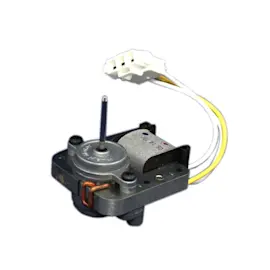
- Evaporator fan (on frost-free models): circulates cold air through shelves and bins.
- Defrost system (on frost-free models): defrost heater, defrost thermostat, and a timer or control board.
- Temperature control: thermostat or electronic sensor/control.
- Door gasket: keeps warm, moist air from leaking in.
Quick “what it does” comparison
| Part | What it does | Common symptom when it fails |
|---|---|---|
| Compressor | Moves refrigerant | Warm cabinet, clicking, no steady run |
| Condenser coil/fan | Dumps heat | Poor cooling, hot cabinet sides, long run time |
| Evaporator coil/fan | Makes and moves cold air | Frost buildup, warm spots, weak airflow |
| Defrost system | Prevents ice blockage | Heavy frost, fan noise, warming over days |
| Door gasket | Seals the door | Frost near door, sweating, frequent cycling |
Why it matters
Knowing which system a part belongs to helps you troubleshoot faster. For example, heavy frost usually points to airflow/defrost or a door seal issue, while no cooling at all often points to the sealed system or electrical supply.
Helpful next steps for troubleshooting and ordering
- Confirm the model tag reads F1613RW3 before ordering.
- Clean dust from the condenser area (if accessible) and ensure good airflow around the cabinet.
- Check the door gasket for gaps, tears, or areas that do not grip paper when the door is closed.
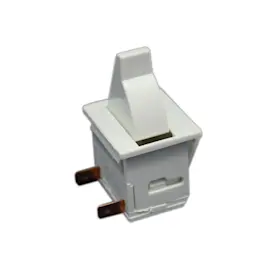
- Listen for the evaporator fan (door switch held closed) and the compressor running.
- If you plan to test electrical parts, use safe meter practices from how to use a multimeter to test electrical parts video.
- When you are ready to shop, start with the parts list for your model, or search by model number on Sears PartsDirect.
Last updated: February 2026