Owner’s manual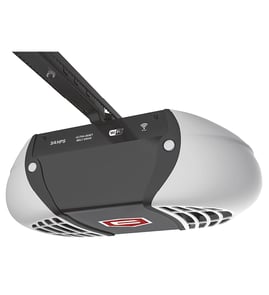


How do I know what model my garage door opener is?
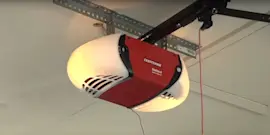
Your Craftsman garage door opener’s model information is typically printed on a label on the powerhead (the motor unit mounted to the ceiling or wall). For model 13954915, the fastest way is to check under the light lens/cover or behind the front cover, then match the model number exactly when looking up parts and troubleshooting steps in the owner's manual.
Where to look for the model label
Check these common locations on the opener motor unit:
- Under the light cover/lens (many one-light and two-light openers)
- Behind the front cover (some units hide the label behind a snap-on panel)
- On the side of the powerhead housing near the wiring terminals
- Near the antenna wire (often close to the learn/program button area)
- On the back panel facing the garage door
What to write down (and why)
Record the information exactly as shown on the label.
| Label item | Example | Why it matters |
|---|---|---|
| Model number | 13954915 | Ensures the correct parts list and instructions |
| Serial number | Varies | Helps identify production run and compatible components |
| Motor type | AC or DC | Useful for diagnostics and error-code charts |
Tips to avoid common mix-ups
- Use the model number from the opener motor unit, not the remote or keypad.
- If the label is dusty or faded, wipe it gently and use a flashlight to read small print.
- If your opener is showing diagnostic flashes or beeps, use the model number to follow the right chart in Craftsman error codes.
Why it matters
Craftsman garage door opener parts and programming steps can vary by model and motor platform. Using the exact model number (like 13954915) prevents ordering the wrong safety sensors, wall control, logic board, or remote compatibility.
Last updated: February 2026
How long does a CR2032 battery last in a garage door opener?
A CR2032 coin-cell battery used in a garage door opener remote or wireless keypad typically lasts 1 to 2 years in normal use. For a Craftsman garage door opener like model 13954915, heavy daily use and temperature extremes can shorten battery life, while light use can extend it.
Typical battery life (what to expect)
Most CR2032-powered garage door opener remotes fall into these real-world ranges:
- Light use (a few presses per week): about 2 to 3 years
- Normal use (daily open/close): about 1 to 2 years
- Heavy use (many cycles per day): about 6 to 12 months
- Cold or hot garages: expect shorter life due to reduced battery performance
Signs it is time to replace the CR2032
If your Craftsman remote or keypad starts acting inconsistent, the battery is usually the first fix.
- Reduced range (you must be closer to the door)
- Intermittent operation (works sometimes, not others)
- Wall control works but the remote does not
- Keypad backlight is dim (if equipped)
- You need multiple button presses to get a response
Quick checks that prevent “false battery” problems
Before you assume the opener has a logic board or receiver issue, rule out the common basics:
- Confirm the battery is installed with correct polarity (+ and -)
- Clean the battery contacts (light corrosion can cause voltage drop)
- Try a fresh, name-brand CR2032 (coin cells vary in shelf age)
- Reprogram the remote if it was recently replaced or reset (follow the owner's manual)
- If the remote still fails, use the opener’s diagnostic lights or codes (see Craftsman error codes)
Battery life factors at a glance
| Factor | What it does | Result |
|---|---|---|
| More button presses per day | Increases drain | Shorter life |
| Extreme cold/heat | Lowers effective capacity | Shorter life |
| LED/backlight features | Adds constant or extra load | Shorter life |
| Older battery stock | Starts with less usable capacity | Shorter life |
Why it matters
A weak CR2032 can look like a bigger garage door opener problem (receiver issues, travel problems, or safety sensor faults). Replacing the coin-cell battery first is the fastest, lowest-cost way to restore reliable remote operation.
Last updated: February 2026
Why is my garage door not responding to remotes and/or keypad?
When a Craftsman garage door opener like model 13954915 will not respond to remotes or a keypad, the cause is usually power or lock mode at the wall control, dead batteries, blocked or misaligned safety sensors, or the remote/keypad losing programming. Restoring power, clearing lock mode, and reprogramming typically fixes it.
Quick checks (fastest fixes first)
- Replace the remote and keypad batteries; confirm correct battery orientation.
- Make sure the opener has power (ceiling outlet, breaker, and any GFCI outlet in the garage).
- Check the wall control for Lock/Vacation mode; turn it off if enabled.
- Verify the safety sensors are aligned and unobstructed; clean the lenses.
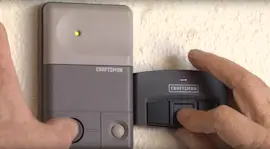
- Remove possible radio interference sources near the opener (common culprits: some LED bulbs in the opener light socket).
- Try operating the door from the wall control; if the wall control works but remotes do not, focus on programming/interference.
Re-sync (program) the remote and keypad
Programming steps vary by logic board and wall control style, but the workflow is consistent:
- Locate the LEARN button on the motor unit.
- Put the opener into learn mode.
- Press the remote button (and follow keypad steps) to store the code.
Use the exact button sequence and timing in the Owner's manual for model 13954915.
What the symptoms usually mean
| Symptom | Most likely cause | What to do next |
|---|---|---|
| Wall control works; remotes/keypad do not | Lock mode, interference, lost programming | Disable lock mode; reprogram; swap LED bulbs |
| Nothing works (no wall control, no remotes) | No power or opener not running | Check outlet, breaker, GFCI; confirm opener lights/LEDs |
| Door starts then stops; lights blink | Safety sensor issue or travel/force issue | Align sensors; check door movement; adjust force per manual |
Why it matters
Remotes and keypads depend on the opener’s receiver and safety logic. If the opener is in lock mode, has interference, or sees a safety sensor problem, it can ignore radio commands or refuse to close for safety.
Related troubleshooting help
If you see blinking light patterns or diagnostic codes, match them to the fix using Craftsman error codes.
Last updated: February 2026
What are the common problems with Craftsman garage door openers?
The most common problems we see on the Craftsman 13954915 garage door opener are safety sensor issues (door will not close), remote or wall control problems, and drive or gear wear that causes grinding or humming. Your owner's manual is the best place to match symptoms to the correct adjustment or repair.
Most common symptoms and what they usually mean
- Door will not close; lights blink: safety sensors misaligned, blocked, or wired incorrectly
- Remote works sometimes: weak remote battery, interference, or opener not in range
- Wall control does nothing: loose wiring at the wall control or opener terminals
- Opener hums but door does not move: door is jammed, trolley disengaged, or internal drive components worn
- Grinding noise: worn drive gear/worm gear assembly (common on chain-drive units)
- Stops or reverses: travel limits or force settings need adjustment; door may be binding
Quick checks we recommend first (before replacing parts)
- Confirm the door moves freely by hand (pull the emergency release and lift the door). A heavy or stuck door points to door hardware, not the opener.
- Check safety sensor alignment: both sensor LEDs should be steady; clean the lenses and remove any obstruction.
- Inspect the rail and trolley: make sure the trolley is engaged and the chain/belt is not excessively loose.
- Power reset: unplug for 30 seconds, then plug back in; verify the outlet has power.
- Reprogram the remote if it is intermittent.
Symptom-to-fix guide
| Symptom | Most likely cause | Best next step |
|---|---|---|
| Won’t close; blinking lights | Safety sensors | Align/clean sensors; check wiring |
| No response from wall control | Wall control wiring | Reseat wires; inspect for staples/cuts |
| Loud grinding | Worn gears | Inspect gear housing; plan gear replacement |
| Reverses when closing | Force/travel or binding door | Adjust force/travel; check door balance |
Why it matters
Most “opener problems” are actually safety sensor alignment or a binding, unbalanced door. Fixing those first prevents repeated reversals, stripped gears, and premature motor wear.
Related troubleshooting help
For diagnostic light patterns and model-family troubleshooting steps, use our Craftsman error codes resource.
Last updated: February 2026
Is it cheaper to repair or replace a garage door opener?
Repairing a Craftsman garage door opener like model 13954915 is cheaper when the problem is limited to common wear items or adjustments (safety sensors, remote programming, force/travel settings). Replacing is the better value when the opener is older, repeatedly fails, or the repair cost is close to half the price of a new unit.
Quick rule of thumb (cost vs. value)
Use this simple decision guide:
- Repair when the opener runs but has a specific symptom (won’t close, remotes won’t work, lights blink, door reverses).
- Replace when the motor/control board is failing, the unit is very noisy, or multiple issues keep coming back.
- Replace when the door itself is binding or heavy and the opener is being overworked (you will keep paying for repairs until the door is corrected).
| Situation | Usually cheaper | Why |
|---|---|---|
| Sensors misaligned, wiring loose, sunlight interference | Repair | Low parts cost; mostly adjustment/cleanup |
| Remote/keypad needs reprogramming | Repair | Setup issue, not a major component failure |
| Door reverses or stops early (force/travel settings) | Repair | Often corrected with adjustments |
| Stripped gears, failing motor, intermittent logic board | Replace | Higher labor/parts; reliability drops |
What to check first on model 13954915
These checks help you avoid replacing an opener for an issue that is actually an adjustment or door problem:
- Confirm the safety sensors are aligned and the lenses are clean.
- Check for LED bulb interference (some LEDs disrupt remote range).
- Inspect the door for binding (rollers, tracks, springs); a heavy door strains the opener.
- Review travel and force settings and test the safety reverse.
- Look for diagnostic blink patterns on the opener.
For model-specific adjustment and testing steps, use the owner's manual.
Why it matters
A garage door opener is a safety device as much as a convenience feature. If you replace when a simple sensor or force adjustment would fix it, you overspend. If you keep repairing a failing drive system or motor, you risk repeated downtime and inconsistent safety reversing.
Helpful troubleshooting resources
When you’re deciding whether a repair is “minor” or “major,” error and blink codes are often the fastest clue. Use our Craftsman error codes guide to match symptoms to likely causes.
Last updated: February 2026