Installation guide
 Owner’s manual



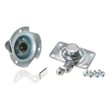
What is the lifespan of a GE dryer?
A GE electric dryer like model GFDN110EL0WW typically lasts 10 years. With consistent care (especially lint and vent maintenance) many dryers reach 12 to 15 years because the heater and drum system run cooler and with less strain.
- Normal household use: about 10 years
- Well maintained, moderate loads: 12 to 15 years
- Heavy daily use or poor airflow: often shorter than 10 years
Key factors that change lifespan:
- Cleaning the lint screen every load (your dryer may still show a reminder message until you press Start)
- Keeping the exhaust venting clear and properly routed
- Avoiding chronic overloading (extra stress on the drum, belt, and motor)
- Installing the dryer correctly and on a stable, level surface
- Addressing squealing, thumping, or burning smells early
Use these habits to get the longest life from your GE GFDN110EL0WW:
- After every load: clean the lint screen
- Monthly: inspect the vent hose for kinks or crushing
- Every 6 to 12 months: clean the full vent run to the outside
- As needed: wipe the exterior and keep pretreatment chemicals off the control panel/finish
- When noises start: check wear items like the belt, glides, and idler pulley
| Symptom | Common cause | Example part for this model |
|---|---|---|
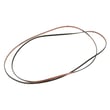
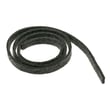
| Drum not turning, motor runs | Worn or broken belt | Dryer drum belt WE03X29897 |
| Squealing or chirping | Idler pulley wear | Idler pulley WE12X83 |
| Scraping, thumping, rough drum movement | Drum glides/pads wearing | Dryer drum glide bearing (green) WE03X37317 |
A dryer’s lifespan is mostly an airflow and friction story: restricted venting raises heat and cycle time, and worn drum support parts increase drag. Keeping airflow strong and replacing small wear parts early helps protect higher-cost components like the motor and control.
For model-specific operating and care guidance, follow the GFDN110EL0WW owner’s manual.
Last updated: January 2026
Do 110V dryers work well?
A true 110V electric dryer typically dries slower than a 240V dryer because it has less heating power. Your GE GFDN110EL0WW is designed for a 120/240V (or 120/208V) 30-amp circuit, so it is built to deliver normal full-size electric-dryer performance when installed correctly per the GFDN110EL0WW installation guide.
In general, 110V dryers can work fine for light-duty needs, but they usually take longer to dry a full load.
- 110V dryers: longer dry times, smaller loads, often compact or specialty units
- 240V dryers: faster heat recovery, better for full-size loads and heavy fabrics
- Energy use: longer run time can offset the lower wattage of 110V units
- Installation: full-size electric dryers typically require a dedicated 30A circuit
This model is intended to run on a dedicated circuit that supports full heating performance.
| Item | Typical requirement for this model type | What it means for drying |
|---|---|---|
| Voltage | 120/240V (or 120/208V) | Full-size electric heat output |
| Circuit | 30 amp, single phase | Prevents nuisance trips and low heat |
| Cord type | 3-prong or 4-prong (as required) | Correct connection for your receptacle |
Even with correct voltage, airflow problems can make a dryer act weak.
- Clean the lint filter before every load
- Confirm you are using 4-inch rigid metal duct where required
- Keep the vent run short; avoid crushing or kinking the duct
- Make sure the outside damper opens freely
- Do not run the dryer without the lint filter in place
For model-specific venting details, follow the GFDN110EL0WW owner’s manual.
Drying performance is mostly about heat plus airflow. A 110V dryer usually lacks heat capacity for fast full-load drying, while a properly installed 240V dryer like the GE GFDN110EL0WW is designed to dry efficiently when the electrical supply and venting meet specifications.
Last updated: January 2026
What is the details of GE GFDN110EL0WW 27 front load electric dryer?
The GE GFDN110EL0WW is a 27-inch front-load electric dryer with a 7.0 cu. ft. capacity and a control panel that supports both sensor dry and timed dry cycles. For the most accurate feature list and cycle behavior, use the GFDN110EL0WW owner's manual.
- 27-inch front-load design
- 7.0 cu. ft. drum capacity
- Sensor dry cycles plus timed dry options
- Multiple heat selections (commonly 4 on this series)
- Multiple dry cycles (commonly 10 on this series)
- Countdown-style display and “wake up” Power button behavior
The manual for this GE dryer series describes how the Power button wakes the display and how dry cycles are selected, including sensor cycles such as Cottons and Mixed Load. It also notes where to find the model and serial label (inside the door opening). See the GFDN110EL0WW owner's manual for the full control-panel and cycle-option details.
Use the installation instructions to confirm electrical and placement requirements before installing or moving the dryer.
- Follow local codes and ordinances
- Keep the wiring diagram and service info location in mind (control console)
- Remove the door from an old dryer before disposal
- Use approved venting practices to prevent long dry times
| Detail | What to check | Where to verify |
|---|---|---|
| Size/fit | 27-inch class dimensions and clearances | GFDN110EL0WW installation guide |
| Electrical | Proper power supply and connections | GFDN110EL0WW installation guide |
| Cycles/features | Sensor vs timed dry behavior | GFDN110EL0WW owner's manual |
Matching the correct capacity, cycle types, and installation requirements helps prevent poor drying performance, nuisance shutdowns, and venting issues. It also ensures you order compatible GE parts for the GFDN110EL0WW when repairs come up.
Last updated: January 2026
What is the most common problem with a GE dryer?
On the GE GFDN110EL0WW electric dryer, the most common problems we see are long dry times from restricted venting, no heat from an electrical supply or heat-system issue, and a drum that will not turn due to a worn belt or pulley. Use the GFDN110EL0WW owner's manual troubleshooting chart to narrow it down fast.
- Clothes take too long to dry: airflow is restricted (lint buildup, kinked duct, stuck outside damper).
- Dryer tumbles but does not heat: a house fuse is blown or a circuit breaker is tripped (many electric dryers can still run but not heat).
- Dryer will not start: door not fully closed, a switch issue, or a control problem.
- Squealing, thumping, or scraping: worn drum glides, idler pulley, or belt.
- Shaking or rattling: dryer is not level; leveling legs need adjustment.
- Clean the lint filter before every load.
- Inspect the vent path from the dryer outlet to the outside hood; remove lint, straighten kinks, and confirm the damper opens freely.
- Check power at the breaker panel: electric dryers typically need full 240V; a partially tripped breaker can cause “runs but no heat.”
- Listen while running: squeal or slap sounds often point to drum support parts.
- Unplug the dryer before service (pressing Start/Stop or Power does not disconnect power).
| Symptom | Most likely area | Example part for GFDN110EL0WW |
|---|---|---|
| Drum will not turn | Drive system | Dryer drum belt WE03X29897 |
| Loud squeal or belt slipping | Tensioner | Idler pulley WE12X83 |
| Scraping at front of drum | Drum support | Dryer drum glide bearing (green) WE03X37317 |
| No start when door closes | Door circuit | Dryer door switch WE4M415 |
Airflow and heat problems do more than slow drying; they can cause overheating, nuisance shutdowns, and premature wear on thermostats, heaters, and drum support parts. Keeping venting correct is one of the best ways to prevent repeat failures.
For display or fault messages, use our GE gfd model series error codes reference to match the code to the likely cause.
Last updated: January 2026