Owner’s manual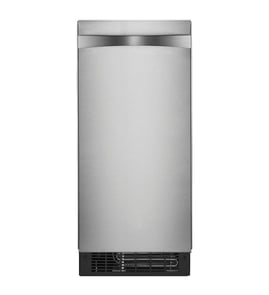







How many cubic feet is my Kenmore refrigerator model 10689583705?
Kenmore model 10689583705 is a freestanding automatic ice maker, not a refrigerator, so it does not have a refrigerator-style “cubic feet” capacity spec. For the correct capacity and storage details for this ice maker, use the specifications section in the 10689583705 owner's manual.
How to find the right “capacity” spec for this model
For a freestanding ice maker, capacity is usually described differently than a refrigerator. Look in the manual for one or more of these:
- Ice production rate (how much ice it can make in a day)
- Ice storage bin capacity (how much ice the bin holds)
- Water reservoir or water supply requirements (depending on design)
- Overall dimensions (height, width, depth for fit)
- Electrical requirements (voltage/amp needs)
Quick comparison: refrigerator cubic feet vs ice maker capacity
| Appliance type | Common “capacity” term | What it tells you |
|---|---|---|
| Refrigerator | Cubic feet | Total interior food storage volume |
| Freestanding ice maker (10689583705) | Bin capacity / daily production | How much ice it stores and how fast it makes ice |
Why it matters
Using the right capacity spec helps you size the unit for your household and avoid confusion when comparing models. Refrigerator cubic feet is a storage-volume number; ice makers are judged by production and bin storage, plus installation space.
If you were trying to identify a different Kenmore model
If you expected a refrigerator spec, double-check the model tag on the appliance. Our guide how to find your appliance model number (and what it means for parts) helps you match the correct model number to the right manual and parts list.
Last updated: February 2026
How to reset bottom ice maker?
For Kenmore freestanding ice maker model 10689583705, a “reset” is typically a power reset plus restarting the ice-making cycle. Unplug the unit for 5 minutes, plug it back in, then run a fresh cycle and confirm water supply and bin sensing are working (see the 10689583705 owner's manual).
Quick reset steps (safe and effective)
- Turn the ice maker OFF (if it has a power switch) and unplug it.
- Wait 5 minutes to clear the control.
- Plug the unit back in and turn it ON.
- Let it run one full harvest cycle (this can take time on a freestanding unit).
- If it has a Clean mode, run a cleaning cycle using freestanding ice maker cleaner W11179302 after the reset.
What to check if it still will not make ice
A reset will not fix a no-water or no-cool condition. Check these common causes:
- Water supply: shutoff valve fully open; inlet line not kinked.
- Water inlet valve: listen for fill; replace if it will not open (see freestanding ice maker water inlet valve W10585391).
- Bin sensing: if the bin thermostat is faulty, the unit may think the bin is full (see ice maker bin thermostat WPW10503764).
- Scale buildup: mineral deposits can slow freezing and harvest; cleaning restores performance.
- Airflow: condenser area needs airflow; dust buildup can reduce cooling.
Symptom guide
| What you see | What it usually means | What to do next |
|---|---|---|
| No sound, no lights | No power | Check outlet, reset power, verify cord |
| Runs but no water fill | Water supply or inlet valve issue | Check supply; test/replace inlet valve |
| Makes thin/soft ice | Low water flow or dirty system | Check tubing; run cleaner cycle |
| Ice backs up or clumps | Bin sensing or harvest issue | Check bin thermostat; inspect cutter/grid |
Why it matters
Resetting clears a temporary control glitch, but consistent ice production depends on steady water flow, clean internal water paths, and accurate bin temperature sensing. Addressing the root cause prevents repeat failures and protects key parts like the control board and evaporator.
Last updated: February 2026
Is it worth replacing the ice maker on a refrigerator?
Replacing a refrigerator ice maker is worth it when the refrigerator is in good overall condition and the fix is limited to the ice system (water supply, valve, or ice maker assembly). For Kenmore model 10689583705 (a freestanding automatic ice maker), the same cost logic applies: repair makes sense when the cabinet and sealed system are healthy.
Quick decision checklist
- The unit cools normally and holds temperature consistently.
- The water supply line has strong flow and the shutoff valve is fully open.
- The issue is isolated to ice production or water fill (not widespread electrical failures).
- The repair cost is under about 50% of the cost of replacement.
- You can confirm the correct procedure and parts using the 10689583705 owner's manual.
What to check before you replace anything
Many “bad ice maker” symptoms are caused by water delivery or drainage problems, not the ice maker itself.
- Verify the inlet water is on and the line is not kinked.
- Look for slow fill or no fill; that often points to a failing valve.
- Check for leaks at tubing connections.
- If the bin overfills or stops early, a bin thermostat can be the culprit.
- If the unit is not draining properly, ice production can stall.
Common repair paths (and what they usually mean)
| Symptom | Most likely area | Example part for this model |
|---|---|---|
| No water entering, no ice | Water inlet system | Freestanding ice maker water inlet valve W10585391 |
| Leaks, cracked line, poor flow | Water tubing/fittings | Ice maker water tubing WPW10217922 |
| Stops making ice with bin issues | Bin sensing | Ice maker bin thermostat WPW10503764 |
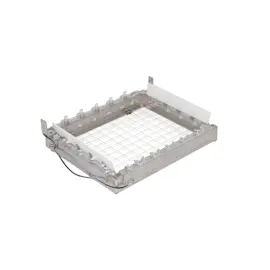
| Ice slab forms but will not cut | Cutting system | Ice maker cutter grid WP2313637 |
Why it matters
Replacing the right component first saves time and prevents repeat failures. A simple water inlet or tubing fix can restore normal ice production without the cost of a major assembly.
Last updated: February 2026
What are the common problems with Kenmore Elite refrigerators?
Common Kenmore Elite refrigerator problems fall into a few buckets: cooling performance (warm fridge or freezer), ice and water system issues (no ice, leaks), and electronic control problems (erratic temps or dead display). For your Kenmore model 10689583705, note that it is a freestanding automatic ice maker, so the most common issues are ice production, water fill, and drainage; use the 10689583705 owner's manual to match symptoms to the correct checks.
Common Kenmore Elite refrigerator problems
- Not cooling or temperature swings (often airflow, condenser, or defrost related)
- Ice maker not making ice (water supply, fill tube freezing, ice maker module)
- Water dispenser slow or not working (filter restriction, frozen line, inlet valve)
- Leaks (water line fittings, drain system, cracked reservoir)
- Control or display issues (power surge symptoms, failed control board)
If you meant your 10689583705 freestanding ice maker (not a refrigerator)
These are the most common problem areas we see on freestanding ice makers:
- No ice or low production: water supply not fully on, restricted inlet screen, poor condenser airflow
- Hollow or small cubes: low water flow, scale buildup, incorrect cleaning interval
- Water leaking: loose tubing connections, drain restriction, bin or door not sealing
- Won’t drain: drain line blockage or a failing drain pump
| Symptom (10689583705) | What to check first | Part that commonly relates |
|---|---|---|
| No ice or slow ice | Water supply, inlet screen, fill system | Freestanding ice maker water inlet valve W10585391 |
| Scale, odor, cloudy ice | Clean and descale routine | Freestanding ice maker cleaner W11179302 |
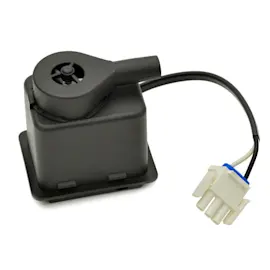
| Standing water, won’t drain | Drain line, pump operation | Ice maker drain pump W11539855 |
Why it matters
Refrigerators and freestanding ice makers fail in different ways. Identifying which appliance you have prevents wasted time and helps you focus on the systems that actually control cooling, water flow, and ice production.
Last updated: February 2026
Why is my Kenmore ice maker not making ice?
If your Kenmore freestanding ice maker model 10689583705 is not making ice, the problem is usually no water filling, a restricted water path (ice or mineral scale), or a failed fill or sensing component. Start with power and water checks, then focus on the fill system.
Quick checks (no parts)
- Confirm the unit is powered on and ice making is enabled.
- Make sure the household shutoff valve is fully open.
- Inspect the supply line for kinks, pinches, or freezing.
- Verify strong water flow at the shutoff valve (weak pressure causes short or no fills).
- Unplug for 5 minutes, then plug back in to reset the control.
Water fill problems (most common)
If you hear the unit running but never see water enter the reservoir/mold area, the fill circuit is the first place to troubleshoot.
| What you observe | Likely cause | What to check next |
|---|---|---|
| No water enters during a fill | Inlet valve not opening or no supply | Screen/filter at valve, wiring, valve operation |
| Slow fill or hollow/soft ice | Low pressure or partial restriction | Supply line, scale in water path |
| Water enters but does not spread correctly | Blocked distributor/tube | Distributor tube and tubing routing |
Model-matched parts that commonly affect filling include the freestanding ice maker water inlet valve W10585391 and ice maker water tubing WPW10217922.
“Bin full” or sensing issues
If the ice maker stops cycling early or acts like the bin is full when it is not, check the bin seating and any obstructions. A model-matched part tied to bin temperature sensing is the ice maker bin thermostat WPW10503764.
Cleaning and scale buildup
Mineral scale restricts water flow and reduces freezing performance. Use freestanding ice maker cleaner W11179302 and follow the cleaning schedule and steps in the 10689583705 owner’s manual.
Why it matters
Correct water fill and a clean water path keep cycle timing normal, prevent overflow leaks, and help the refrigeration system maintain steady ice production.
Last updated: February 2026