Owner’s manual
 Error Codes



What is the average lifespan of a Kenmore 59676259701 refrigerator?
A Kenmore Elite 59676259701 bottom-mount refrigerator typically lasts 10 to 15 years. Regular maintenance (especially keeping airflow clear and doors sealing tightly) helps you reach the high end of that range and reduces the chance of expensive sealed-system or cooling repairs.
What affects lifespan the most
- Condenser cleanliness: Dust buildup makes the compressor work harder.
- Door seal condition: Leaky gaskets cause longer run times and moisture issues.
- Defrost performance: Frost buildup can restrict airflow and warm the fresh food section.
- Power interruptions: Frequent outages and surges stress electronics.
- Usage habits: Overpacking and frequent door openings increase run time.
Quick maintenance checklist (best ROI)
- Vacuum the condenser area and keep the toe grille vents clear.
- Confirm doors close fully and the cabinet is level.
- Clean spills promptly to protect drawer rails and door bins.
- Keep freezer vents unobstructed so cold air can circulate.
- Review the care and troubleshooting sections in the owner's manual.
Common “end-of-life” symptoms and what they usually point to
| Symptom | Most common cause | Typical next step |
|---|---|---|
| Warm fresh food, freezer OK | Airflow/defrost issue | Check for frost; inspect defrost components |
| Both sections warming | Cooling system or control issue | Clean condenser; check fans and controls |
| Intermittent temps, odd behavior | Electronic control problem | Diagnose wiring and board inputs |
| Heavy frost on back freezer wall | Defrost failure | Test heater and defrost thermostat |
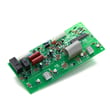
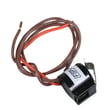
If you’re troubleshooting a cooling or defrost problem, the parts most often involved include the refrigerator defrost heater WP67001794, refrigerator defrost bi-metal thermostat WPW10165425, and the refrigerator electronic control board WPW10503278.
Why it matters
Once a refrigerator is past about 10 years, small efficiency losses (dirty coils, weak door seals, defrost issues) can add up to higher run time, temperature swings, and more wear on the compressor and electronics.
Last updated: February 2026
How do I know what model Kenmore refrigerator I have?
Your Kenmore refrigerator’s model number is printed on the rating label inside the cabinet. For Kenmore Elite bottom-mount models like 59676259701, it’s typically in the fresh food (refrigerator) section on a side wall or near the crisper area; match that number exactly when looking up parts and instructions in the owner's manual.
Where to look for the model number label
Check these common spots first (use a flashlight and look for a white or silver sticker/plate):
- Inside the fresh food compartment on the left or right side wall
- On the ceiling of the fresh food compartment
- Behind or beside the crisper drawers (you may need to slide drawers out)
- Along the cabinet frame near the door opening (hinge side)
- On the back exterior panel (less common, but possible)
How to use the model number once you find it
Write the model number exactly as shown (letters, numbers, and punctuation). Then use it to:
- Confirm you are ordering parts that fit your exact refrigerator
- Find diagrams for shelves, drawers, doors, and the ice maker area
- Follow model-specific troubleshooting steps and control settings
- Identify compatible electrical parts like a control board or light switch
Quick examples for model 59676259701
| What you need | Why the model number matters | Example part on this model |
|---|---|---|
| Cooling or defrost repair | Parts vary by series and revision | Refrigerator defrost heater WP67001794 |
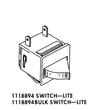
| Lights not working | Switches and sockets differ by design | Refrigerator light switch W11384469 |
| No power or erratic temps | Control boards are model-specific | Refrigerator electronic control board WPW10503278 |
Why it matters
Kenmore model numbers are the fastest way to avoid wrong-part returns. Even refrigerators that look identical can use different gaskets, harnesses, or control boards depending on the exact model and production run.
Last updated: February 2026
How to tell if a Kenmore refrigerator compressor is bad?
On our Kenmore Elite refrigerator model 59676259701, a bad compressor usually shows up as poor or no cooling even though the unit has power, often with repeated clicking (overload cycling) or unusual loud humming. Before condemning the compressor, we rule out power, control settings, airflow, and defrost issues using the owner's manual.
Quick signs the compressor is failing
- Refrigerator and freezer temperatures keep rising even after 24 hours of normal operation.
- You hear clicking every few minutes but the compressor does not stay running.
- The compressor is very hot to the touch and then shuts off (overload protector trips).
- The condenser fan runs, but cooling does not improve.
- The refrigerator runs “all the time” with little temperature change.
What to check first (fast, no tools)
The manual troubleshooting section calls out several basics that can mimic a compressor problem:
- Confirm the outlet has power and the cord is fully plugged in.
- Make sure the temperature control is turned on and set correctly.
- If it is a new install or was recently unplugged, allow 24 hours to cool completely.
- Make sure doors close fully and are not blocked by bins or food packages.
Compressor vs. other common causes
| Symptom | More likely compressor | More likely something else |
|---|---|---|
| Clicking, no sustained run | Yes | Also possible start device/control issue |
| Frost buildup, weak airflow | No | Defrost system issue (heater/thermostat) |
| Runs constantly, warm inside | Possible | Dirty condenser, airflow, gasket leak |
| No operation at all | Unlikely | Power, control, wiring, control board |
Parts that often relate to “not cooling” diagnosis
If the refrigerator has power but cooling is inconsistent, these model-matched parts are commonly involved in troubleshooting:
- Refrigerator electronic control board WPW10503278
- Refrigerator defrost bi-metal thermostat WPW10165425
- Refrigerator defrost heater WP67001794
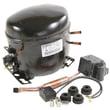
- Refrigerator compressor W10309989
Why it matters
A compressor is part of the sealed refrigeration system; misdiagnosing it can lead to unnecessary cost. Checking controls, door sealing, airflow, and defrost operation first helps you pinpoint whether the issue is truly the compressor or a simpler electrical or defrost-related failure.
Last updated: February 2026
Why is my Kenmore 59676259701 refrigerator leaking water out of the bottom?
Water leaking from the bottom of your Kenmore 59676259701 bottom-mount refrigerator is usually caused by a defrost drain that is clogged or frozen, so meltwater cannot reach the drain pan. Less often, a water supply line to the ice maker can seep, or a door not sealing well can create excess frost that later melts. For model-specific care and access points, use the owner's manual.
Quick checks that solve most leaks
- Look for a sheet of ice or standing water on the freezer floor; that strongly points to a blocked defrost drain.
- Check the drain pan area underneath for overflow or a pan that is out of position.
- Inspect the water line at the lower rear connection and along the back for drips, kinks, or rubbing.
- Confirm the freezer and refrigerator doors close fully; warm air can increase frost and defrost water.
- If the leak happens only when the ice maker is on, focus on the water supply connection and tubing.
Step-by-step: clear a clogged or frozen defrost drain
- Unplug the refrigerator.
- Remove the freezer drawer/bins as needed to access the rear interior panel.
- If you see ice buildup, melt it with warm air (hair dryer on low) or warm towels.
- Flush the drain opening with hot water using a turkey baster until it flows freely.
- Reassemble and monitor for 24 hours.
When it is likely a water line or ice maker leak
Use this quick guide to narrow it down:
| What you see | Most likely cause | What to do next |
|---|---|---|
| Water only after dispensing or ice maker running | Seeping/kinked water tubing or loose fitting | Inspect and reseat connections; straighten line |
| Water under fridge, no ice on freezer floor | Drain pan overflow or external drip | Check pan position and look for active drips |
| Ice on freezer floor, then water later | Defrost drain clogged/frozen | Clear drain and remove ice |
Parts that can be involved
If troubleshooting points to a defrost-system issue, these parts are commonly involved in defrost performance:
Why it matters
A recurring bottom leak can lead to floor damage and can also indicate airflow or defrost problems that create heavy frost. Fixing the root cause helps the refrigerator maintain stable temperatures and reduces future ice buildup.
Last updated: February 2026