 Error Codes




How do I get my Frigidaire dishwasher to dry dishes?
To get better drying from your MDR251RHR0 dishwasher, use the heated dry option (if equipped), load so water can drain off, and open the door slightly after the cycle ends. Plastics and nested items commonly hold water and need extra attention.
Best loading and cycle settings for drying
- Avoid nesting bowls, cups, and measuring spoons; trapped water cannot evaporate.
- Angle cups and plastic containers downward on the upper rack so they drain.
- Keep tall items from blocking the vent area (if your model has a vent).
- Use a high-temperature wash option when you have heavy loads; hotter water improves evaporation.
- Turn on heated dry (or high temp dry) when available; it boosts final rinse temperature and drying.
- Crack the door open 1 to 3 inches after the cycle completes to release steam and speed drying.
Rinse aid and detergent tips (often the biggest improvement)
Rinse aid reduces water beading so sheets of water run off dishes instead of clinging.
| What you do | What it helps | What you may notice |
|---|---|---|
| Fill the rinse aid dispenser and keep it topped off | Faster water runoff | Fewer droplets on glass and plastic |
| Use fresh detergent and the right amount | Better final rinse performance | Less filming and less water spotting |
| Run hot water at the sink before starting | Hotter wash and rinse temps | Better overall drying |
Quick checks if drying suddenly got worse
If drying performance changed recently, we look for a heat, fill, or drain-related issue.
- Make sure the dishwasher is filling fully; low water level reduces wash and rinse temperatures.
- Confirm the water supply is hot (typical target is about 120°F at the sink).
- Check that the door closes and latches firmly; a poor seal can disrupt the dry portion of the cycle.
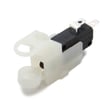
- If you see underfilling or no fill, inspect the water valve 154637401 for sticking or restriction.
Why it matters
Dishwashers dry best when the final rinse is hot and water can freely drain off surfaces. Loading gaps, rinse aid, and heat work together; if any one is missing, plastics and concave items will stay wet.
Last updated: February 2026
Does a Frigidaire dishwasher heat its own water?
Yes. Your MDR251RHR0 dishwasher can heat water during the cycle when a high-temperature option is selected; this boosts wash performance on greasy or heavily soiled loads and can improve drying. For best results, start with hot water at the sink before you begin the cycle.
How the dishwasher heats water (what to expect)
Most dishwashers like the MDR251RHR0 use an internal heating circuit to raise or maintain water temperature during certain parts of the wash.
- Heating is typically tied to specific cycle options (often labeled “Hi-Temp” or “Sanitize”).
- The unit may pause briefly while heating to reach the target temperature.
- If incoming water is too cool, the cycle can run longer.
- Heating performance depends on proper water fill level and circulation.
Quick checks if water is not getting hot
If you suspect the dishwasher is not heating, these checks cover the most common causes.
- Run the hot water at the kitchen faucet for 30 to 60 seconds before starting.
- Confirm the dishwasher is filling normally (low fill can prevent effective heating).
- Listen for normal wash action; weak circulation can make heating seem ineffective.
- Check for a door that is not latching fully; some models interrupt heating if the door switch is not made.
- If the unit is not filling, inspect the water valve 154637401 for a clog or failure.
Common symptoms and likely causes
| Symptom | What it usually points to | What we recommend |
|---|---|---|
| Dishes come out cool and wet | No heat, short cycle, or low incoming water temp | Use heated option; pre-run hot water |
| Cycle seems to “stall” mid-wash | Unit is heating water | Let it finish; this is normal |
| Poor cleaning plus cool water | Low fill or poor circulation | Check fill, spray action, and inlet valve |
| Door pops open or won’t start | Latch/strike issue | Inspect latch alignment and door closure |
Why it matters
Hotter wash water helps detergent dissolve and break down grease; it also supports better drying by leaving dishes and the tub warmer at the end of the cycle.
Last updated: February 2026
What is the average lifespan of a Frigidaire dishwasher?
Most Frigidaire-built dishwashers like model MDR251RHR0 last 10 years on average with normal household use. With consistent cleaning and prompt repair of wear items, it’s common to reach 12 years; heavy daily use and hard water often shorten life to 7 to 8 years.
Typical lifespan ranges (what to expect)
- Light use (2 to 4 loads/week): 11 to 13 years
- Average use (4 to 7 loads/week): about 10 years
- Heavy use (1 to 2 loads/day): 7 to 9 years
- Hard water without treatment: expect the lower end of the range
- Good maintenance and quick fixes: pushes lifespan toward the upper end
What usually ends a dishwasher’s life first
These are the most common failure points that drive repair decisions on dishwashers in this class:
- Water fill problems (slow fill, no fill, overfill)
- Door not latching or leaking at the door
- Poor wash performance from circulation issues
- Drain or fill leaks at seals, clamps, or the tub gasket
- Electrical/control issues (intermittent operation, dead panel)
Parts that often extend the life of MDR251RHR0
Replacing a few common wear parts early can prevent bigger damage (leaks, overheating, or repeated cycle failures):
| Symptom | Common part to check | Why it matters |
|---|---|---|
| Won’t fill or fills slowly | Water valve 154637401 | Restores correct water level for proper washing and heating |
| Overfills or won’t stop filling | Dishwasher float switch 154225501 | Prevents flooding and protects the pump and wiring |
| Door pops open or won’t start | Latch 5304442175 | A secure latch is required for safe operation and sealing |
| Door leaks at the perimeter | Dishwasher tub gasket 8581548276014 | Stops leaks that can damage flooring and cabinets |
Why it matters
A dishwasher that is underfilling, leaking, or not latching correctly often runs longer cycles, washes poorly, and stresses the heater and motor. Fixing those issues early typically costs less than replacing major assemblies later.
Last updated: February 2026
What is the most common problem with Frigidaire dishwashers?
The most common problems we see on Frigidaire-built dishwashers like model MDR251RHR0 are drainage issues (water left in the tub) and door-latch related no-start problems. Both are often caused by simple blockages, a stuck float, or a worn latch/strike that prevents the control from allowing a cycle to begin.
Most common symptoms and what they usually mean
- Water standing in the bottom after a cycle: drain hose restriction, sink/disposal connection blockage, or a drain path clog.
- Dishwasher will not start or stops immediately: door not fully latched, strike misaligned, or latch mechanism worn.
- Overfilling or filling when it should not: float stuck up or float switch not changing state.
- No fill or very slow fill: restricted supply, inlet valve issue, or float stuck in the “full” position.
- Poor wash performance: spray obstruction, chopper/impeller wear, or low water fill.
Quick checks we recommend before replacing parts
- Confirm the door closes firmly and the tub lip is clear of racks or dishes.
- Check the float inside the tub; it should move freely up and down.
- Inspect the drain hose routing for kinks and make sure the sink/disposal inlet is clear.
- Run hot water at the sink for 30 to 60 seconds before starting to improve wash results.
- Reset power by turning the breaker off for 1 minute, then back on.
Parts that commonly solve these problems on MDR251RHR0
| Problem area | What fails | Part to check first |
|---|---|---|
| No-start / door won’t “catch” | Strike or latch wear/misalignment | Door strike 154662601 |
| Overfill or won’t fill | Float system not switching correctly | Dishwasher float switch 154225501 |
| Not filling / slow fill | Inlet valve not opening fully | Water valve 154637401 |
Why it matters
Drain and latch problems can look like “the dishwasher is dead,” but they are often safety interlocks doing their job. Fixing the root cause helps prevent leaks, protects the motor, and restores normal cycle operation.
Last updated: February 2026
What are the commonly replaced parts in a dishwasher?
In the MDR251RHR0 dishwasher, the most commonly replaced parts are the components that control filling, draining, heating, and door sealing, plus rack hardware that wears from daily use. These parts typically fail from normal wear, mineral buildup, clogs, or repeated door slamming.
Common dishwasher parts that get replaced most often
These are the parts we see replaced frequently across dishwashers, and several are available for MDR251RHR0:
- Water inlet valve (won’t fill, fills slowly, or overfills)
- Float switch and float hardware (overfilling, intermittent filling)
- Door latch and strike (won’t start because the door won’t “lock”)
- Door gasket and tub seals (leaks at the door or along the tub)
- Detergent dispenser (soap door won’t open, poor cleaning)
- Spray system and wash components (poor wash, low spray pressure)
- Rack wheels, stops, and track hardware (rack falls off track, won’t roll)
Model-specific examples for MDR251RHR0
If you are troubleshooting a symptom, these MDR251RHR0 parts are common starting points:
| Symptom | Commonly involved part | Example part on this model |
|---|---|---|
| Not filling or filling slowly | Water inlet valve | Water valve 154637401 |
| Overfilling or won’t fill consistently | Float switch system | Dishwasher float switch 154225501 and float bracket 154773201 |
| Door won’t latch or cycle won’t start | Door latch/strike | Door strike 154662601 and latch 5304442175 |
| Leaking around the tub/door area | Gasket/seal | Dishwasher tub gasket 8581548276014 |
| Rack won’t roll smoothly | Rack hardware | Dishwasher wheel 5304532229 and dishwasher dishrack slide rail stop 5300809927 |
Quick checks before you buy a part
We recommend these fast checks because they often pinpoint whether you need a replacement part or just cleaning/adjustment:
- Confirm the dishwasher is getting water at the shutoff valve and the supply line is not kinked.
- Clean out debris around the float so it moves freely up and down.
- Inspect the door strike area for looseness, misalignment, or cracked plastic.
- Look for mineral buildup at the inlet valve screen (if accessible) and signs of leaking.
- Check rack wheels and stops for flat spots, cracks, or missing hardware.
Why it matters
Replacing the right “high-wear” part restores normal fill level, wash pressure, heating performance, and leak protection. That prevents repeat problems like poor cleaning, standing water, and door-related no-start issues.
Last updated: February 2026





