Installation guide
 Owner’s manual
 Error Codes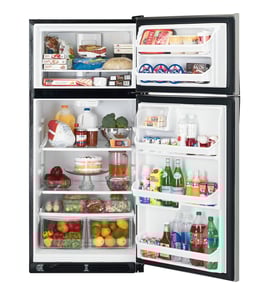
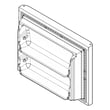


What is the upper part of a fridge called?
On the Frigidaire LFHT2131QF0 top-mount refrigerator, the upper section is the freezer compartment. It’s the coldest area of the appliance and is designed to keep foods frozen; it also helps support overall cooling by sharing cold air with the fresh food section.
- Freezer shelves or a wire rack for organizing frozen foods
- An evaporator area behind an interior panel (where cold air is produced)
- Air vents that move cold air down to the refrigerator section
- A temperature control setting that affects freezer and fresh food temperatures
- Door bins for smaller frozen items (varies by configuration)
| Section | Common name | Main purpose | Typical target temperature |
|---|---|---|---|
| Upper section | Freezer compartment | Long-term frozen storage | 0°F |
| Lower section | Fresh food compartment | Short-term refrigerated storage | 37°F to 40°F |
Knowing the correct name helps when you’re reading instructions, ordering parts, or troubleshooting symptoms like frost buildup, warm temperatures, or unusual fan noise. For example, many cooling issues start in the freezer area because that’s where the evaporator and airflow system are located.
For the LFHT2131QF0, we recommend checking the diagrams and terminology in the LFHT2131QF0 owner's manual.
Last updated: January 2026
Why is my Frigidaire top mount freezer not freezing?
If your Frigidaire LFHT2131QF0 top-mount freezer is not freezing, the most common causes are incorrect temperature settings, restricted airflow from frost buildup, dirty condenser coils, or a fan problem. Start with the simple checks first because they fix most “not freezing” complaints quickly.
- Set the freezer control colder and wait 24 hours for temperatures to stabilize.
- Make sure the freezer door closes fully and nothing is holding it open.
- Look for heavy frost on the back freezer panel (a defrost problem can block airflow).
- Listen for the evaporator fan in the freezer; it should run when the compressor is running.
- Clean dust from the condenser coils and confirm the condenser fan (if equipped) runs.
Use this as a practical target while troubleshooting.
| Location | Normal target | What “not freezing” looks like |
|---|---|---|
| Freezer | 0°F | Above 10°F and soft ice cream |
| Fresh food | 37°F | Above 40°F and food spoiling |
A solid frost sheet usually means the evaporator is iced over and cold air cannot circulate.
- Unplug the refrigerator and do a full manual defrost (doors open) until all ice melts.
- After restart, monitor for frost returning within a few days.
- If frost returns quickly, the defrost system needs diagnosis.
If the freezer is cold near the back but warm elsewhere, airflow is the issue.
- Check for a stalled evaporator fan motor.
- Inspect the fan blade for damage or rubbing.
Helpful parts for airflow issues include the refrigerator evaporator fan motor 242077705 and refrigerator evaporator fan blade 242219302.
A freezer that is not freezing is often an airflow problem, not a sealed-system failure. Fixing frost buildup, coil cleanliness, and fan operation early prevents temperature swings, food loss, and extra compressor run time.
For model-specific control locations and diagnostic steps, follow the LFHT2131QF0 owner's manual.
Last updated: January 2026
What is the most common problem with a Frigidaire refrigerator?
The most common Frigidaire refrigerator complaint is not cooling properly (fresh food section warm, freezer not holding temperature). On the Frigidaire LFHT2131QF0 top-mount, this usually traces to airflow issues (frost buildup), a fan problem, or a sealed-system restriction.
- Confirm the controls are set correctly and the doors close fully.
- Make sure vents inside the refrigerator and freezer are not blocked by food packages.
- Listen for the evaporator fan in the freezer; it should run when the compressor is running.
- Look for heavy frost on the freezer back wall (a defrost problem).
- Clean dust from the condenser area (restricted airflow makes cooling weak).
- Verify the unit has space around it for ventilation.
| Symptom | Most likely area | What you typically notice |
|---|---|---|
| Refrigerator warm, freezer cold | Airflow from freezer | Frosted back panel, weak air at vents |
| Both sections warm | Compressor start or condenser airflow | Clicking, humming, warm cabinet |
| Noisy or no airflow | Evaporator fan | Rattling, squealing, or silence |
| Runs constantly | Door seal or airflow restriction | Moisture, warm spots, long run times |
If the freezer fan is not moving air, we typically check the fan motor and blade first.
If cooling is weak and a technician finds a sealed-system restriction, the filter drier is a common service item during sealed-system work.
A refrigerator that is even 5 to 10 degrees too warm can spoil food quickly and force the compressor to run longer, which increases energy use and wear on components.
For control settings, airflow locations, and diagnostic guidance specific to Frigidaire LFHT2131QF0, use the LFHT2131QF0 owner's manual. If you see an error code, the Frigidaire refrigerator error codes guide helps you match the code to the most likely failure.
Last updated: January 2026
How to fix a Frigidaire refrigerator door alignment?
To fix door alignment on your Frigidaire LFHT2131QF0 top-mount refrigerator, we level the cabinet first, then fine-tune the door position at the hinges or front leveling hardware so the doors sit even and seal tightly. Proper alignment helps the door close smoothly and prevents warm air leaks.
- Remove heavy items from door bins to reduce sag while adjusting.
- Level the refrigerator side-to-side; set a slight backward tilt so doors self-close.
- Tighten loose hinge screws; a loose top hinge commonly causes a “dropped” door.
- Confirm shelves and door bins are fully seated and not pushing the door outward.
- Check the gasket for gaps, twists, or areas folded under.
- Level the cabinet using the front leveling legs or rollers (use the tool size specified in the LFHT2131QF0 owner's manual).
- Check door height and gaps at the top and along the side.
- Adjust alignment:
- If the fresh food door is low on the handle side, raise that front corner using the leveling leg or roller.
- If the door rubs the cabinet, slightly loosen the hinge, reposition the door, then retighten.
- Verify the seal with the paper test: close the door on a sheet of paper; you should feel steady resistance when pulling it out.
| Symptom | Likely cause | First fix |
|---|---|---|
| Door won’t stay closed | Cabinet not tilted back | Add slight rear tilt |
| Door rubs cabinet | Out of level or hinge shifted | Level, then hinge adjust |
| Moisture/frost near door | Gasket not sealing | Clean/reshape gasket |
If alignment will not hold, hinge wear or a poor seal is usually the reason.
- Inspect the refrigerator door hinge bushing 5304507146 for wear that lets the door sag.
- If the gasket is torn or permanently deformed, replace it; for example, refrigerator door gasket (white) 242193213.
A misaligned door leaks warm, humid air into the refrigerator and freezer. That increases run time, can cause frost or sweating, and leads to temperature swings.
Last updated: January 2026